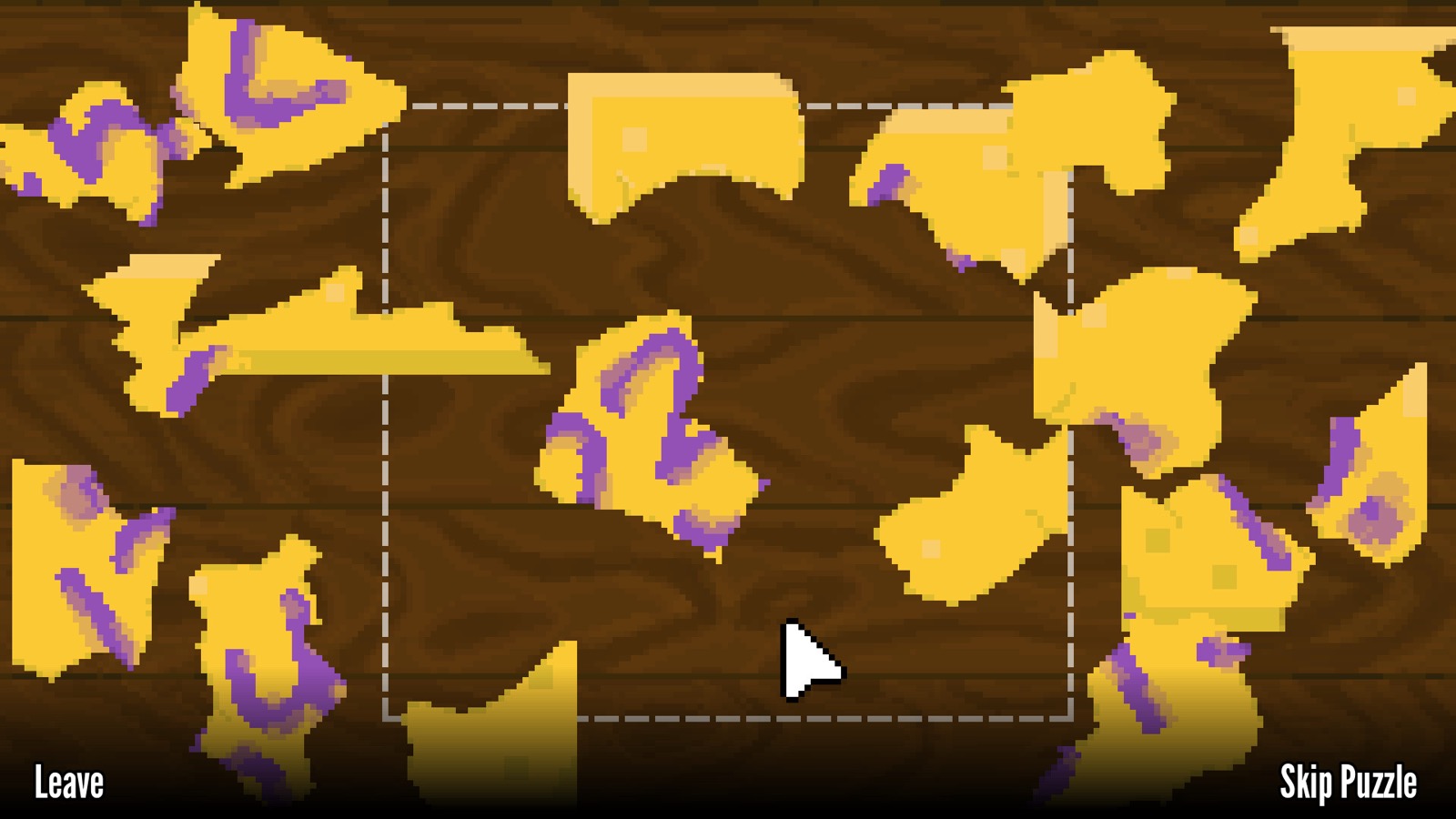
A pile of yellow scraps fills the screen. Two words sit underneath it: Leave on the left, Skip Puzzle on the right. The exit is almost as prominent as the puzzle.
That is the interesting choice in Aster Pebble and the Case of Bad Bureaucracy. The game includes a hands-on task for repairing a torn password note, then refuses to make that task the price of staying with its characters and time-loop mystery.
The note is not a dialogue riddle. Players drag its pieces into a dashed work area. In the developer's description, a piece snaps into place when it lands close enough to its target. The official screenshot shows the fragments, the empty assembly space, and both ways out.
The Steam page is just as blunt about the option to skip. This is not a hidden accessibility setting or a hint that appears after several failures. The game puts the decision on the puzzle screen before frustration has to be measured.
The note tests the wrong skill
Reassembling a note can make evidence feel like an object someone damaged, not another fact dropped into a journal. It also tests spatial matching and cursor work. Neither skill proves that the player understands the case.
When a local interaction blocks a story-heavy game, those two kinds of progress become tangled. A player can know what the password note is for and still stop moving because rotating scraps is not the part of mystery games they came to play.
Wandering Door Games keeps the puzzle and removes its authority as a gate. The studio's development log says the skip exists so people who came for the story and characters can continue. Players who enjoy assembly still get the small satisfaction of rebuilding the note by hand.
The same preference for recoverable progress appears after release. In update v1.1.5, the developer kept the password note available after the related login. The stated reason was to fix a lockout and leave more room for an additional interaction. That change does not make the puzzle deeper. It makes the surrounding case harder to break.
A puzzle can survive without being a gate
An honest skip button lets the puzzle do a narrower job. It gives the password a physical history and changes the rhythm between conversations without pretending that every player must enjoy the manipulation itself.
There is a useful distinction here for small narrative teams. Some obstacles check whether the player understood a clue. Others add texture, timing, or a joke. Making the second kind optional can protect the first kind from being blamed when the story stalls.
The exit can make the puzzle look disposable
The risk is visible in the same screenshot. If Skip Puzzle always sits one click away and nothing else makes the scraps appealing, some players will read the interaction as filler before touching a piece. An option meant to respect their time can quietly lower the perceived value of the work behind it.
Aster Pebble therefore has to earn participation through curiosity, character, or the pleasure of handling its world. The skip can keep one torn note from stopping the story. It cannot make that note worth repairing.
This design should suit players who like point-and-click cases, dialogue, and odd characters more than manipulation puzzles. Developers can ask a narrower question before adding a skip: does this obstacle verify understanding, or does it merely change how the player reaches the next conversation?
Sources
Find Aster Pebble on Steam
See current screenshots, system requirements, and release details.