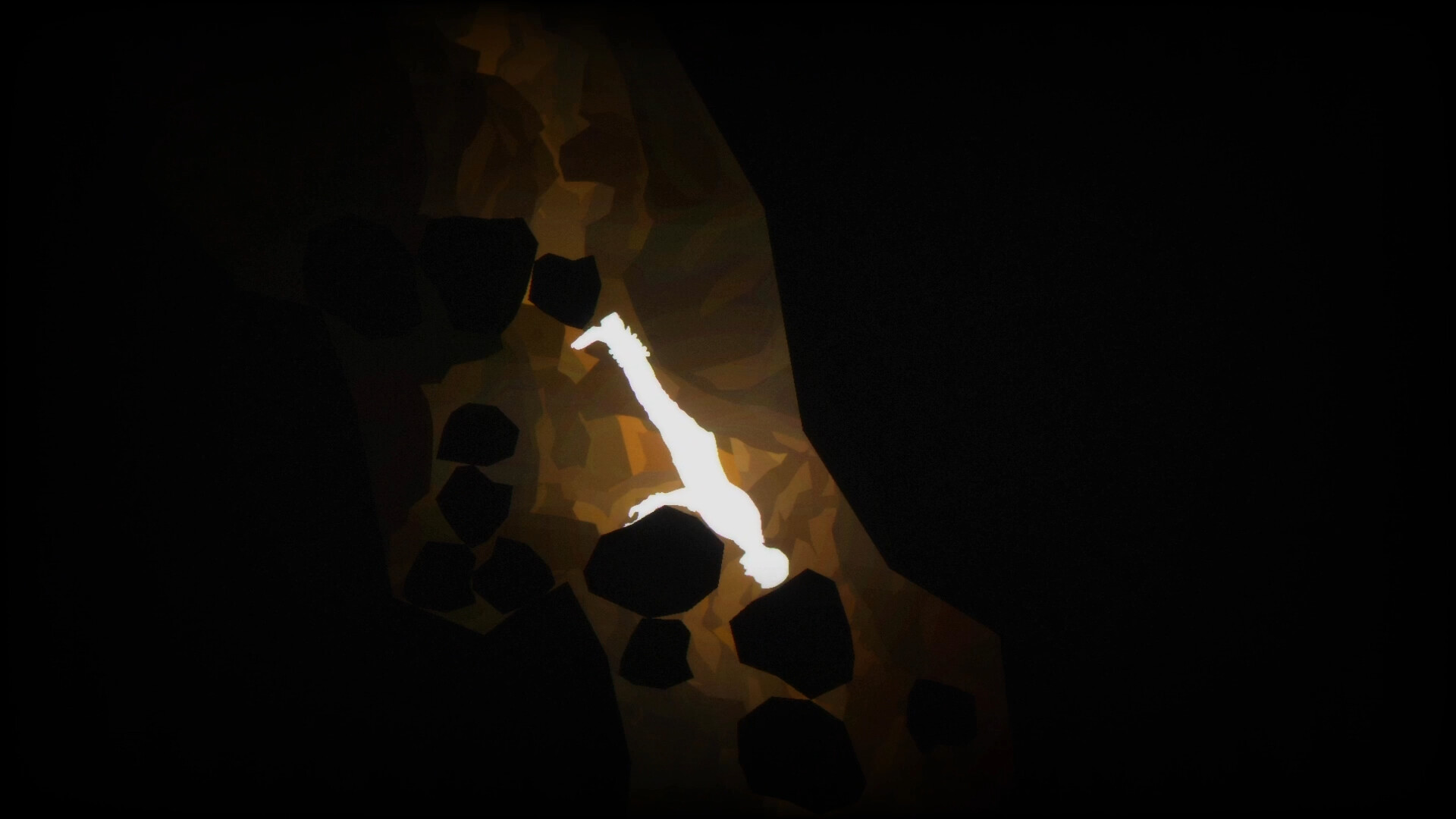
The Cave Diver gives you two hands and a hole barely wide enough for the body attached to them. Pulling forward is the basic movement, but it is also how a shoulder catches, a leg folds into the wrong gap, or the next handhold slips out of reach.
That makes the controls part of the horror. The cave does not need to interrupt movement with a separate danger system when every attempt to move deeper can wedge the body more tightly into the rock.
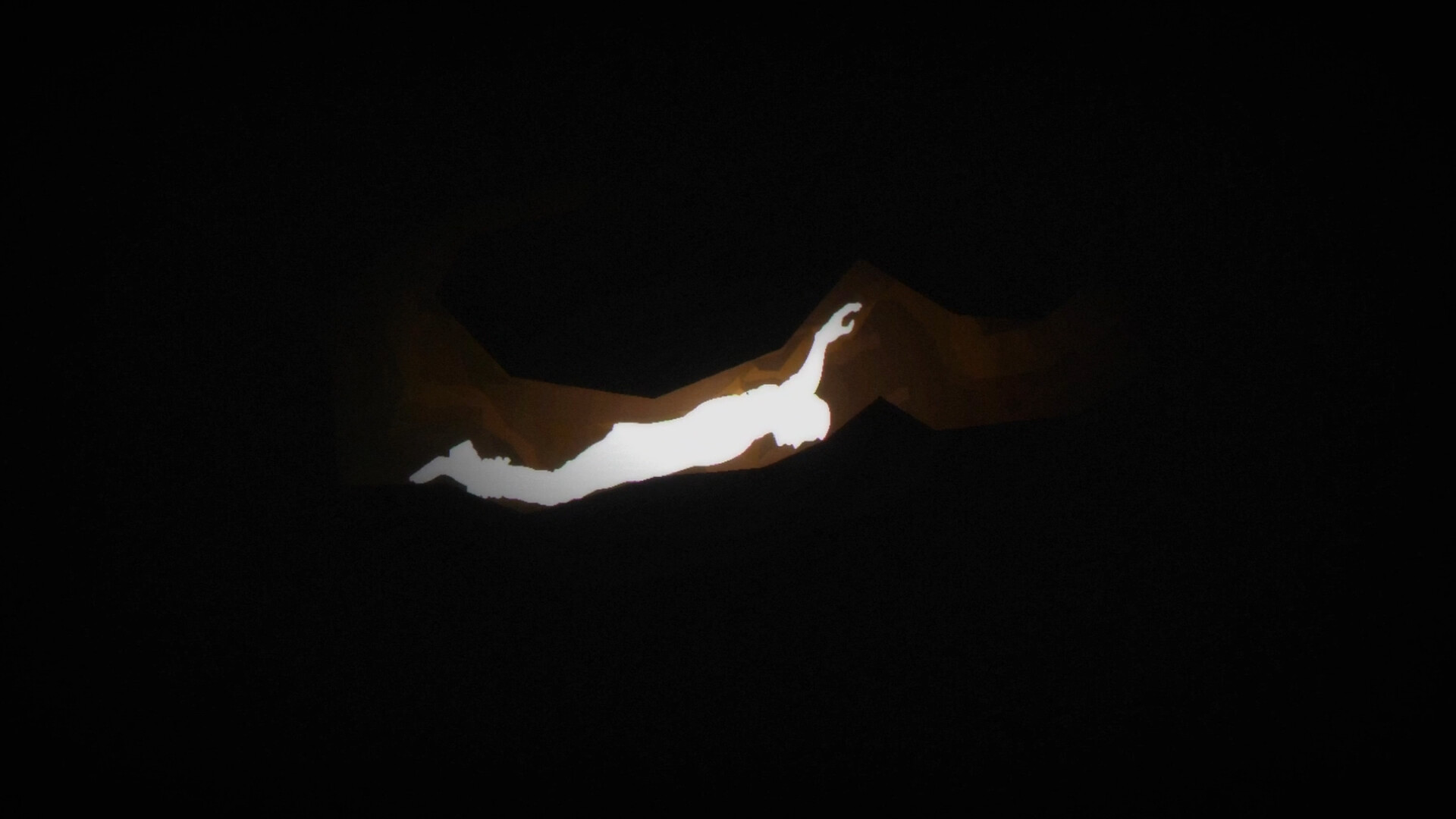
Official screenshots show a pale, jointed diver stretched across shafts, curled around boulders, and pressed flat inside low tunnels. The Steam page says the player grips and moves with two hands, hammers signs into the stone, and may encounter a previous diver's remains on a later attempt.
The silhouette keeps the problem readable. A bent knee, trapped hip, or extended arm explains which part of the body is blocking the route without turning the cave into a diagram.
Awkward movement still needs a fair signal
Deliberately awkward controls have a narrow margin for error. If the body always obeys, squeezing through the cave becomes ordinary navigation. If the physics produce results the player cannot connect to a grip or pull, the cave stops feeling dangerous and the controls take the blame.
Ovsko described exactly that problem after feedback on the demo. Some movement felt too unpredictable, unrealistic, and unfair even though the game was supposed to remain frustrating. The answer was not to remove the difficult body. It was to make the relationship between hand motion and body response easier to read.
The revised system gives the cursor a weak radius for small hand adjustments and a strong radius for harder pushes and pulls. Hand response increases farther from the centre, one-arm grip strength was raised for switching hands, and a watch distinguishes the left wrist. The body also tries to return its limbs toward natural positions when the cave gives it room.
These changes do more than make movement smoother. They separate two jobs that a single input has to perform. Small motions position a hand. Larger motions commit the body's weight. A player can still make a bad pull, but the size and direction of that pull have a clearer connection to the result.
A trustworthy awkward control gives the player something to learn. Tight gaps ask for short corrections. Open drops invite stronger movement. Switching hands becomes a sequence of leverage changes rather than a dice roll about whether the free arm will hold.
That learning can also deepen the horror. Familiarity does not make the cave spacious. It makes the player aware of how little room remains and how much force the next movement will require.
Trust the hands, fear the cave
The design can fail in either direction. Leave too much noise in the body and repeated deaths will look like physics accidents. Correct too much, and a human figure being dragged through stone becomes a cursor following a route.
The public material cannot show where the release build lands between those extremes. What it does show is a useful production decision: difficulty was not treated as permission for unreadable input. Ovsko kept the resistant body and revised the signals that explain how force reaches it.
Players who enjoy learning an unusual physical verb may find that negotiation compelling, especially when a failed movement leaves a visible body problem to solve. Players who dislike deliberate control friction may find the same idea exhausting.
For developers, the distinction is practical. A frustrating control scheme still needs a stable lesson. The player should be able to point to the grip, angle, or amount of force that caused a failure, then try a different movement on the next body.
Sources
Find The Cave Diver on Steam
See current screenshots, system requirements, and release details.