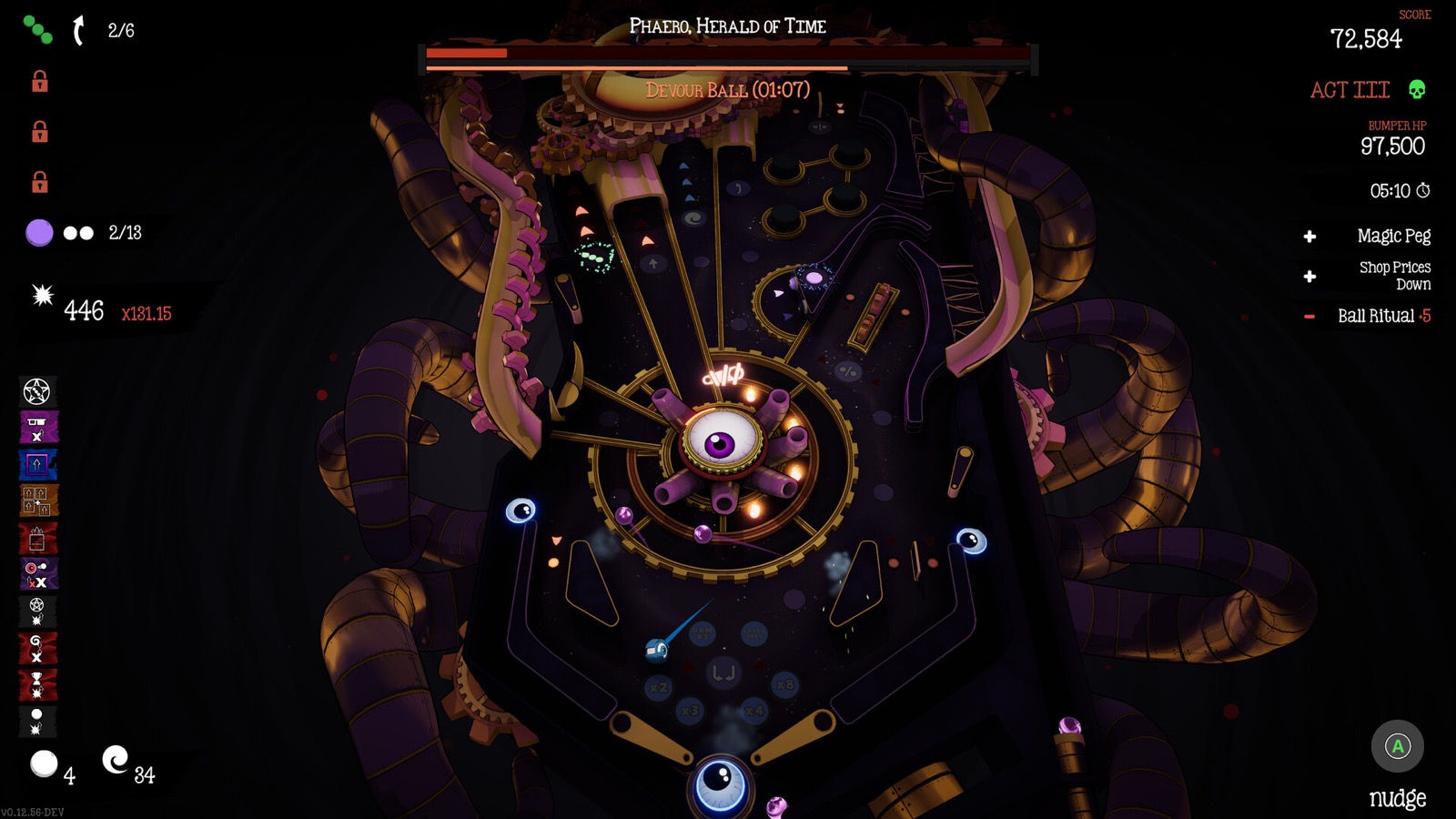
A red DEVOUR BALL clock hangs over one of Cult of PiN's boss tables. Four spare balls sit in the corner of the same official screenshot. They look like four mistakes the player is allowed to make. The boss reads them as four more minutes to take away.
That reversal gives the fight an unusually blunt job. It does not only ask whether the player can keep a pinball alive. It asks whether the build can finish the fight before the safety stock becomes the countdown.
Cult of PiN is a roguelike pinball game in which hits damage bumpers and more than a hundred Glyph upgrades can change damage, rituals, missions and table rules. The game reached version 1.0 on August 10, and the current Steam media still shows the boss's Devour Ball timer above the playfield.
The developer explained the rule when it was introduced during the demo. Defeating a boss within 30 seconds opened the bonus table. After that window, every 60 seconds cost one spare ball. With no reserve left, the boss consumed the active ball and ended the run.
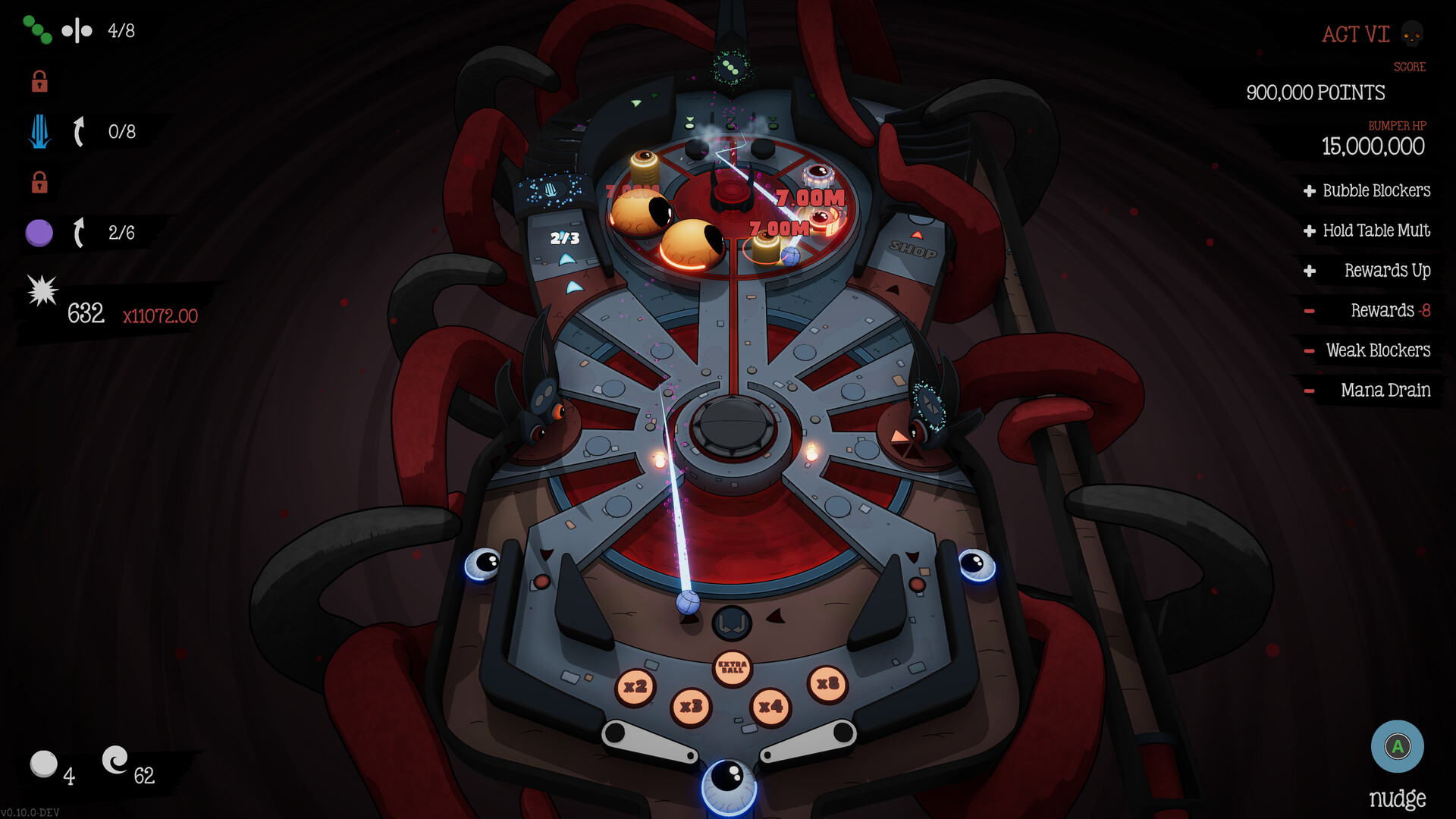
Four safe mistakes become four minutes
A normal spare ball forgives a drain. It does not care why the run is taking so long. That is useful when pinball execution is the main test, but awkward when a roguelike build has already failed to keep pace with rising bumper health.
The developer described unsuccessful runs that could fizzle out with plenty of balls remaining but too little damage. The player could continue flipping through a boss fight whose result had become clear. Survival postponed the loss without creating a new way out of it.
The boss now spends the resource that once prolonged the stalemate. One interval removes a spare ball, so the reserve reports how many more intervals the current build can buy. The top clock and the spare-ball count describe the same threat from opposite ends of the screen.
That also gives several upgrades a shared purpose. More boss time, lower boss health and slower tentacle respawns are different ways to change whether the next ball gets eaten. They are no longer only improvements to separate numbers. They negotiate one deadline.
The reserve gives the timer a body
The rule turns a soft failure into something the player can read before it arrives. A weak build is not merely producing disappointing damage. It is converting saved lives into seconds, one ball at a time.
It also lets pinball skill keep some bargaining power. A spare ball still matters because it extends the fight, and a clean sequence can still beat the next devour. The mechanism does not replace the playfield with a conventional timer; it makes the pinball reserve carry the timer's cost.
One drain cannot answer the whole run
A build check can crowd out the thing pinball is best at rewarding: keeping a bad ball alive. If survival after the deadline only delays an unavoidable deduction, a difficult recovery shot may feel less valuable than a damage multiplier chosen several minutes earlier.
The development history shows how narrow that balance is. A later demo patch reworked the table multiplier because losing a ball during a boss battle had become nearly run-ending on higher difficulties. The timer clarified a weak build, but another drain penalty could make one physical mistake answer the whole run.
The boss should eat a ball because the build failed to close the fight, not because every pinball error needs a second punishment. Cult of PiN's sharper question is whether the player can still change the deadline once the red clock appears.
This is a mechanism for players who want pinball shots and roguelike planning to argue over the same resource. For developers mixing arcade execution with buildcraft, it offers a useful warning: an anti-stall timer becomes more interesting when it consumes something the player already understands, but that resource cannot carry every penalty at once.
Sources
Find Cult of PiN on Steam
See current screenshots, system requirements, and release details.