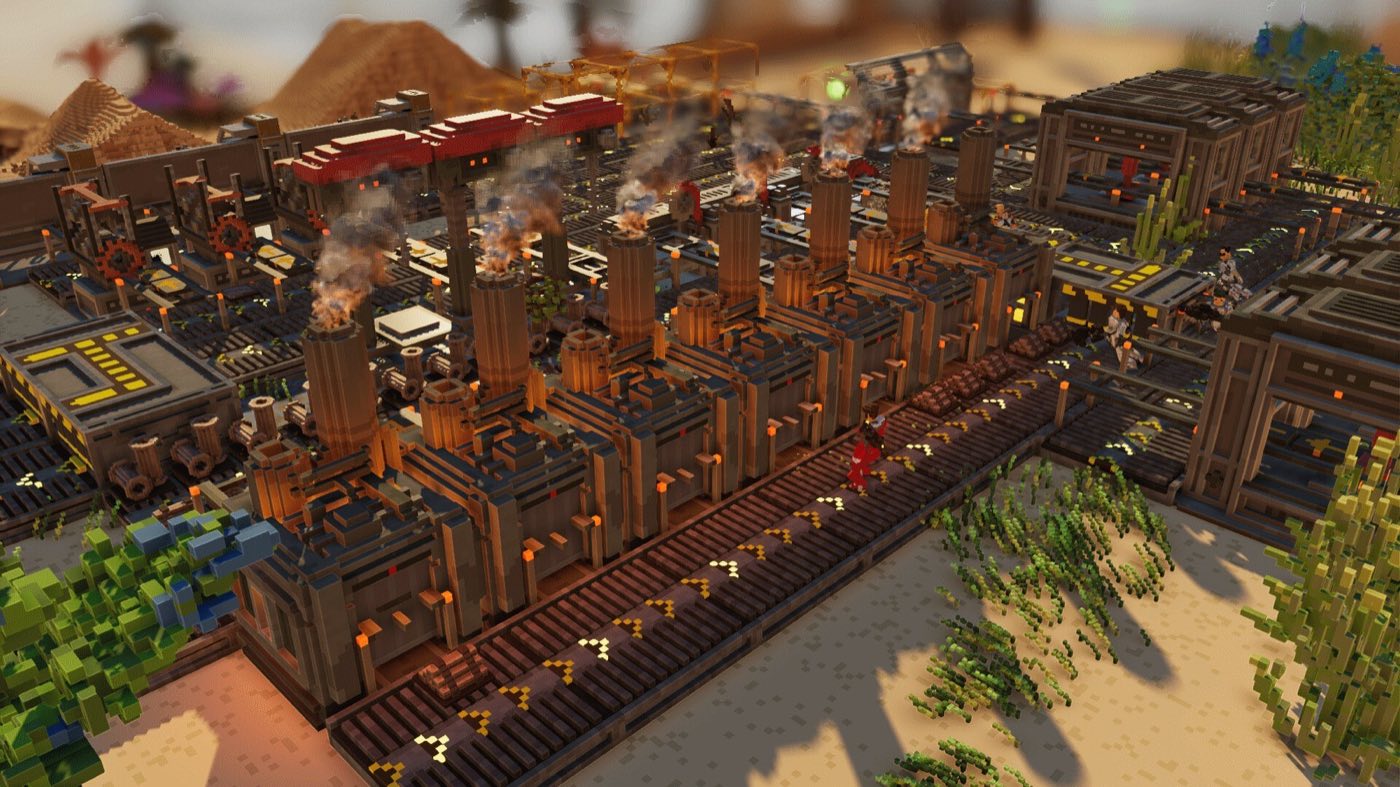
A tidy factory wants everything close. Ore crosses fewer tiles, belts stay short, and workers spend less time between jobs. Dawn Apart puts that instinct on a planet where the factory, terrain, and defenses can be destroyed. The neatest layout may also be the easiest one to interrupt.
That tension is the game's most useful design idea. Production and survival occupy the same colony. A wall is not protecting an abstract score; it is standing beside the machines, stockpiles, and routes that keep the settlement running.
Industrial Technology and Witchcraft describes Dawn Apart as a factory and colony simulation in a fully destructible voxel world. The Steam page lists automation, settler needs, combat, destruction, and basic terraforming among its Early Access systems. The publisher describes the same world as a place to mine, build systems, manage a colony, and defend it.
The June Violent Frontier update makes the connection literal. Rain can damage exposed machines and flood furnaces. Buildings need floors, walls, roofs, and structural support, while the loss of a critical support wall during combat can collapse a larger structure. A later hotfix capped enemy waves, changed target searches around obstacles, and tripled palisade health.
The shortest line can be the weakest plan
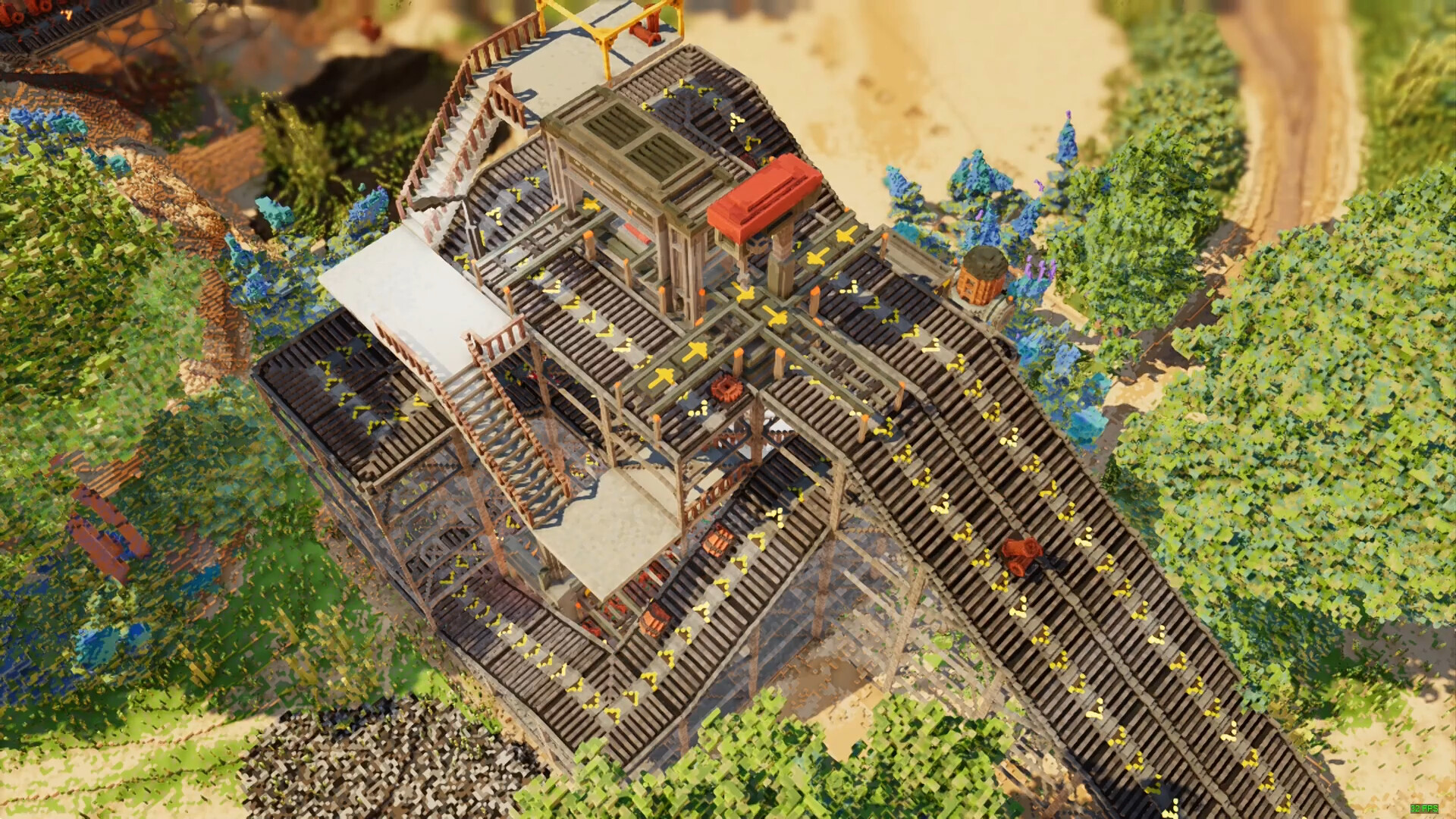
Factory layouts usually turn space into a throughput problem. The designer asks how directly one machine can feed the next. Survival pressure asks different questions. Where can a breach spread trouble? Which route must stay open? Can one damaged district stop food, medicine, and production together?
Combining those questions gives every efficient shortcut a second price. A central stockpile may shorten several routes, but it also concentrates dependence. A long wall protects more machinery, but creates more boundary to maintain. Separation wastes travel time while giving the colony a chance to keep one line working when another is hit.
Dawn Apart does not need a special resilience statistic to create this conflict. It can let ordinary placement carry both meanings. Distance affects logistics and exposure. A palisade consumes room while defining what an enemy meets first. Terraforming can prepare a factory footprint and change the ground around it.
Structural integrity gives destruction a route into production. A wall may be shelter, support for the roof, and part of the boundary around machinery. Lose the wrong one and the cost can spread beyond the wall itself. An attack leaves a repair problem inside the production plan instead of ending with a clean transition back from battle.
For players who already know automation games, this gives familiar optimization a reason to become less perfect. Redundancy, spare routes, and empty space can be deliberate choices rather than signs of sloppy planning. The useful question changes from 'Is this the shortest line?' to 'What still works if this corner fails?'
It also gives combat consequences that belong to the player's own design. A lost wall segment matters because of what was placed behind it. That relationship can make defense readable without inventing a second economy of battle upgrades disconnected from the colony.
Destruction has to teach, not exhaust
Destruction can just as easily punish creativity. If rebuilding complex belts and rooms becomes routine clerical work, players may copy one safe layout and stop taking spatial risks. If attacks cannot meaningfully disturb production, the voxel damage is mostly a visual flourish.
Early Access makes that balance especially unstable. The official patch notes already show wave size, target selection, and palisade durability being adjusted. The important measure is not how much gets destroyed. It is whether the player can understand why a layout failed and make a different structural choice next time.
Dawn Apart is worth watching for players who enjoy factory efficiency but want the map to push back against a solved blueprint. For developers combining automation with survival, the sharper lesson is to let threats attack relationships inside the factory, not merely its hit points. A damaged route, exposed stockpile, or isolated service can reveal more about a design than a larger enemy health bar.
Sources
Find Dawn Apart on Steam
See current screenshots, system requirements, and release details.