
The enemy waits for your footstep
Demon Lord: Just a Block treats the player's movement as the clock. Take one step and enemies take theirs. Stop and the room waits. The familiar verbs are still present: dodge, parry, counter, collide. What changes is who decides how quickly the fight advances.
The result sits between planning and performance. A player can inspect the board one step at a time, then move quickly once the pattern makes sense.
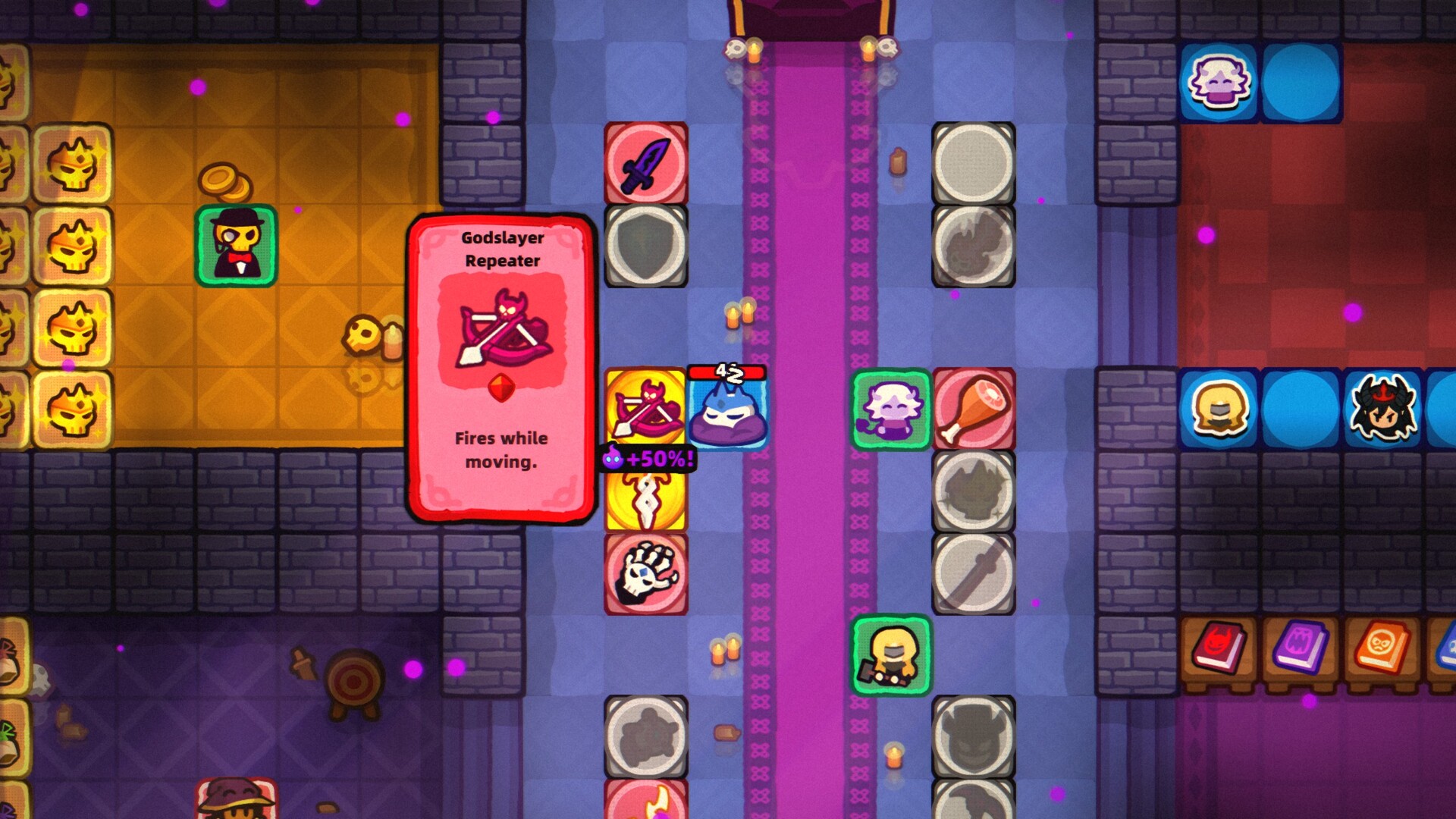
The Demon Lord moves in four directions through a world made of blocks. Enemies act after the player moves, and running into them triggers attacks. Weapons and ability cards alter the build, while destructible objects and procedurally generated rooms change the available space.
Bosses introduce their own rules, including puzzle and arcade structures such as Tetris. YuWave's direct developer post also notes brief real-time windows in which an incoming attack can be dodged or parried.
Action without reflex speed
Action combat often bundles two skills together. The player must recognize the correct response and execute it before a timer expires. A good spatial decision can be lost because the hand was late, while fast input can rescue a poor plan.
Removing the timer entirely risks turning a dodge into ordinary turn selection. Demon Lord needs room for thought without losing the feeling of an action being performed.
Most of the room advances on the player's step. That makes enemy position and attack cues available for inspection. Collision keeps movement and offense on the same control, so a planned route can become a chain of attacks when performed quickly.
Short response windows interrupt that control at selected moments. The player sets the general pace, but an enemy can still ask for a timely dodge or parry.
One rule can serve two tempos. A careful player can stop after every movement and read the next state. A confident player can enter several moves quickly and turn a known solution into something that looks closer to an action sequence.
Distinct boss rules can test whether the player understands more than a single combat rhythm. Changing the puzzle changes what information deserves attention even though movement still advances the clock.
What happens after the pattern is learned
A readable rule can become a solved rule. If enemies do not create new spatial combinations, waiting for them to move may feel procedural rather than tense. Brief real-time windows also complicate the accessibility promise, because some pressure returns at the moment of attack.
Procedural rooms carry much of the burden once the timing rule becomes familiar. If enemies settle into the same spatial answers, waiting for each move will expose the repetition instead of hiding it.
Demon Lord is for players who like action verbs but want time to read the board before committing. It may be a poor fit for players who want uninterrupted real-time momentum or for anyone expecting every threat to wait indefinitely.
Sources
Find Demon Lord: Just a Block on Steam
See current screenshots, system requirements, and release details.