Echoes of Mystralia launched into Early Access with more than a hundred Memories that can alter spells. That number is easy to advertise and hard to design around. If every modifier simply joins a list, abundance produces longer tooltips rather than more interesting magic.
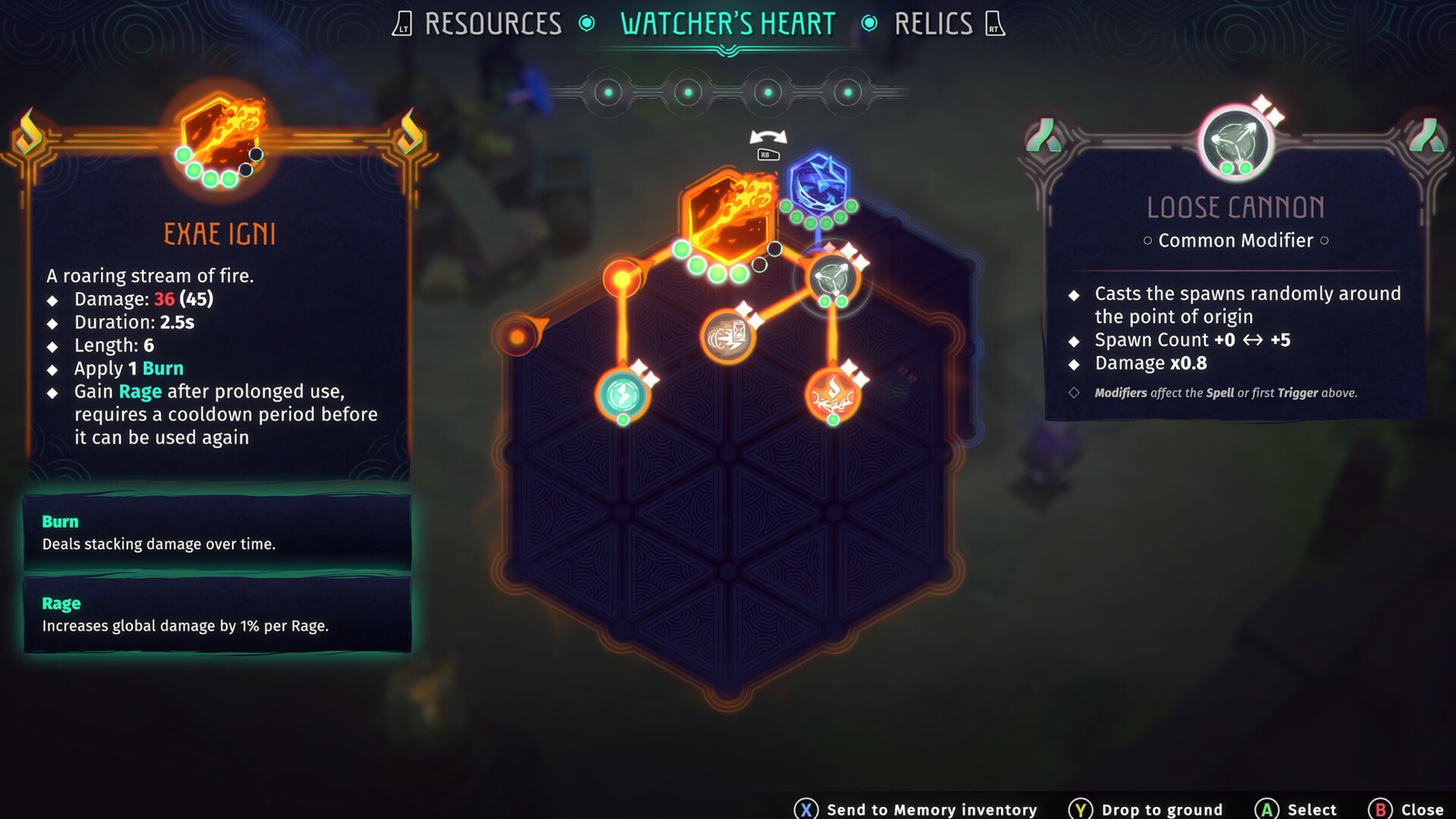
Borealys Games gives the modifiers somewhere to live. Players combine and reorder Memories on a free-form Spell Canvas, and one of the game's Guardian rewards can increase the canvas size. A spell is constrained by a piece of space before it is constrained by arithmetic.
The official site describes Memories as the only weapon against the Shadows of the Past. They can be combined, modified, enhanced, and reordered while the resulting spell changes in front of the player. The Early Access materials list seven elements, sixteen starting spells, more than one hundred Memories, and a free-form canvas.
The canvas also participates in progression. Borealys Games says players can customize it before a run, reshape it at the Memory Forge, and earn a Canvas Socket upgrade from a Guardian. The launch announcement still presents that socket upgrade as a Guardian reward.
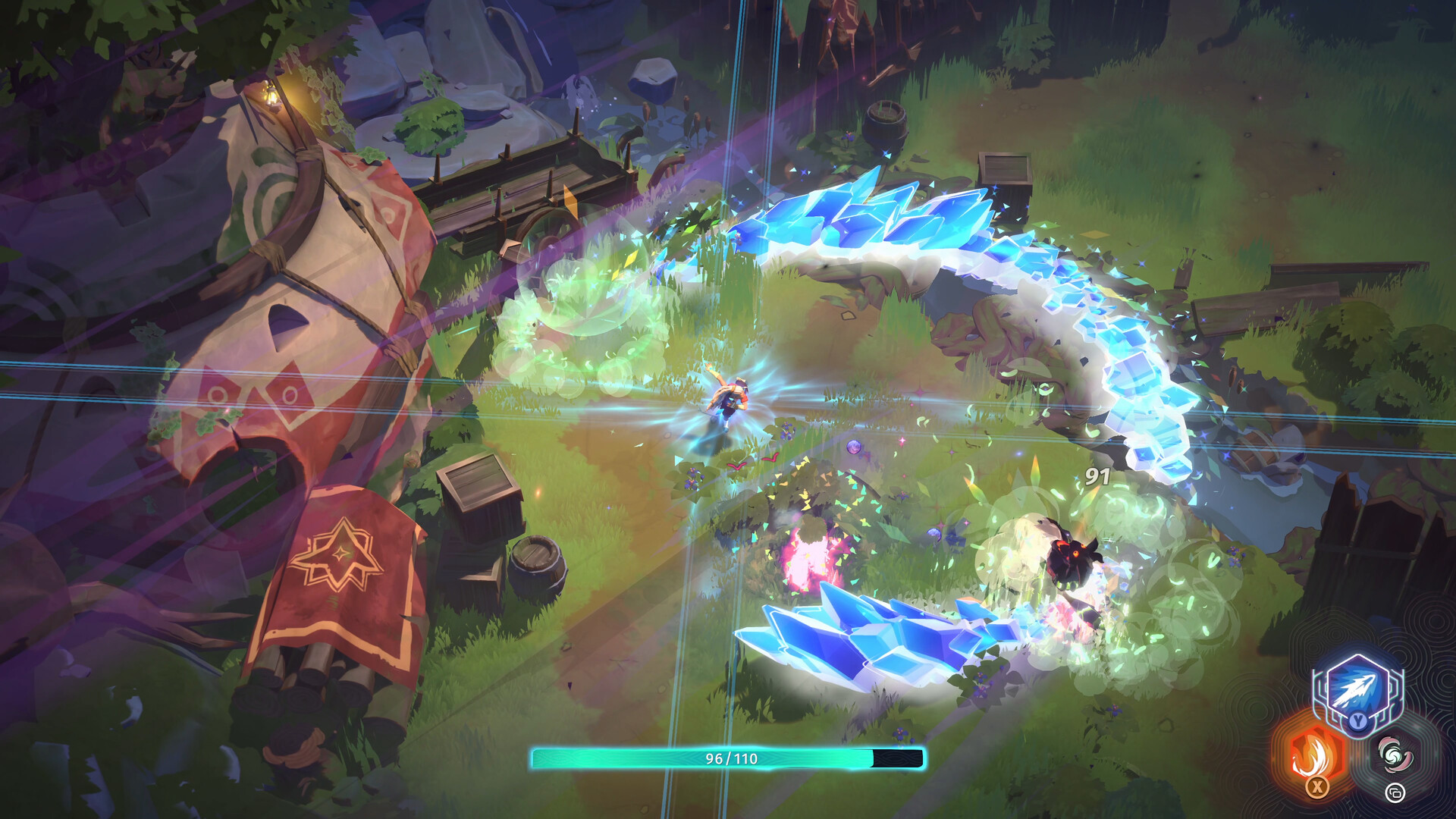
Good parts need somewhere not to fit
Modular magic needs a reason to leave good parts out. Without one, spellcrafting becomes accumulation: attach damage, then range, then another elemental effect, and keep everything that tests well. The spell may become stronger without becoming more particular.
A limited canvas can turn omission into authorship. One Memory occupies room that another Memory could have used. Reordering matters because the system is asking how pieces coexist, not only which bonuses have the largest values.
The Spell Canvas makes capacity visible. A player can read empty sockets, crowded regions, and the point where a new modifier no longer fits. This is easier to reason about than an unseen complexity budget, especially when the system already has many elements and Memories.
Expanding the canvas is therefore an unusual permanent reward. Another socket does not prescribe fire, ice, range, or damage. It creates room for a relationship the previous shape could not hold. The reward widens the design problem before the player solves it again.
That distinction can keep progression tied to experimentation. A flat damage bonus confirms the spell already built. More canvas space asks whether that spell should branch, combine another behavior, or make room for a modifier that was previously too expensive.
The system also gives Borealys Games a readable way to pace complexity. New Memories can arrive as possibilities while canvas size controls how many possibilities must be understood at once. The player sees the constraint and can anticipate what an extra socket would unlock.
More room can erase the decision
Spatial interfaces can promise freedom while hiding one dominant packing solution. If every strong build fills the canvas in the same order, arranging Memories becomes inventory Tetris performed before reaching the expected answer.
Expansion has the opposite risk. Enough sockets may remove the need to choose, letting every spell carry the safest modifiers. The canvas earns its place only while its shape keeps asking for a compromise. Early Access can still change those pressures. If one arrangement or spell form dominates, the canvas loses the need to keep redrawing the answer.
Echoes of Mystralia should interest players who enjoy building abilities piece by piece and want the construction to remain visible. For developers, the useful question is not how many modifiers a crafting system contains. It is what stops the player from accepting all of them. A spatial budget works when each extra piece changes the arrangement, not just the total.
Sources
Find Echoes of Mystralia on Steam
See current screenshots, system requirements, and release details.