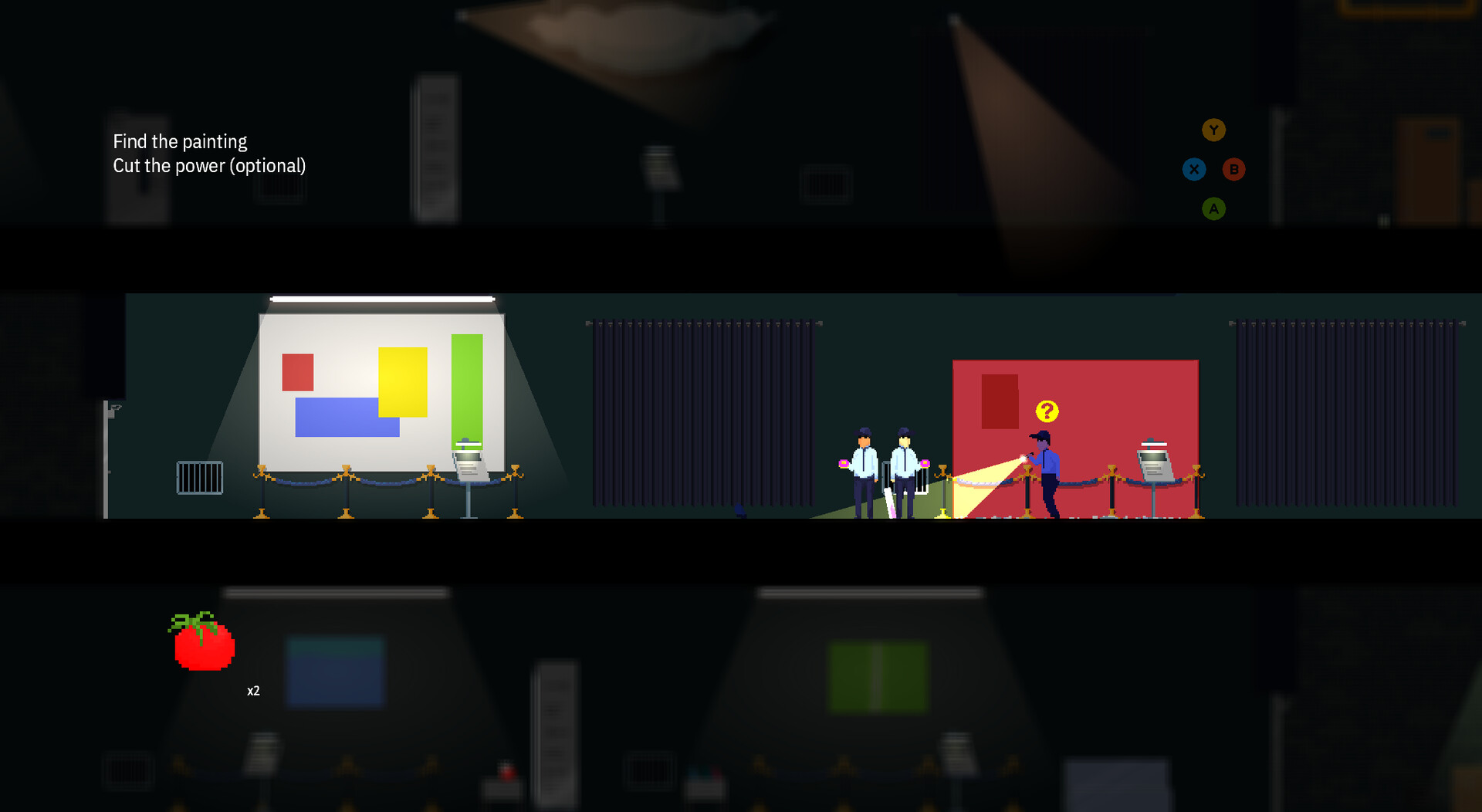
False Alarm wants its guards to fall for the same trick twice. Knock on a door and one leaves a patrol to investigate. Spill water and someone may stay long enough to switch the source off. Brew coffee and a guard can be drawn into another room for reasons more domestic than tactical.
That reliability is deliberate. The developer describes each distraction as something the player should be able to plan around. In a game full of improvised tools, predictable enemies are what allow improvisation to become a plan.
The official screenshots present each level as a long side-on slice through offices, museums, hotels, and labs. Walls, doors, cones of light, hiding places, guards, civilians, and usable objects share the same view. A question mark above a guard shows when something has interrupted the normal route.
The store page lists photocopiers, doors, coffee, thrown objects, lights, icy floors, microwaves, and pink gas among the ways to interfere. These are not character abilities selected before a mission. They are things already sitting in the building.
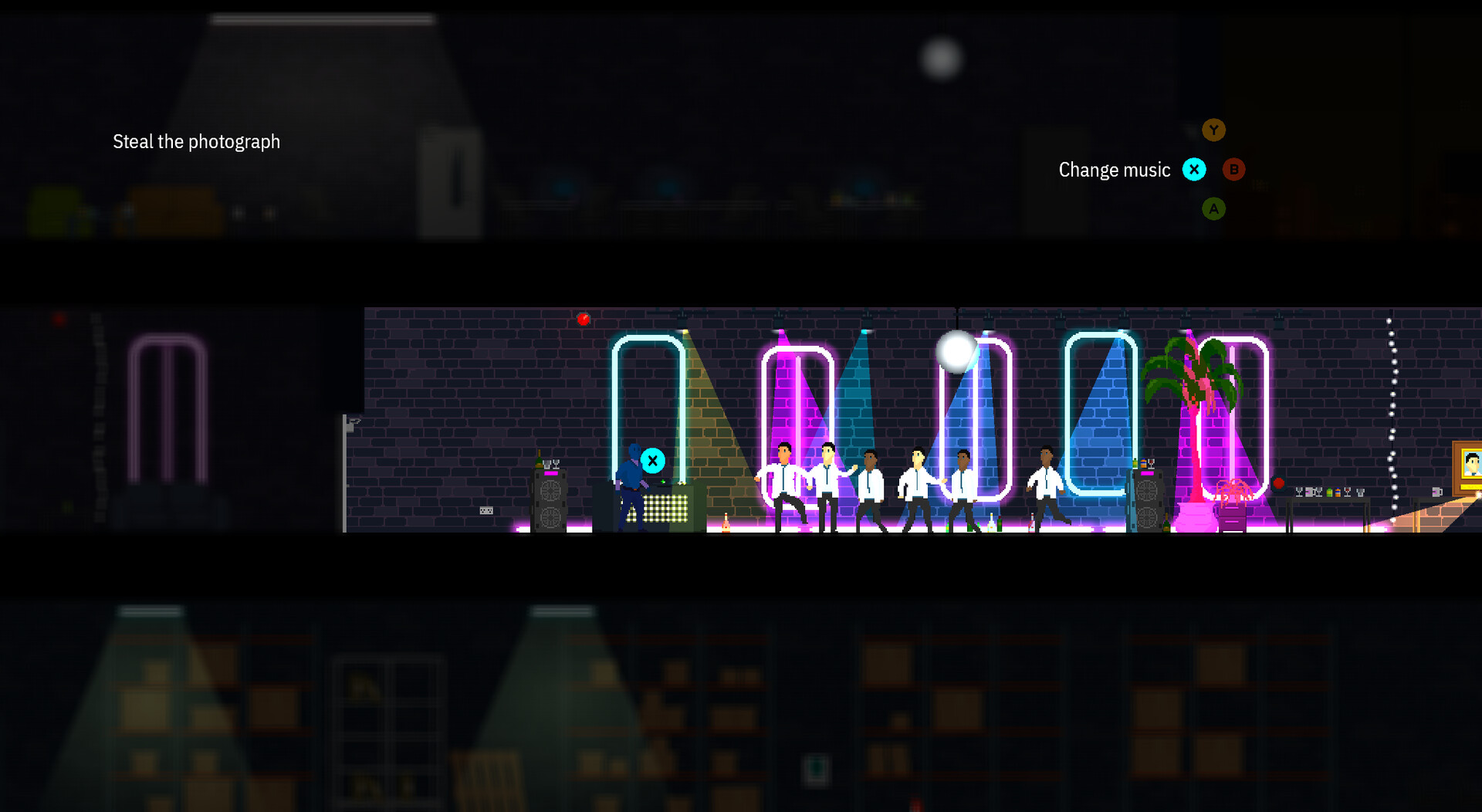
A coffee break can be a stealth tool
A stealth sandbox asks the player to take risks with rules that are often hidden inside enemy AI. If a guard ignores one noise and sprints toward the next, the player cannot tell whether the plan was bad or the simulation changed its mind. Restarting becomes the only dependable experiment.
The opposite design is not much better. A guard who walks to every sound on command is a moving door switch. The player can solve the room without treating the guard as a threat.
False Alarm gives distraction a four-part routine: notice, investigate, search, return. The developer also states the limits. A trigger can be too far away. A wall can block a sound, although a closed door does not. A lighting change needs to enter the guard's line of sight before it matters.
Enemy types bend the routine without replacing it. A helmet blocks the easy thrown-object stun. A trained guard cannot be choked from behind. A scientist runs for an alarm instead of chasing. The player learns one baseline, then has to notice which shortcut the current person removes.
The guard has to keep the promise
A stable reaction can make two objects combine into a sentence. Knock on a door so the guard crosses the hall, darken the room before the guard arrives, then use the opened route while the search runs its course. The surprise comes from the available furniture and the order of operations, not from wondering whether the AI will honor its own rules.
The side-on view helps because the cause and result can remain on screen together. The player can see the object, the route it interrupts, the light being crossed, and the space that has just opened. A missed opportunity has somewhere visible to point.
Predictable cannot mean obedient
Predictability can become obedience. Once the player knows the exact investigation distance and return time, a guard risks becoming a timer that happens to carry a flashlight. The enemy variants add friction, but they need to change the plan rather than merely forbid one preferred move.
Readable guards only stay interesting while rooms, objects, and enemy traits keep changing what their familiar routine means. If later levels repeat the same four-part response without asking for a new sequence, predictability becomes rote instead of tense.
False Alarm should appeal to players who enjoy observing a room, testing one readable reaction, and turning the result into a longer chain. It may frustrate players who want guards to remain mysterious or who find a failed multi-step setup more tedious than exciting. Readable AI does not have to be simple. It needs a consistent baseline that each room, object, and enemy trait can complicate.
Sources
Find False Alarm on Steam
See current screenshots, system requirements, and release details.