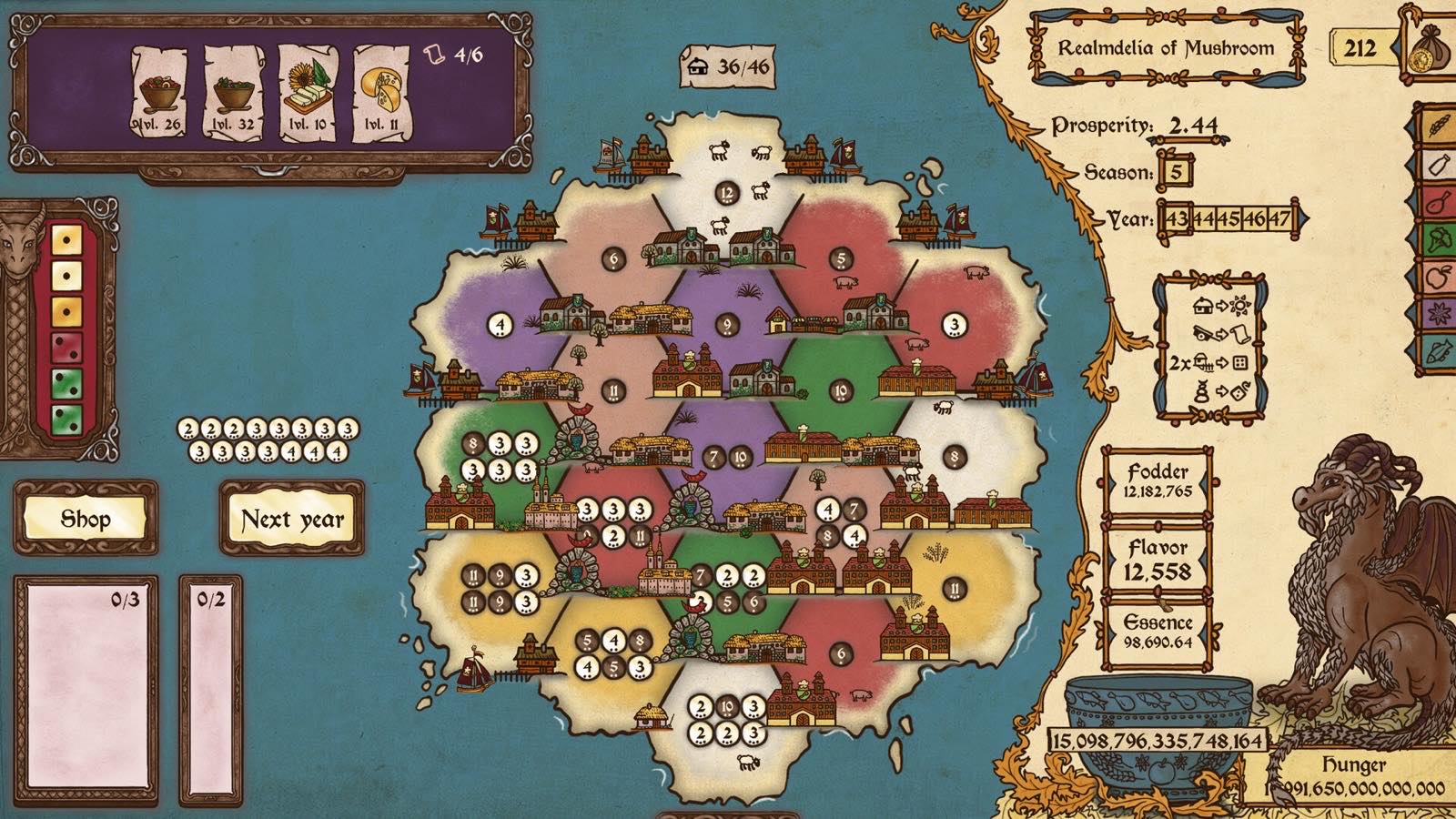
One official Feed the Scorchpot screenshot shows an island that has almost nowhere left to breathe. Farms, harbors, shrines, animals, and dice results cover the hexes. Beside them, the meal is split into three numbers: Fodder, Flavor, and Essence. Those values multiply into a pot worth more than 15 quadrillion, while the dragon's hunger waits below one quadrillion.
The remarkable part is not the size of the number. It is how many different kinds of work had to agree before the pot reached it. The island produces the base. Recipes decide whether that base stays dinner-sized or becomes dragon-sized.
A year begins with dice that activate the island. Farmsteads, shrines, and harbors change what the board produces, while recipes combine harvested ingredients into a meal. The Steam page separates that meal into Fodder, Flavor, and Essence, with the latter two multiplying the first.
The deadline keeps moving. The dragon wakes up hungrier each year, and a tantrum can burn part of the board. The official publisher page reduces the threat to one blunt possibility: one roll can end a run.
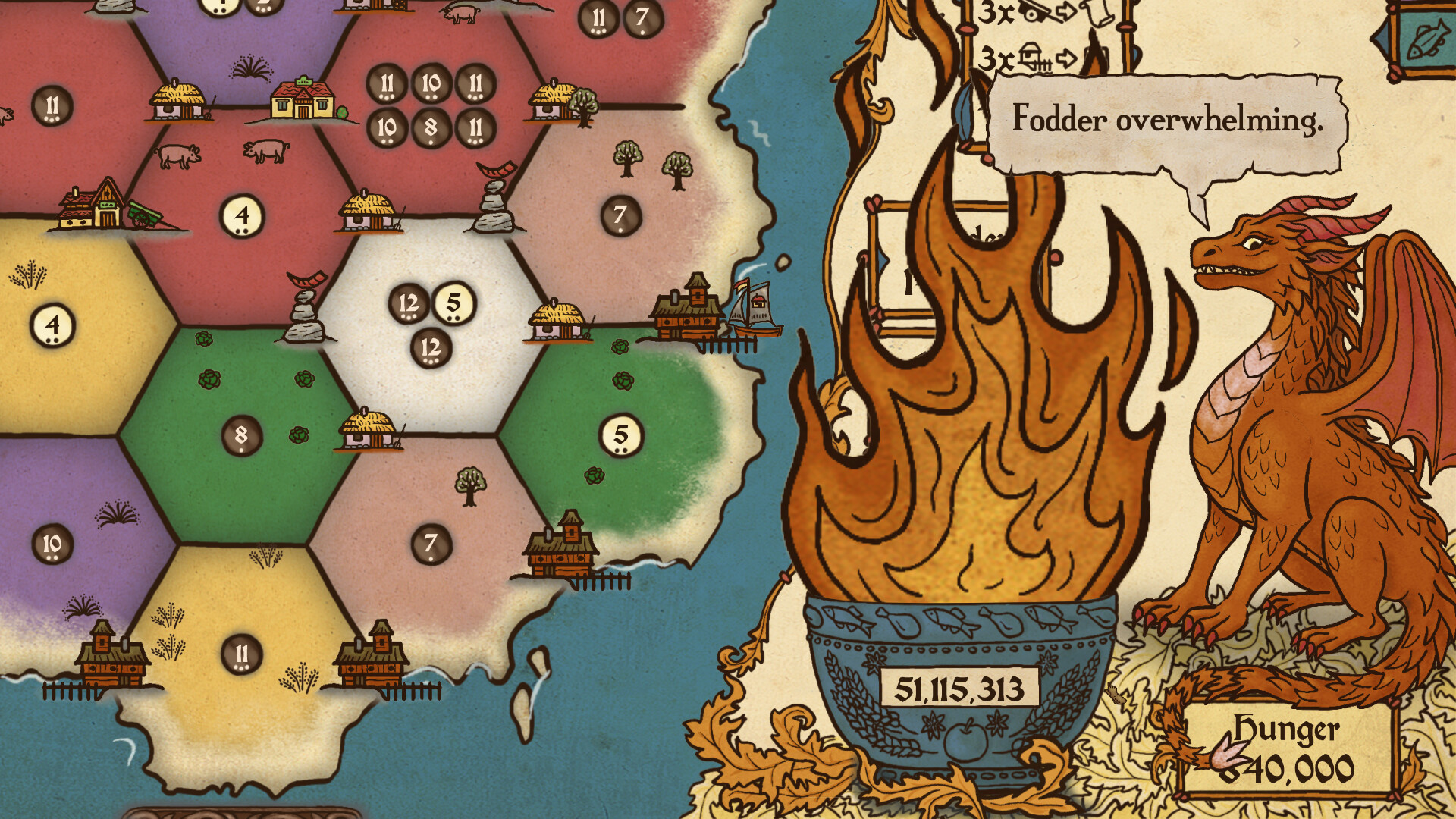
The island runs out of room before the score does
Reliable production is comforting in an engine builder. It is also dangerous design territory. If another farm always answers the next target, the dice only change how quickly the obvious plan arrives. A twenty-year contract needs early investments that feel sensible without remaining sufficient forever.
Pure volatility has the opposite problem. If survival depends on finding one enormous multiplier, the island may look strategic while functioning as a waiting room for the recipe that actually matters.
The developers describe buildings as the stable side of the economy. Farmsteads and harbors offer a predictable return on ingredients, but the board gives them a hard physical limit. Recipes carry stricter conditions and less certainty, yet their scoring potential can continue past that spatial ceiling.
That turns a shop decision into an argument about time. Ducats spent on a permanent structure make the next harvest safer. Ducats spent chasing a high-Flavor recipe may do less immediately, but they can multiply a mature island hard enough to meet a later appetite.
A recipe needs an economy worth multiplying
The two investments need each other. A recipe multiplier has nothing useful to multiply without a working island, and an island full of dependable buildings can still fall behind if it never finds another source of scale. Luck enters after planning rather than replacing it.
This also gives the dragon a better job than acting as a larger health bar. Rising hunger changes what counts as responsible spending. The farm that looked prudent several meals ago can become the reason the player cannot afford a risk now.
When caution becomes a disguised mistake
There is a narrow line between making caution insufficient and declaring it wrong. If the board ceiling arrives before players can read the recipe economy, a sensible farm-first plan may fail for reasons it never had a chance to anticipate. The punishment would teach hindsight, not strategy.
The reverse failure is just as plain. If one recipe family scales far beyond every alternative, buildings stop competing for space in interesting ways. They become raw material for a multiplier the player was always supposed to find.
Feed the Scorchpot should interest players who like building a tidy engine and then being told that tidy is no longer enough. For small developers, its useful question is uncomfortable: how long can the safe investment remain safe before the game asks the player to risk the economy that made survival possible?
Sources
Find Feed the Scorchpot on Steam
See current screenshots, system requirements, and release details.