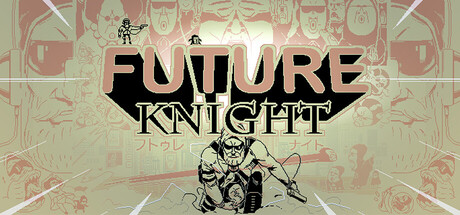
Two bodies, two empty meters
Future Knight pairs a gun-carrying robot with Two More, a small companion who can dash, climb, and fit through narrow spaces. The swap does more than change movement. Using Two More restores the robot's health; returning to the robot recharges Two More's energy.
Each body supplies something the other needs, so switching can become the basic rhythm of staying alive.
Future Knight fires heavy weapons, bites, and rolls through danger. Two More can be ejected for high-speed dashes, wall climbing, close-range fire, and small passages. The player can switch between them instantly during horizontal and vertical action stages.
Both appear inside a hand-drawn style based on calculators and old LCD handhelds. The official studio announcement describes their control as choreographic and presents the game as a collaboration between two independent teams.
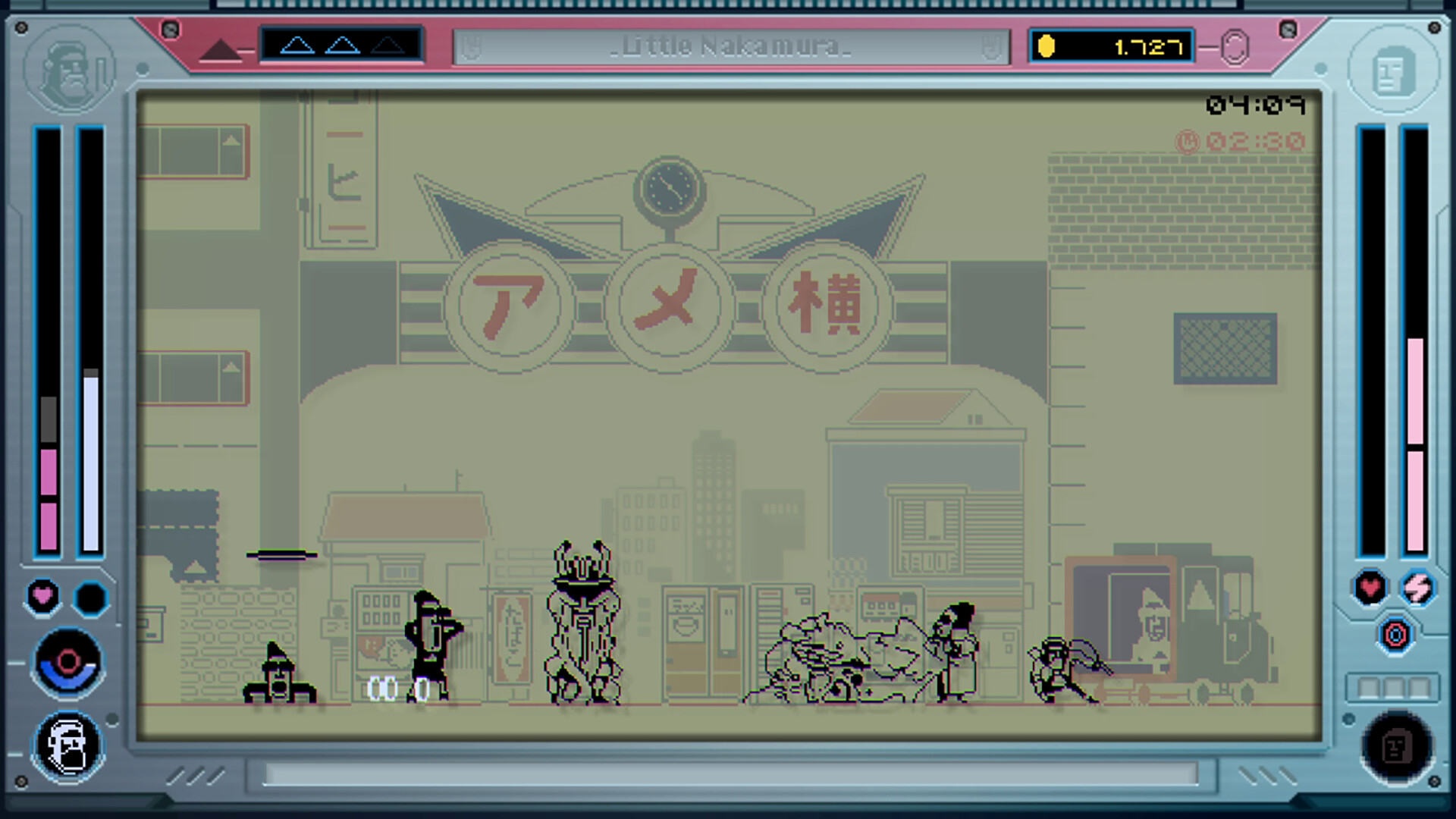
Switching needs a reason that survives preference
A second playable form can shrink into a utility item. The player uses it at the marked vent or special door, then returns to the character with the better general moveset. Instant switching exists, but the game rarely asks for an actual exchange.
Future Knight needs both bodies to matter during ordinary survival, beyond the obstacles built for one specific form.
Movement and recovery point in the same direction. Two More handles speed, walls, and tight spaces while repairing damage to Future Knight. The robot provides heavier offense and gives Two More's energy time to return.
That relationship can turn a resource shortage into a change of body. Instead of waiting behind cover for a meter, the player enters the other character's movement problem.
Recovery as choreography
The loop gives each character a reason to appear even when the level does not demand a specific traversal skill. Damage to the robot creates an incentive to use Two More; depleted energy sends the player back to the robot.
Different silhouettes and movement speeds may also make the exchange easy to read inside the unusual LCD-like art. The robot occupies space as the heavy body, while Two More moves as a smaller, faster mark.
Reciprocity can become compulsion. If one character feels much better to control, the recovery loop may repeatedly drag the player into the less enjoyable moveset. The relationship also depends on careful balance: generous recovery makes damage trivial, while slow recovery turns the swap into a waiting room.
Official footage and descriptions establish the roles and the resource exchange. They cannot verify switch responsiveness, balance, hitbox clarity, or whether the LCD-inspired presentation remains readable during dense combat.
Future Knight is for players who enjoy treating a character swap as part of movement and resource management. Players who want to settle into one stable moveset may resist a system designed to keep both bodies in circulation.
Sources
Find Future Knight on Steam
See current screenshots, system requirements, and release details.