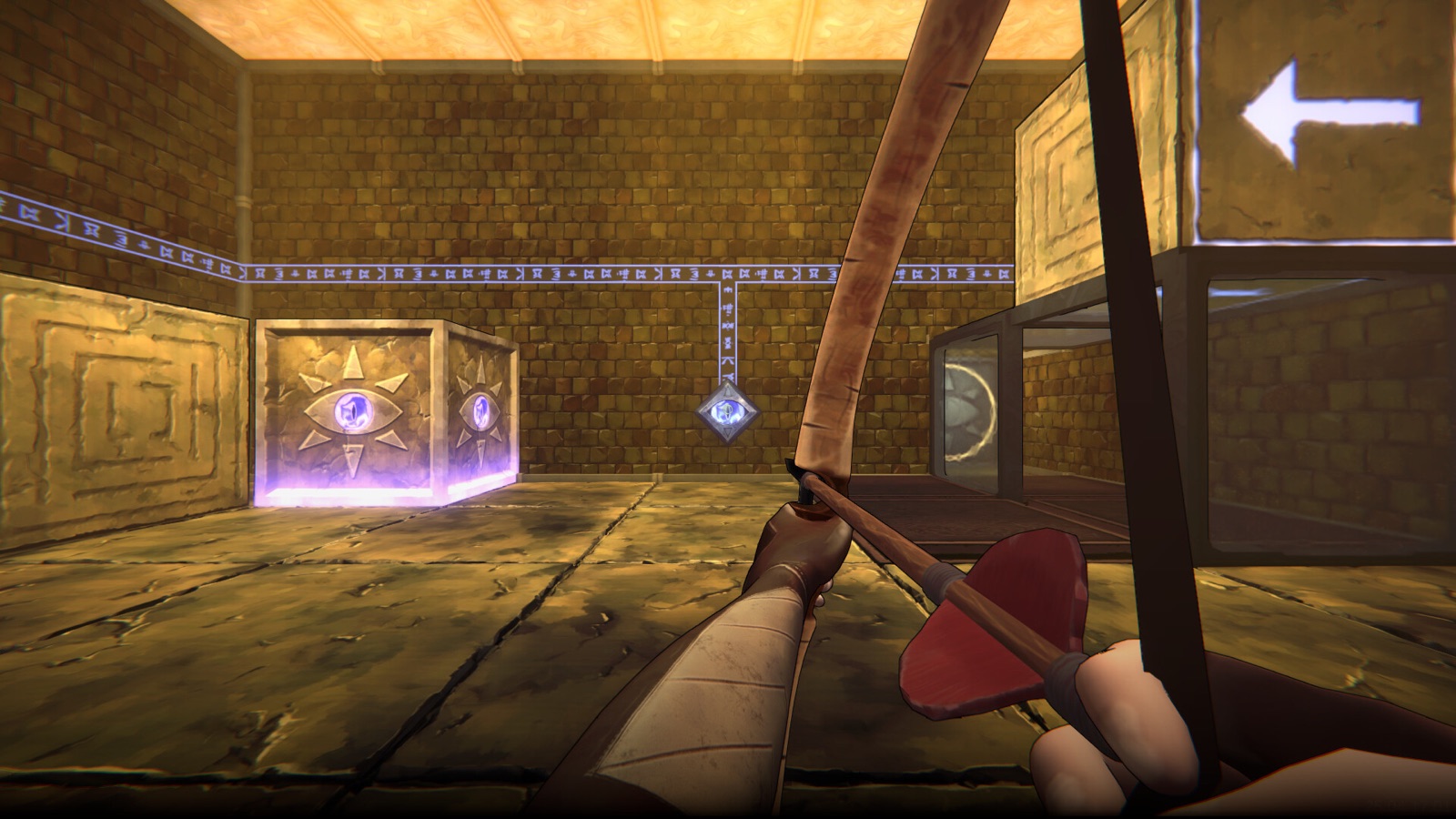
He Who Watches gives the player a bow and one magical arrow, then refuses to keep that arrow in a single job. It can open a door, move a block, activate a switch, or pull the player over a gap. Turn the room onto a wall and the same shot belongs to a different puzzle.
That overlap is the hook. A new chamber does not need to hand over a new gadget. It can ask whether the player has understood what the current gadget means from another direction.
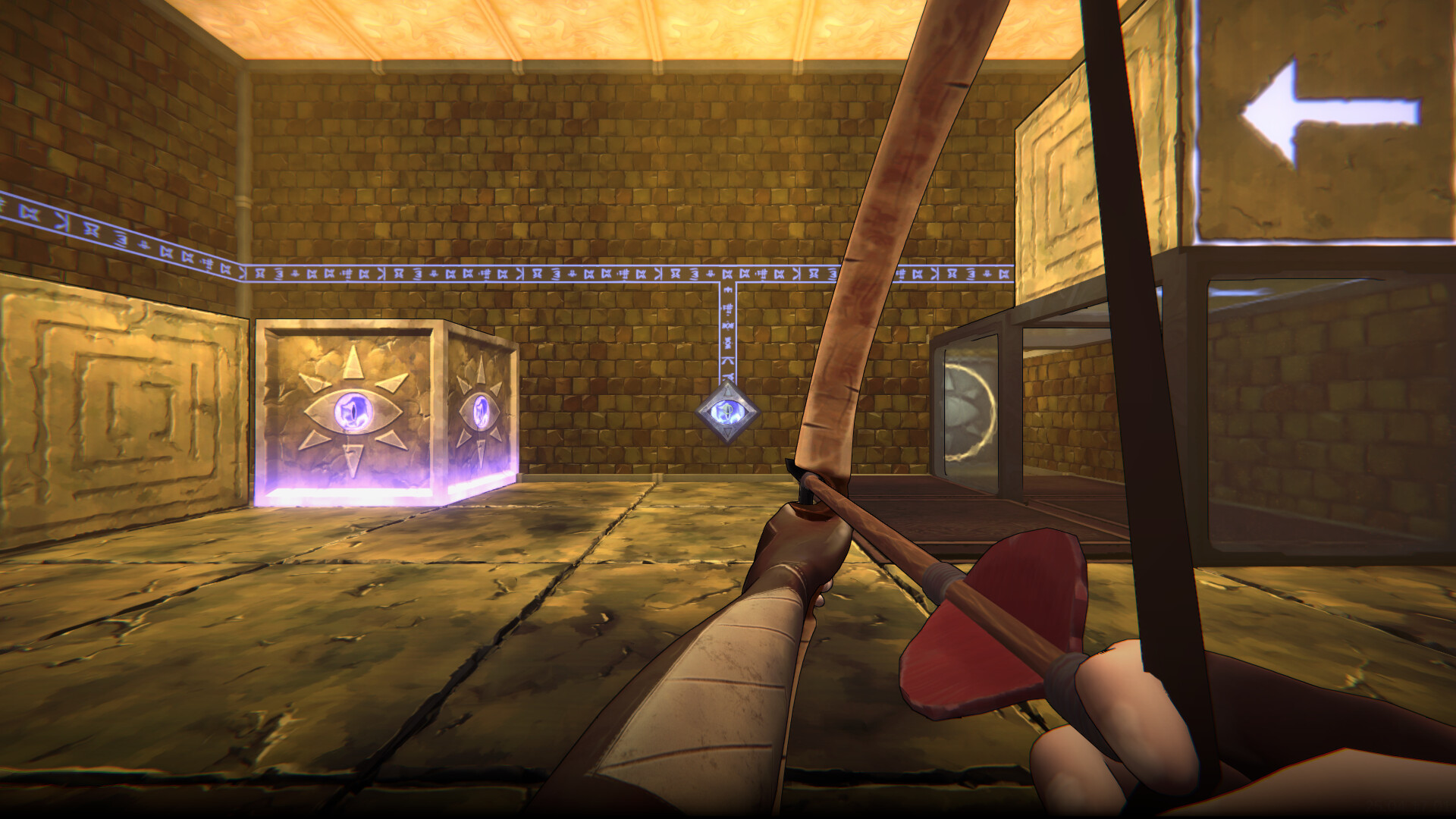
Official screenshots put the bow in the foreground and use bright lines, symbols, blocks, and direction markers to make the room's relationships visible. The Steam page describes walls and ceilings as walkable planes, with gravity shifts creating chain reactions between the player and environmental objects.
The release announcement keeps the same vocabulary: traverse walls and ceilings, shift blocks with the magical bow, and look for secrets beyond the main route. The game is scheduled for September 2, and a demo is available now.
One verb, several consequences
Gravity puzzles carry a built-in risk. A rotated room can look new while asking exactly the same question, or it can become so hard to read that the player checks every surface without a theory. Adding a separate device for every obstruction solves the clarity problem but replaces spatial reasoning with inventory matching.
A smaller vocabulary puts more pressure on level design. Each room has to reveal a new consequence of rules the player already knows.
He Who Watches makes the arrow the shared verb. The target changes what the shot does. A block moves. A switch fires. A door opens. A chain can pull the player. Gravity then changes which of those outcomes is useful and where the player will stand afterward.
This creates a useful dependency. Moving a block is not finished when the block reaches a marked position. Its new face or height may matter after the room turns, and the player's landing place may decide whether the next shot is possible.
One tool with several physical consequences can make a solution feel connected instead of assembled from locks. The player can form a sentence: move the cube so it becomes a platform after gravity turns, then use the chain to cross. Every part uses the same visible objects.
It also gives secrets a fair basis. A hidden route can reuse an arrow property or orientation that the main path already taught. Curiosity becomes a second reading of familiar rules rather than a hunt for an unannounced collectible command.
When a compact grammar becomes obscure
The arrow's flexibility needs sharp feedback. A failed shot might mean the target is inert, the angle is wrong, the current plane is wrong, or the player has not noticed a later consequence. If those failures look alike, the compact vocabulary stops feeling elegant and starts hiding its grammar.
The developer's May demo update says the hint system was improved and integrated more closely into the world. That is a revealing production choice. A puzzle game built around discovery needs help that can restore the player's line of thought without replacing the pleasure of finding the final move. The real test is whether those hints return a useful line of thought without giving away the move that follows.
This is for players who enjoy carrying one rule into an unfamiliar space and testing what changed. Players who prefer a large inventory of explicit tools may find the shared arrow too ambiguous. The design question worth watching is whether each room makes the next useful relationship visible before the player runs out of ideas.
Sources
Find He Who Watches on Steam
See current screenshots, system requirements, and release details.