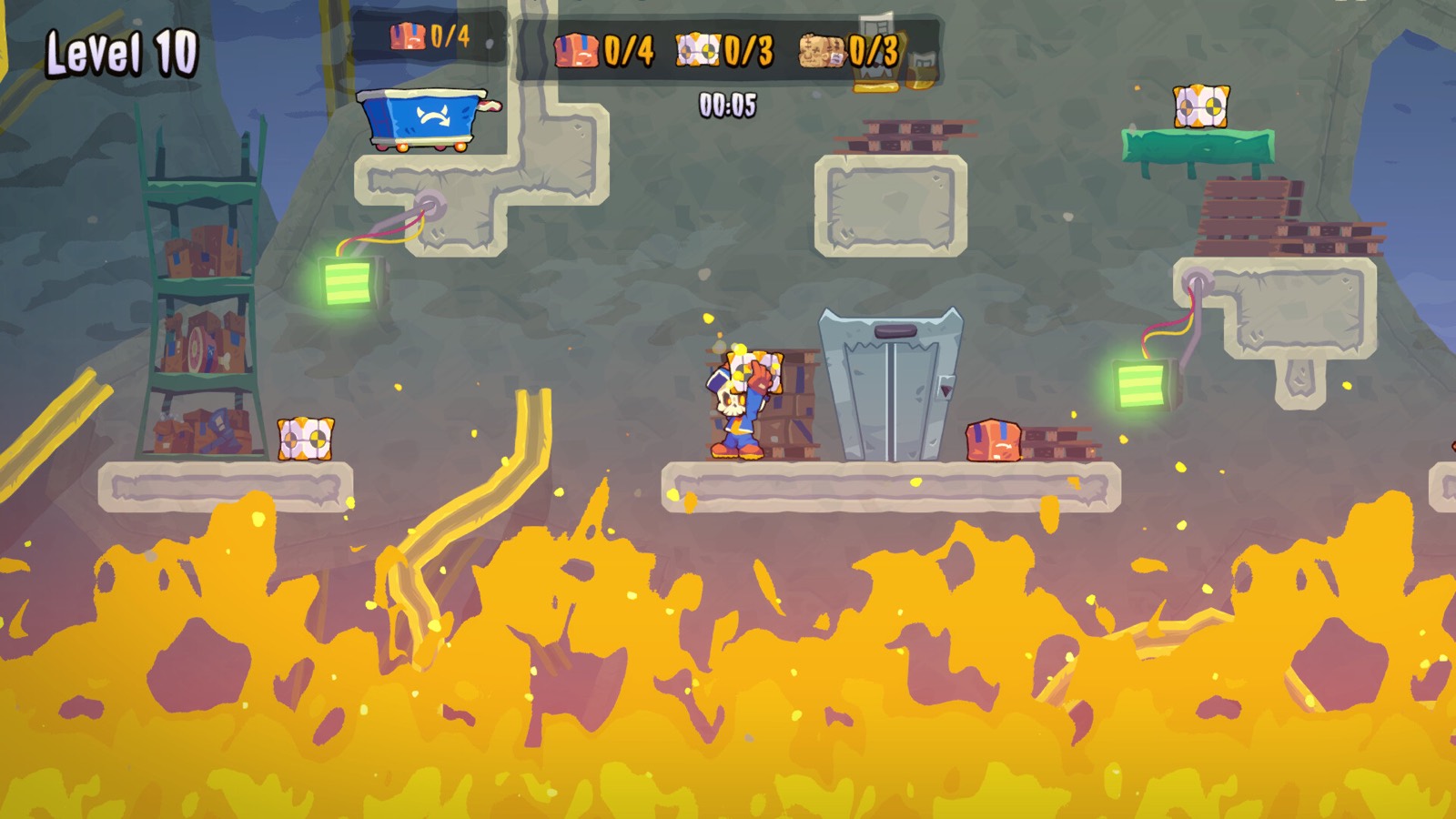
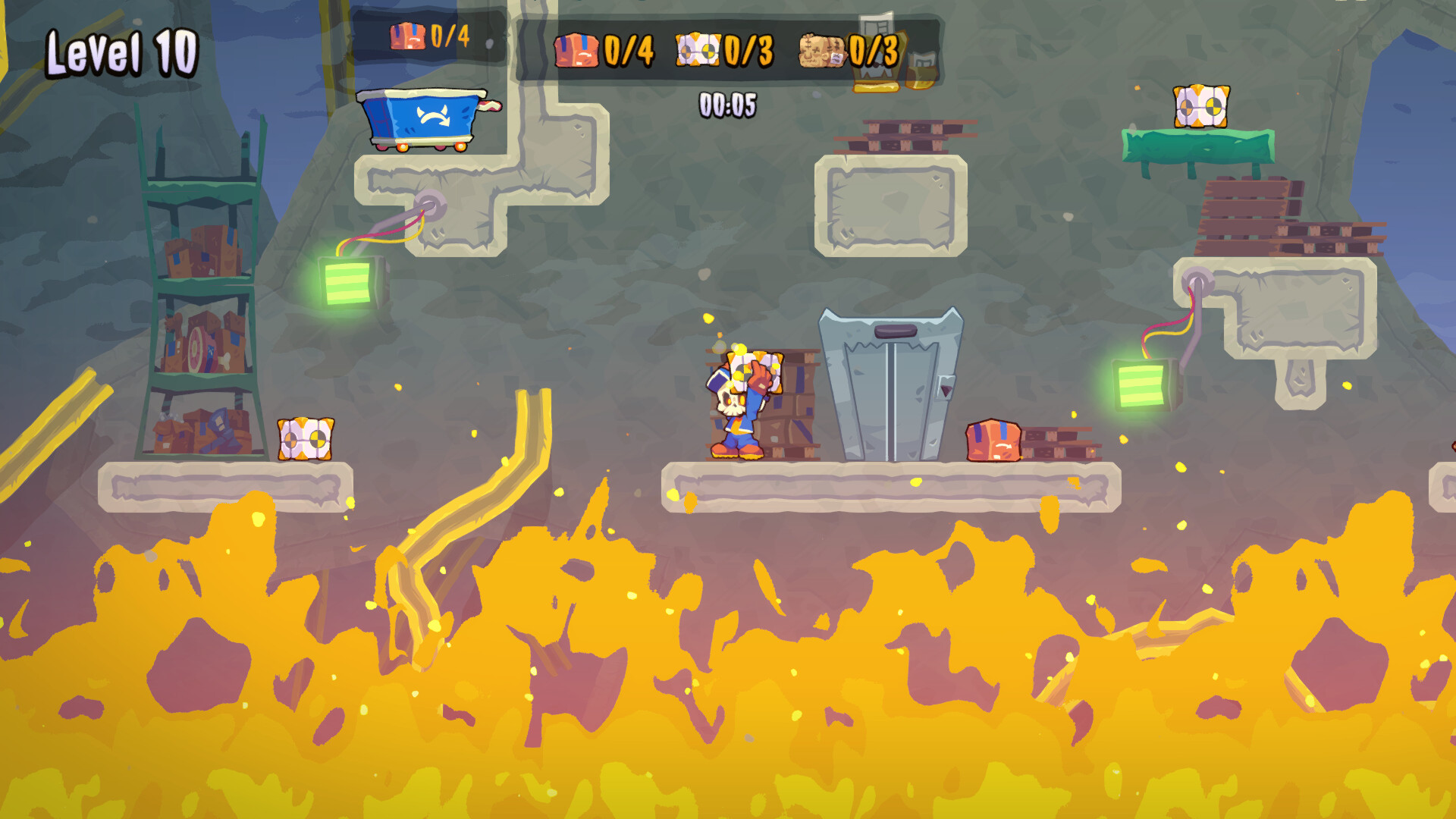
Level 10 of HELLBOUND INC is already asking for several things before the courier takes a step. A box sits in the character's hands. A timer reads 00:05. Four counters across the top are still empty, and more packages wait around the room.
That crowded little screen explains why this precision platformer needs more than a quick restart. The main delivery can remain brutal because the room also contains a smaller job worth attempting next.
The courier jumps while carrying packages through machinery, spikes, moving platforms, and other hazards. The Steam page describes 47 levels across eight circles, with delivery gauntlets, hidden collectibles, and instant respawn. Rewilder's game page also names time trials and limited-death challenges among the ways a room can be approached.
The package is not merely the prize at the exit. Game lead Abe Morales says the idea began by combining precision movement with puzzle logistics: the object being delivered also becomes the obstacle the player has to manage on the way there.
Fast respawn only removes the waiting
Instant respawn solves dead time. It does not solve the feeling of facing the same wall without knowing which brick to touch. A player can return to the start in a second and still have no better idea what the next attempt is for.
That distinction matters in a room built from carrying and jumping. Failure might come from the route, the package position, the order of actions, or the execution of one jump. A fast retry only helps when the player has a smaller question to bring into it.
Morales calls instant respawn the foundation, then identifies the more important intervention: small, achievable goals inside the level. Extra item quests, short dialogue moments, collectibles, and immediate objectives give the player something to investigate while the main delivery continues to resist them.
These goals change the size of the promise made by the next attempt. The courier does not have to believe the whole room will be solved. Reaching one package, testing one route, or discovering what one counter tracks can be enough reason to move again.
The side job has to teach the main route
A side objective earns its place when it sharpens the main route. Chasing another item can expose a safe landing. Carrying a package to an awkward corner can reveal how its weight or position changes the jump being planned. Even an attempt that ends in another death can leave the room less mysterious than it was.
This is a useful form of reward density for a small game. The level does not need to stop being difficult or produce a new spectacle after every failure. It needs several nearby discoveries that reuse the same space, objects, and movement rules.
The counters can also pull the room apart. If an item quest is only a collectible detour and the dialogue is only a consolation prize, the player may clear a list without understanding the delivery any better. The smaller wins start competing with the larger one instead of making it readable.
HELLBOUND INC therefore has to connect its density to the puzzle. A package, hidden object, or alternate challenge should make the player look at the room differently. Otherwise instant respawn remains the only thing carrying knowledge from one failed shift to the next.
Give the next attempt a smaller promise
This structure should appeal to players who enjoy difficult platformers but need a concrete experiment between full solutions. Developers working on high-failure games can ask a stricter question than how quickly the game restarts: after the restart, what smaller victory does the player now know how to chase?
Sources
Find HELLBOUND INC on Steam
See current screenshots, system requirements, and release details.