
In most war games, artillery is a promise made with a cursor: click here, wait, watch the explosion. IRON NEST stretches that promise back into a job. The player receives an order, reads the terrain, works through the calculation, sets a heavy gun, and lives with the result.
Its realism is aimed at the gap between intention and impact. That gap is where the game puts the player.
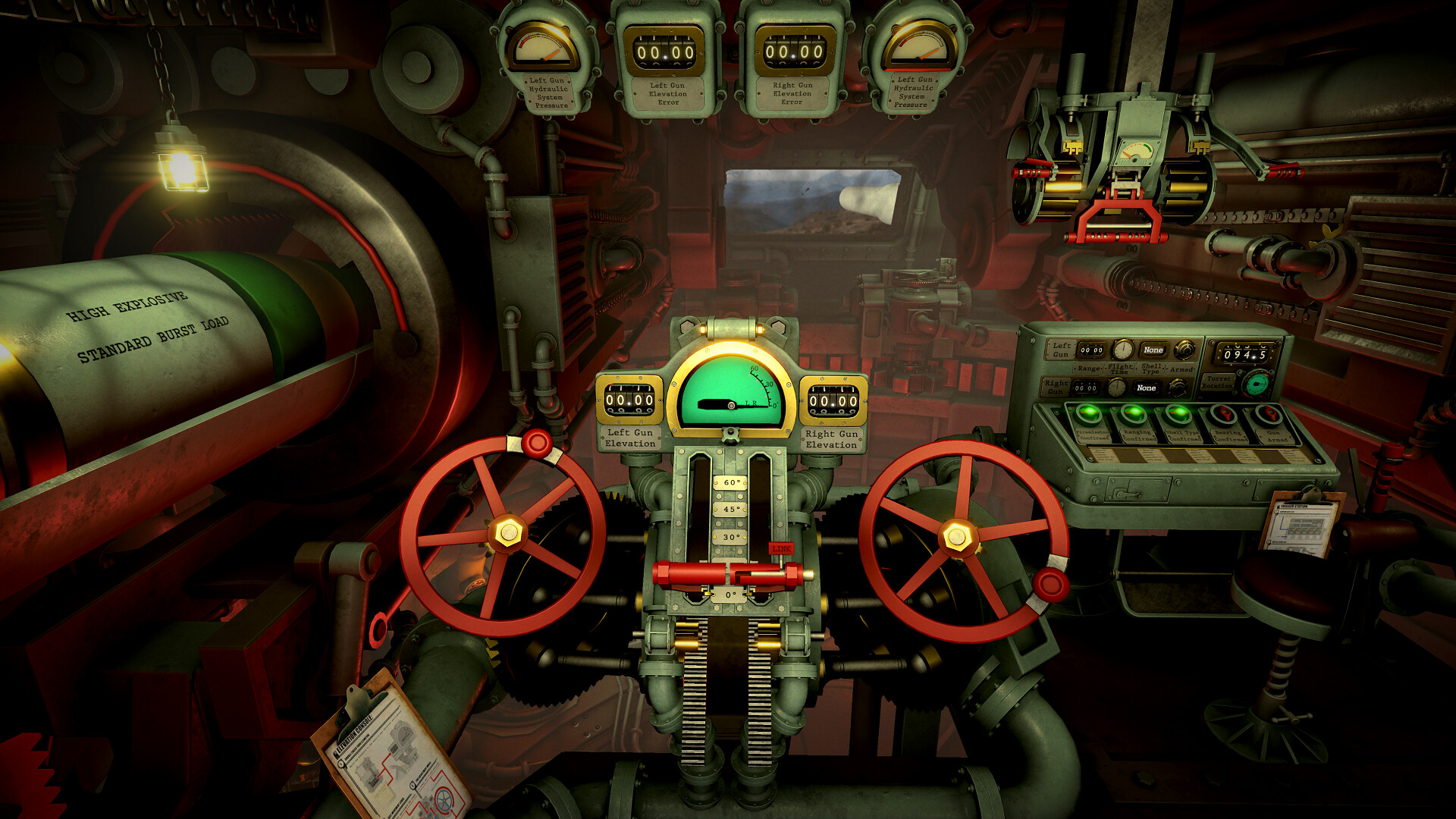
An order arrives with intelligence and aerial photographs. The player takes measurements from a map, works with a ballistic calculator, selects a shell and charge, raises the gun to the required elevation, and waits for machinery that does not move at the speed of a mouse pointer.
The official description also says damage remains on the battlefield. A later order can send the player back to a place already marked by earlier fire.
Power through paperwork
Long-range weapons are difficult to make legible. The target may be kilometres away, the crew may never see the people on the ground, and much of the real work happens before the dramatic moment. Compress everything too far and artillery becomes a special effect with a timer.
IRON NEST needs the player to understand why a distant explosion belongs to this particular order and this particular sequence of decisions.
Maps and numbers establish where the shot comes from. Ammunition and charge selection make the firing solution specific. The player then has to move a slow machine into position. After the shot, damage stays on the landscape.
No single step carries the whole idea. The effect comes from having to complete all of them before the target changes.
Routine is the design and the danger
A shell may feel less disposable after the player has done the work required to place it. Returning to a damaged location can reinforce that connection without adding a morality meter or a cutscene.
Practice also has somewhere to show. The player can read a map faster and need fewer corrections instead of waiting for the game to award a stronger gun.
Ritual gains meaning through attention, but repeated ritual can become clerical work. If one correct process solves too many objectives, the calculation may stop feeling like judgment and turn into data entry. More than 30 ammunition types and procedural objectives can vary the work, but that only matters if objectives demand different calculations and ammunition choices.
Slow rotation works when the delay gives the player time to anticipate the shot. It drags when the next decision is already obvious.
IRON NEST is for players who enjoy machines as systems to learn and who are willing to let procedure carry part of the drama. Anyone looking for immediate battlefield spectacle may find the distance between order and impact to be the point they least enjoy.
Sources
Find IRON NEST on Steam
See current screenshots, system requirements, and release details.