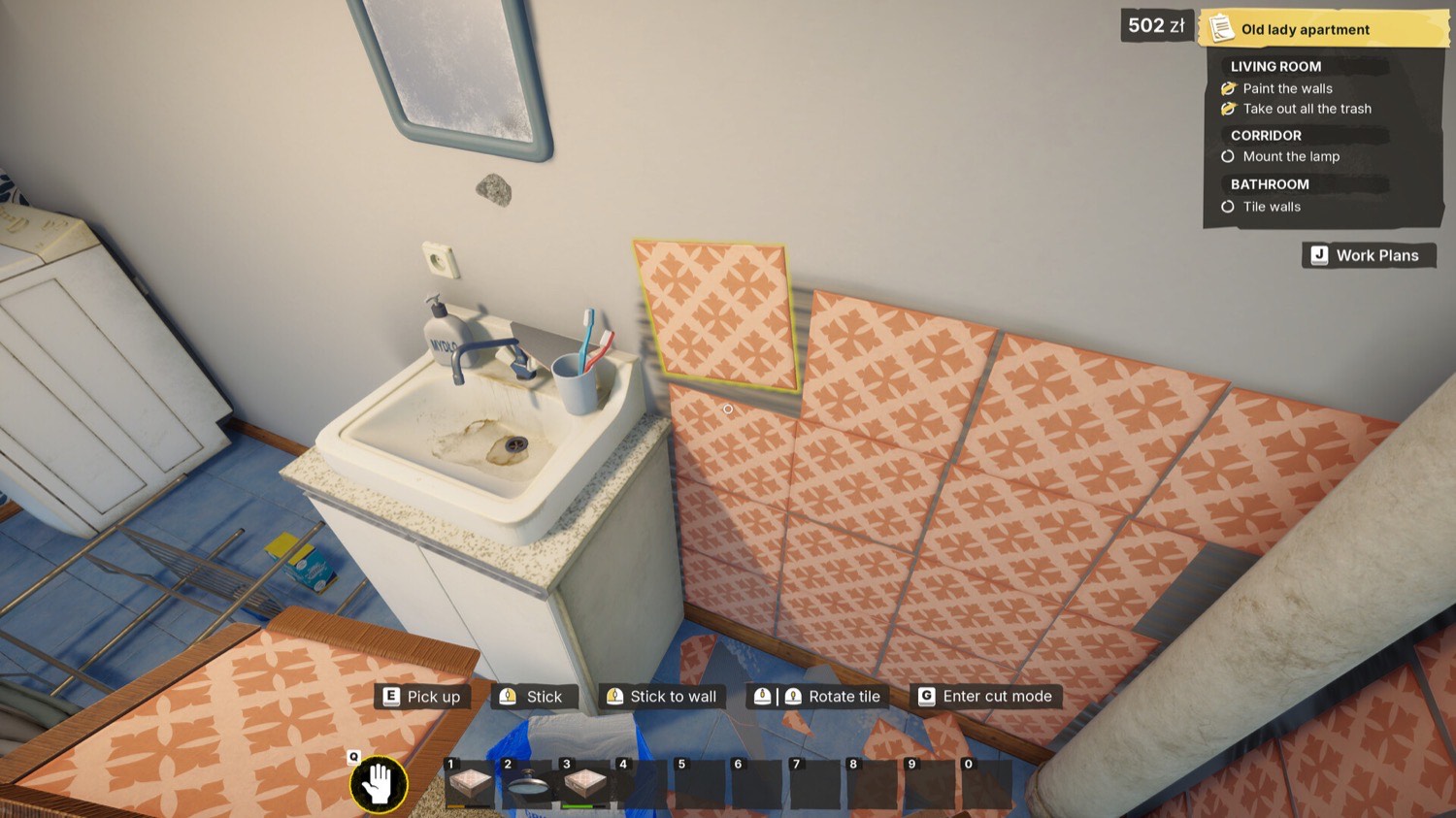
Most renovation games make the clean finish the reward. Low-Budget Repairs begins with a less respectable question: how much of the job can you avoid doing before the saving turns into a problem? Water down the paint, skip the level, buy the tool that may survive only a few hits. The rough result is not merely a joke pasted over ordinary renovation. It is the thing being priced.
Chaos by itself does not create a decision. A crooked tile is funny once. It becomes a game when the player understands why it was left crooked, what the shortcut saved, and who might notice.
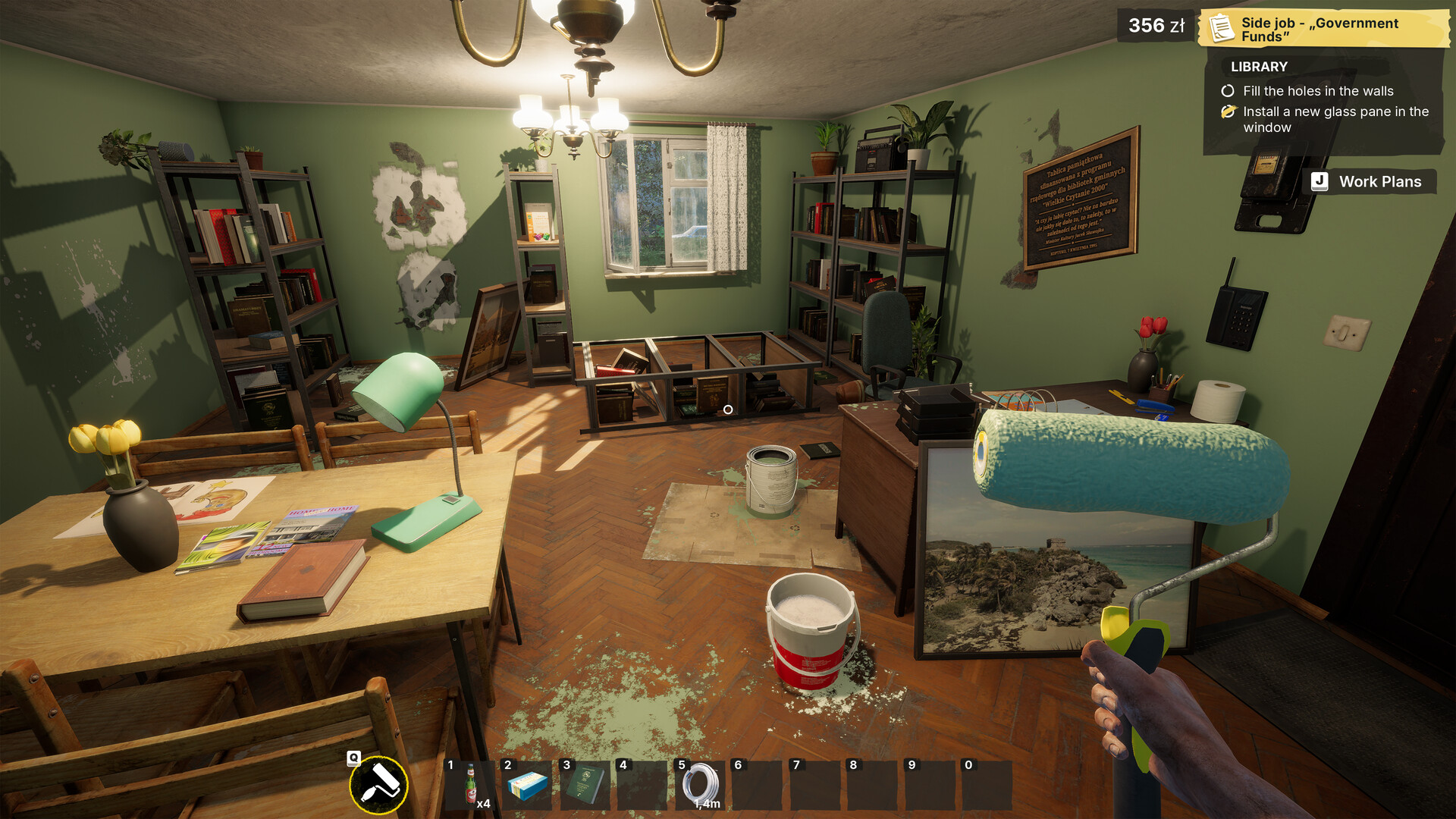
Steam's examples are blunt about the available compromises. Paint can be diluted to cover more wall. Tiles can go up without a level. A cheap hammer may fail early. Furniture that does not fit through a door can leave through the window instead. Screenshots keep the workmanship visible, down to tile gaps, peeling walls, loose rubbish and a contract checklist sharing the view.
Gray2RGB's development diaries push the idea beyond a list of gags. Thin adhesive needs duct tape. Scraps can be kept. Rubbish can be carried downstairs, hidden behind furniture, swept under a rug, or thrown outside. Pattern mismatches may be concealed behind a wardrobe. Measuring tools are useful when the client is watching. Each bad method has a place where its weakness can be seen.
A shortcut needs a visible saving
A simulator about doing poor work could collapse into a toy box of failure animations. Press the wrong button, watch the room break, move to the next gag. That gives the player permission to make a mess but little reason to prefer one mess over another.
The stronger design problem is how to make negligence intentional. A shortcut needs a benefit that arrives now and a compromise that stays in the room. The player should be able to point to both before deciding whether a client, a later task, or the repair itself will expose the bargain.
Low-Budget Repairs ties its comedy to materials, time, visibility, and money. Watering paint stretches a limited supply while weakening the colour. Using less adhesive saves some for another job while making the tile unreliable. Covering a hole is faster than filling it, but only while the cover remains in place. Hiding waste saves the trip to the dumpster and leaves evidence inside the apartment.
Those relationships let ordinary objects carry the economy. A bucket, tile, cable, rug, cabinet, and window are not separate minigames waiting to be completed correctly. They are places to decide which standard of work the current job can afford.
When bad work becomes the obvious answer
This can make slapstick readable. The player is not laughing because the physics selected a random disaster. The joke grows from recognising the plan: the cabinet will not fit, the window is open, and throwing it is cheaper than solving the doorway. The failure is visible before it happens, even if the exact landing is not.
For a small team, the rule can also multiply the value of one renovation system. A tile tool supports careful alignment, cheap coverage, concealed gaps, wasted material, and a client complaint without requiring five unrelated activities. The variety comes from the standard the player chooses to meet.
The economy has to resist one obvious answer. If every shortcut reliably keeps the profit, then the title has already solved the work: always buy cheap, hide everything, and leave. Client scrutiny, cascading repairs, material limits, and visible defects need enough weight to make a corner worth considering rather than automatically cutting.
Random punishment would be just as weak. A tile falling later is useful only if the player can connect it to the adhesive, placement, or support chosen earlier. Whether the release build explains those consequences consistently will decide if the shortcuts feel risky or arbitrary.
Players who enjoy messy physical comedy may find more to hold onto when the bad work has a plan behind it. Players who want precise decorating may resent a game that keeps asking what they can get away with instead of rewarding perfection.
For developers, the test is practical. A comedic shortcut needs to save a resource and leave a compromise the player can see. It also needs a later event that might reveal the bargain. Without that connection, the shortcut is only a punchline.
Sources
Find Low-Budget Repairs on Steam
See current screenshots, system requirements, and release details.