A card can be free and still not fit
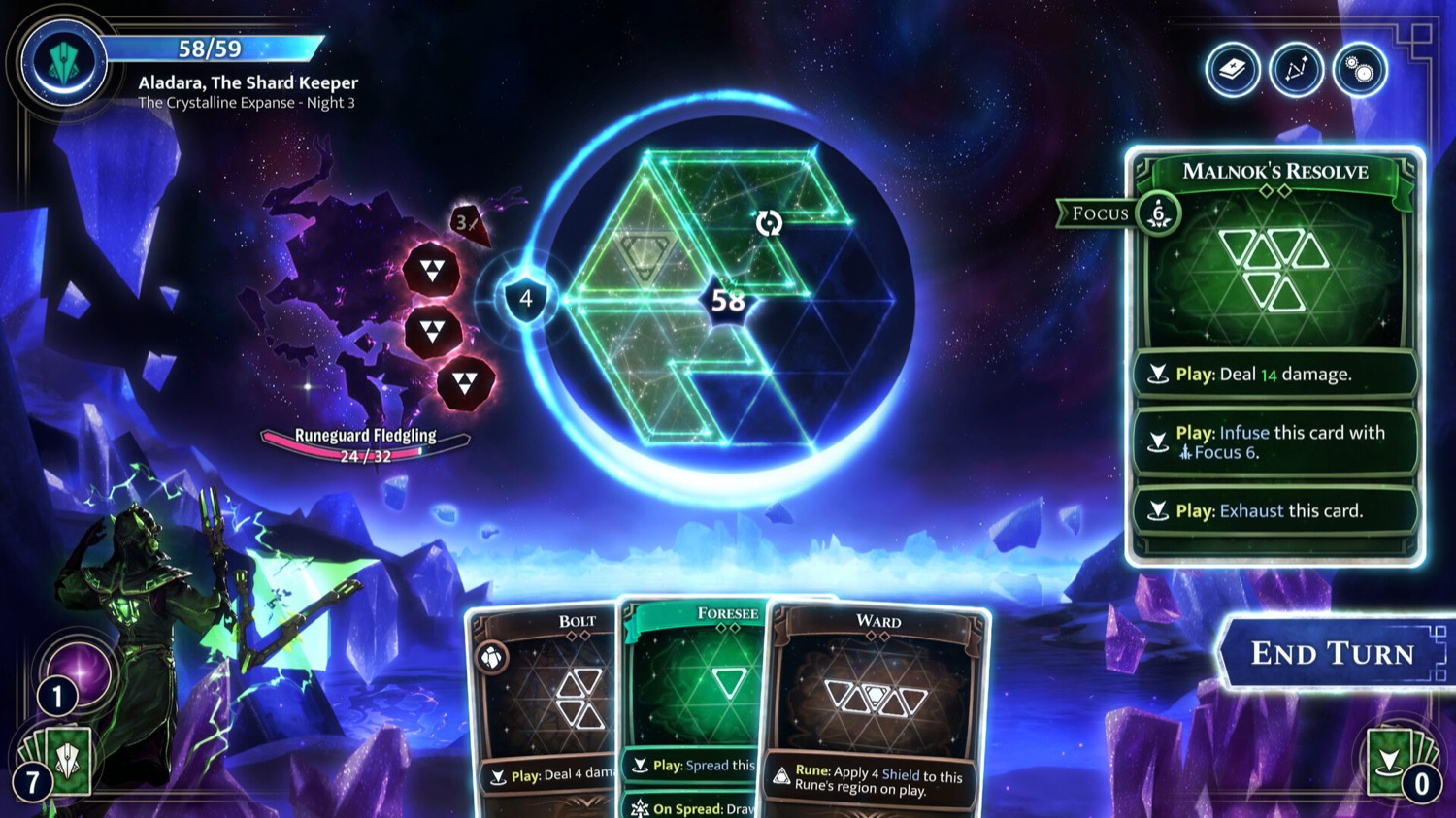
Moonsigil Atlas lets a player hold a playable card and still be unable to play it. The missing resource is not energy. It is an empty arrangement of triangles on the moon-shaped grid.
That changes the first question of a combo. Drawing the pieces is not enough. The player has to preserve a shape in which those pieces can exist together.
Every card is a sigil with its own arrangement of tiles, keywords, and effects. The grid fills with connected shapes while the hand remains available below it. Cards can benefit from adjacency, overlap, runes, and persistent effects. Titans and hostile zones can reshape the board itself.
The upgrade system can remove tiles, add runes, apply keywords, or swap shapes between cards. The post-launch Accumulate update adds another version of the same tension: players can load keywords and runes onto a Singularity card, then use the bonuses immediately or hold them for one larger attack.
The grid has to replace the energy meter
Energy normally performs two jobs in a deckbuilder. It limits how much happens in one turn and gives expensive cards a reason to be stronger. Remove it without adding another pressure and the correct turn may be to empty the hand whenever possible.
Moonsigil Atlas still wants combinations large enough to feel excessive. Its limit therefore has to interrupt a sequence without reducing every card to a number beside its name.
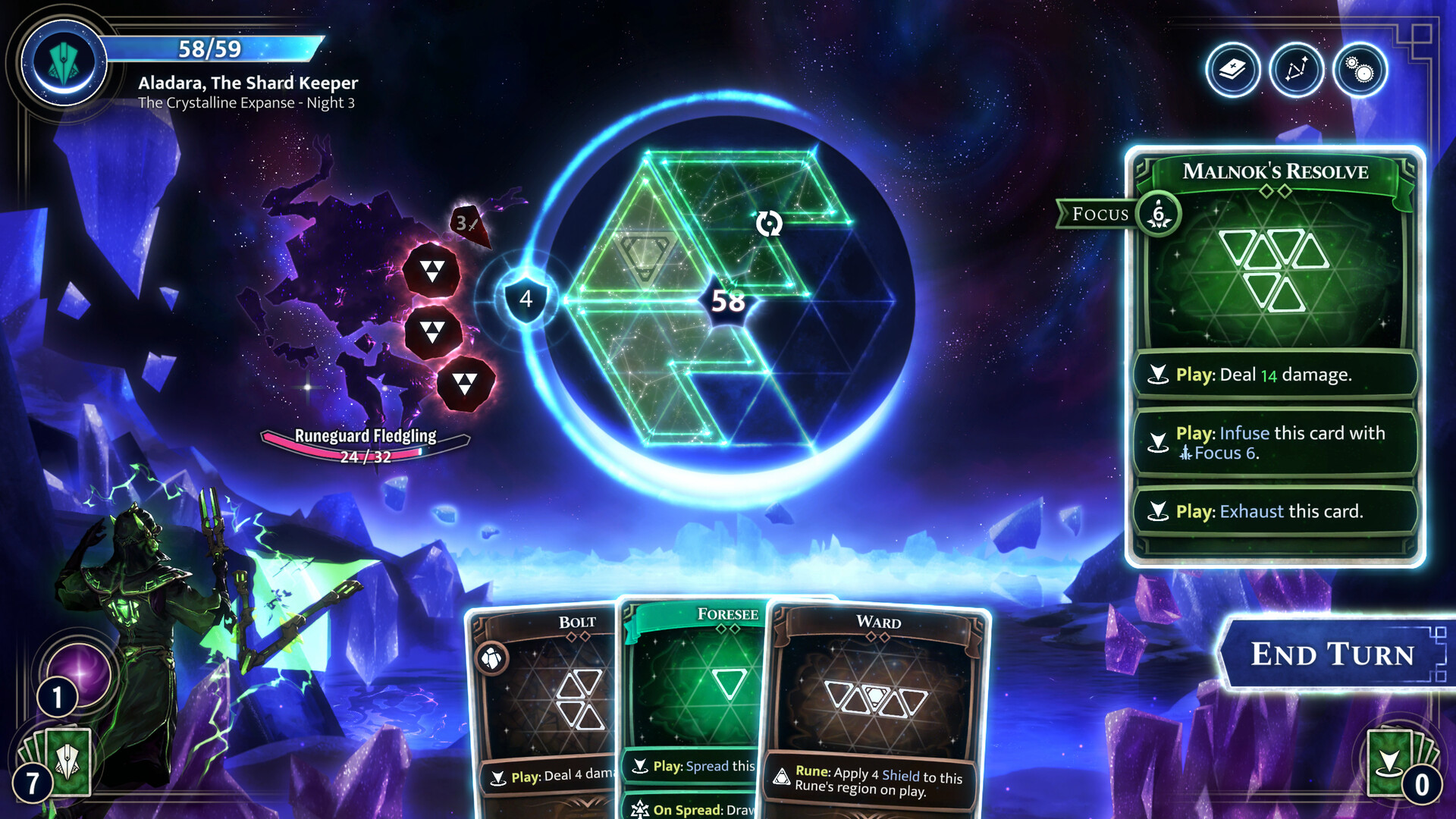
Physical space becomes the bill. A wide sigil can block several later placements even when its effect is useful. A narrow card may preserve a pocket for another play. Adjacency and overlap complicate that economy because the best location for one card can also be the location a second card needs.
Reshaping a card is more than a discount. Removing one tile can open a route through the board. Swapping shapes can move an awkward footprint onto an effect worth building around. The deck and the grid keep negotiating with each other after the card reward screen closes.
Combo setup begins before the final card
This gives combo setup a visible failure check. If a sequence stops, the problem may not be card draw or damage. The board may have been packed in an order that consumed the only useful gap. A player can look back at the shapes and identify where flexibility disappeared.
It also lets enemies attack the build without discarding the player's cards. A hostile zone or shifting grid can make a familiar footprint expensive, forcing the same deck to find a different arrangement.
When packing slows the turn
Packing can become paperwork. When several legal placements differ by one triangle, a powerful turn may pause for repeated fitting instead of moving toward a clear commitment. If compact shapes are consistently easier to combine, the spatial system may also create its own safest card profile.
The rules offer several ways to reshape cards, but a crowded board still has to produce a fresh decision rather than a long search for the only legal fit.
Players who enjoy planning a combo as both a sequence and a layout have a clear reason to look at Moonsigil Atlas. Players who want card play to resolve quickly may find the extra packing step intrusive. Its sharper idea is not simply the absence of an energy meter. Empty space explains why the next good action does not fit.
Sources
Find Moonsigil Atlas on Steam
See current screenshots, system requirements, and release details.