Most tycoon upgrades make the same job faster. OFFBEAT's stranger instruments change what the player can compose.
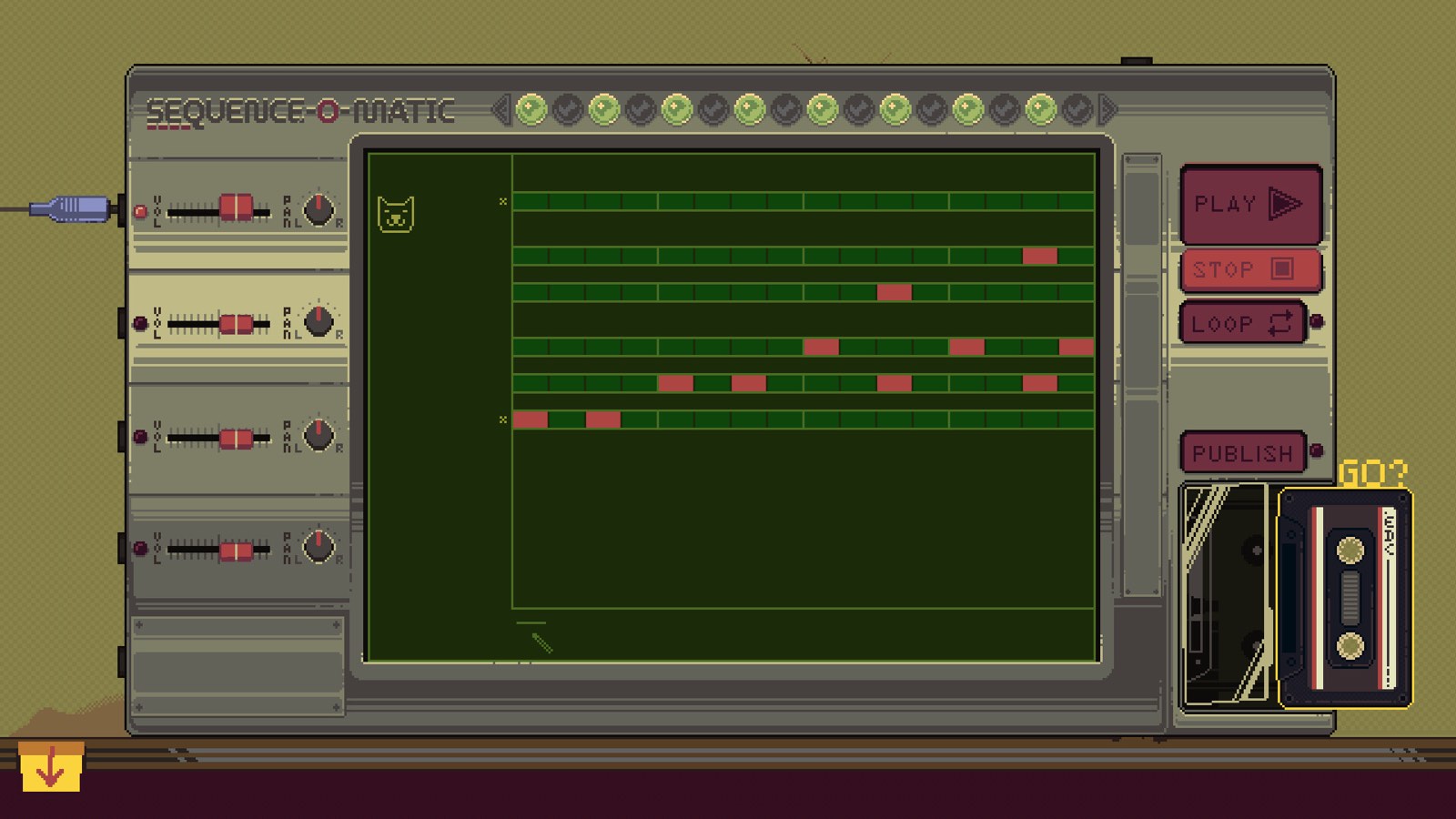
Jobs lead into a four-track sequencer, and the finished track leaves the game as a WAV file the player can keep and use. The management loop ends with an artifact rather than a score alone.
The player begins as a jobbing composer with a toy keyboard and a four-track Sequence-o-matic. Commissions ask for music for weddings, workout videos, corporate presentations, films, and other clients. Cash from those jobs buys new sound-making objects through a second-hand catalogue, including singing garden gnomes and devices that shred sound as well as paper.
An official screenshot shows four sequencer lanes, steps placed along a grid, play, stop, loop, and publish controls, and a cassette beside the machine. The official pages say the instruments are simulated, the resulting audio is real, and tracks can be saved locally as WAV files.
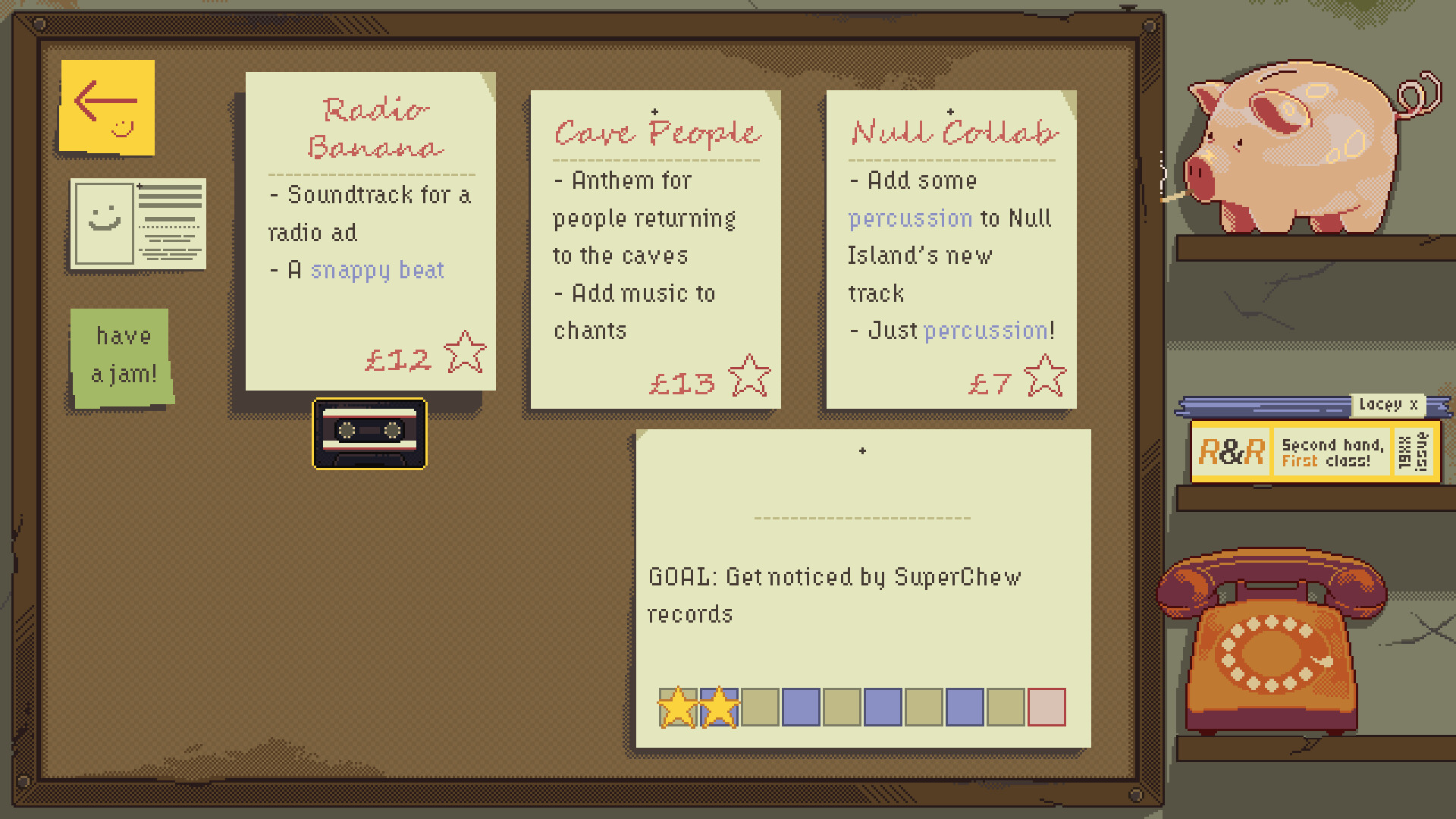
A brief has to start the song, not write it
A beginner opening music software has to answer too many questions at once. What should the track be for? Which sound belongs in it? How long should it run? What does each control change? A blank timeline offers freedom, but it gives no reason to place the first note.
A management game can avoid that problem by reducing composition to a menu choice. That makes the economy easy to read, but it also removes the creative work that the studio is supposedly selling. OFFBEAT needs the brief to start the player without composing on the player's behalf.
Client jobs supply a small purpose, then the sequencer leaves the musical answer to the player. Progression adds instruments and effects rather than replacing composition with a higher production stat. A purchase changes the sounds available on the next grid.
The July Early Access scope post listed seven musical objects across two chapters, with more instruments, chapters, and features planned. It also confirmed WAV export and said players own the rights to what they create. The post separates the launch set from the roadmap instead of presenting every planned feature as available.
A brief can remove the blank-page question without removing authorship. The player has a client and a purpose, but still has to decide where notes land, which sounds share a track, and what the finished piece should become.
The upgrade loop can also become audible. Each new object adds a sound that can alter the next composition and steer the player toward a different rhythm or texture. Export gives that experiment a life outside the save file, even if the player only sends it to a friend.
When creativity meets a grading rubric
The job requirements have to be specific enough to guide a beginner and loose enough to accept personal answers. OFFBEAT's first hotfix amended several jobs whose requirements were confusing. That change shows how easily a creative prompt can become an interface riddle.
If a commission expects one hidden pattern, composition becomes a search for the rubric. If almost any result passes, the money and reputation layer may stop explaining why one job differs from another. The present briefs, seven-object launch set, and sequencer will have to prove that balance over time.
OFFBEAT is likely to suit players who are curious about composing but find conventional audio software difficult to approach. It may also interest tycoon players who want to make the product their studio sells. Experienced producers looking for a full digital audio workstation, or management players looking for a deep economy, may want to follow the Early Access updates before deciding whether either side is substantial enough.
Sources
Find OFFBEAT on Steam
See current screenshots, system requirements, and release details.