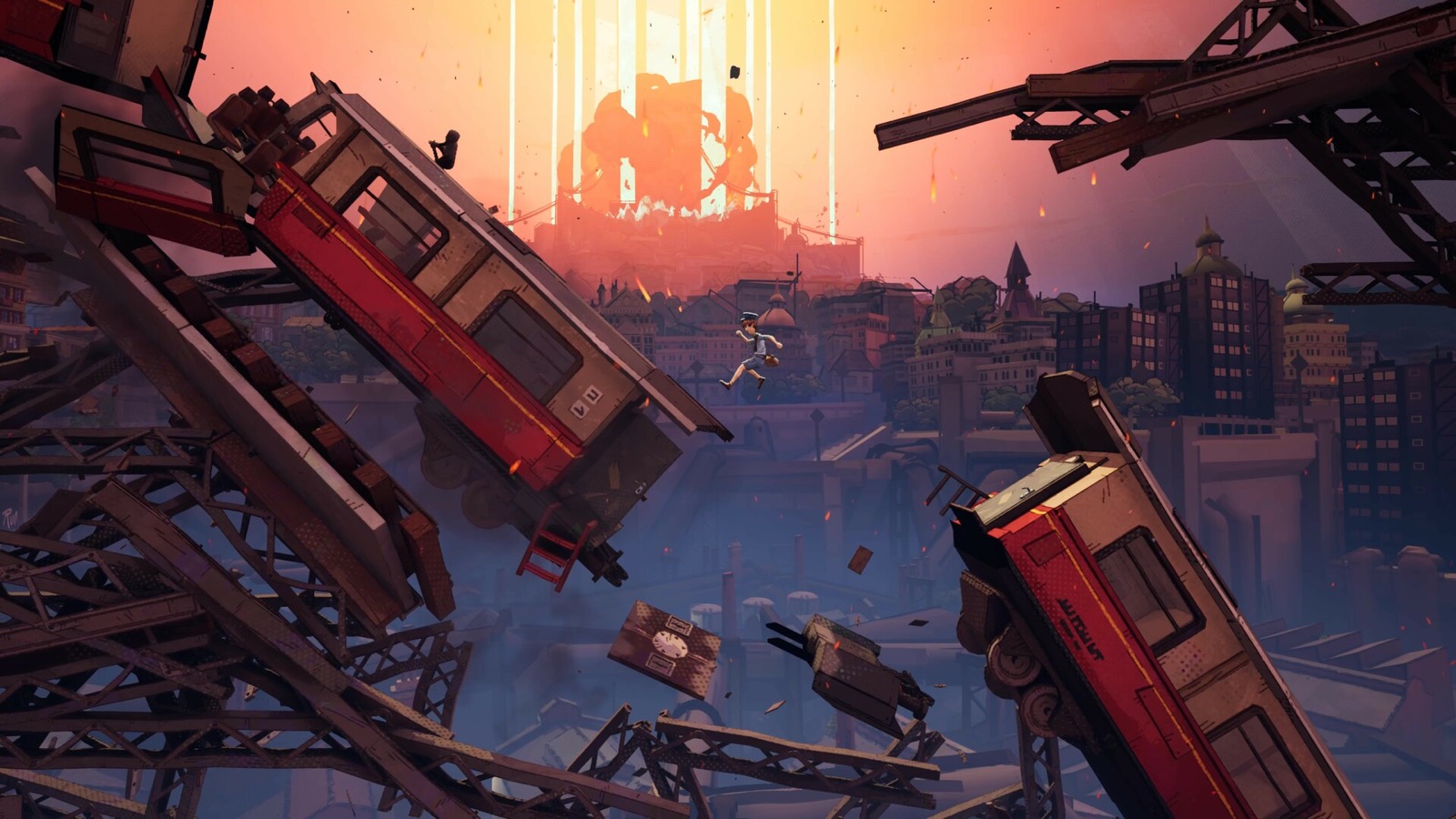
RECUR gives a time machine to a mail carrier, then hides most of its controls in ordinary movement. Walk right and the disaster advances. Walk left and the scene rewinds. Move into or out of the screen and time holds still. The same input chooses where Peter stands and when the surrounding world exists.
A separate rewind button would let the player fix time without moving Peter's body. RECUR refuses that convenience. Backtracking is the rewind, so correcting an event also changes the place from which the next attempt begins.
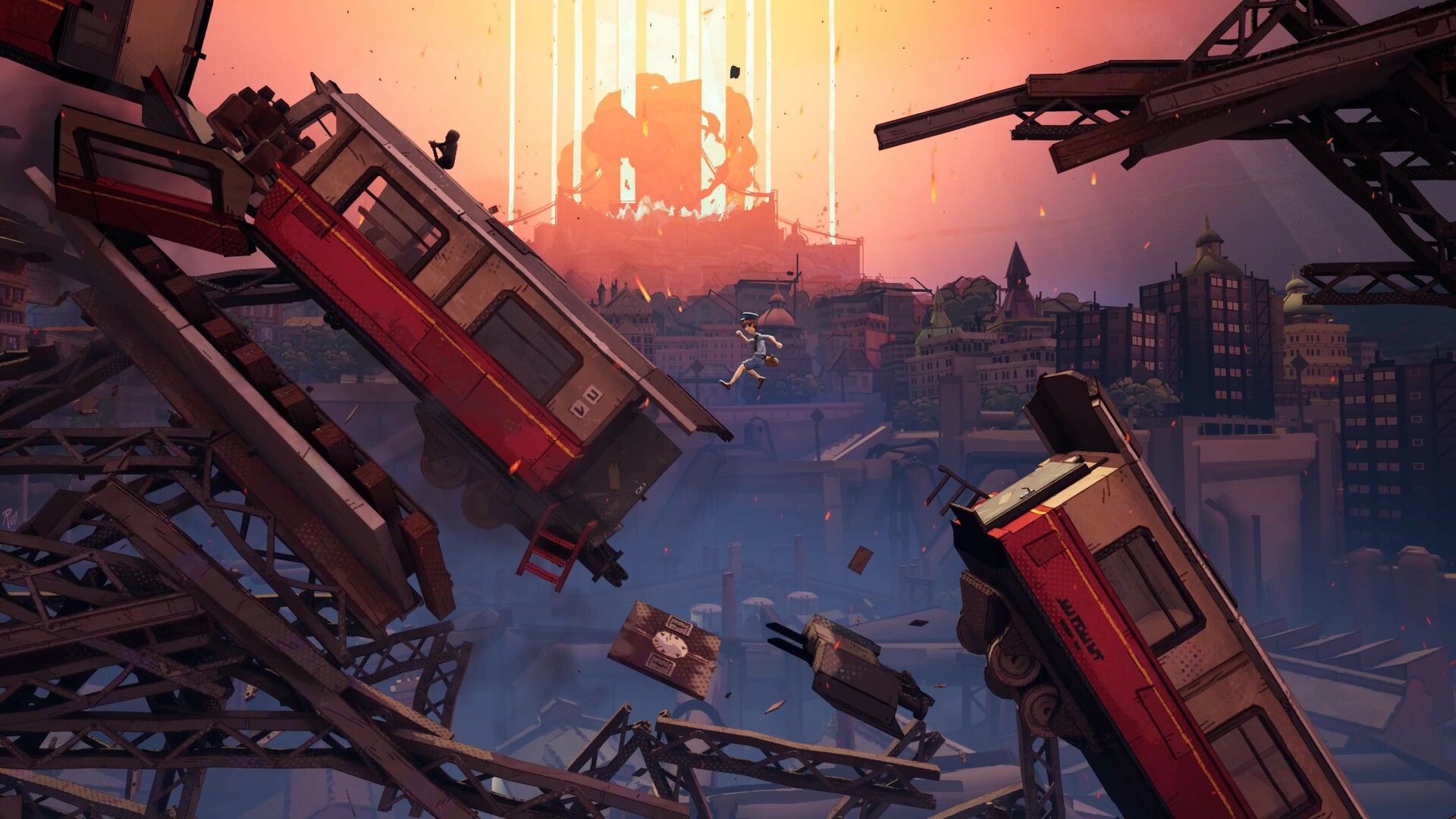
Peter crosses a city that is coming apart around him. A warehouse collapses. A train falls from a bridge. kaleidoscube wants the rule to work inside those individual problems and across the larger walk through a recurring catastrophe. The current Steam page lists the release date as unannounced.
A correction changes where you stand
Rewind can easily become an undo button. The player crosses a room, something fails, and a separate control rolls the mistake back. That is useful, but it leaves movement mostly untouched. The time power repairs traversal without becoming part of traversal. RECUR needs the apocalypse to be more than a row of scenes the player resets between jumps.
Horizontal position becomes a rough timeline. Moving toward the right side of the level spends time as well as distance. Returning left gives up spatial progress while recovering an earlier state. The depth axis has a different job: it lets Peter change position while the event waits.
There is no clean border between arranging a solution and performing it. A step toward a platform may also advance a falling object. A retreat may restore that object while taking Peter away from the place where he needs to use it. The puzzle can ask for a route through several states, not one correct frame viewed from anywhere.
The mapping does not need a clock or rewind meter to explain itself. Peter's position leaves a visible trace, and the world moves between earlier and later conditions as he changes sides. Rewinding is not a free camera operation either. Peter returns through the space with the event, which can break one arrangement while restoring another.
kaleidoscube can use the same rule for a small contraption and the city's larger collapse. That only pays off if objects have useful histories. A train, platform, door, or piece of debris needs more than a before and after pose. Several moments must create genuinely different routes.
When movement can no longer be neutral
Sharing an input is also a nuisance. A player may want to adjust a jump without advancing the danger, or inspect something behind Peter without rewinding the setup. Frozen depth movement can help, but the directions have to stay readable as the camera and level geometry change.
Worse, walking could become a video scrubber. If most answers amount to pacing left and right until an object reaches one useful frame, the clever mapping has not produced much of a puzzle. Events need to overlap and interfere with one another so that choosing a time also means choosing a route.
RECUR should appeal to players who enjoy time puzzles with visible cause and effect, especially when they would rather manipulate a scene directly than operate a separate timeline interface. RECUR keeps its time power present in every step. The gain is constant contact with the rule. The cost is that movement can never be neutral again.
Sources
Find RECUR on Steam
See current screenshots, system requirements, and release details.