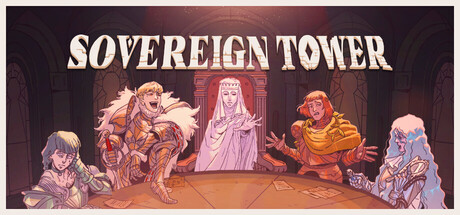
Sovereign Tower gives the reload button an address. A demon lives in the crypts and offers to turn back time. The ruler returns with information from the abandoned timeline, which can reveal decisions, people, and routes that were unavailable before.
The ruler keeps the lesson, but gives up that version of the court.
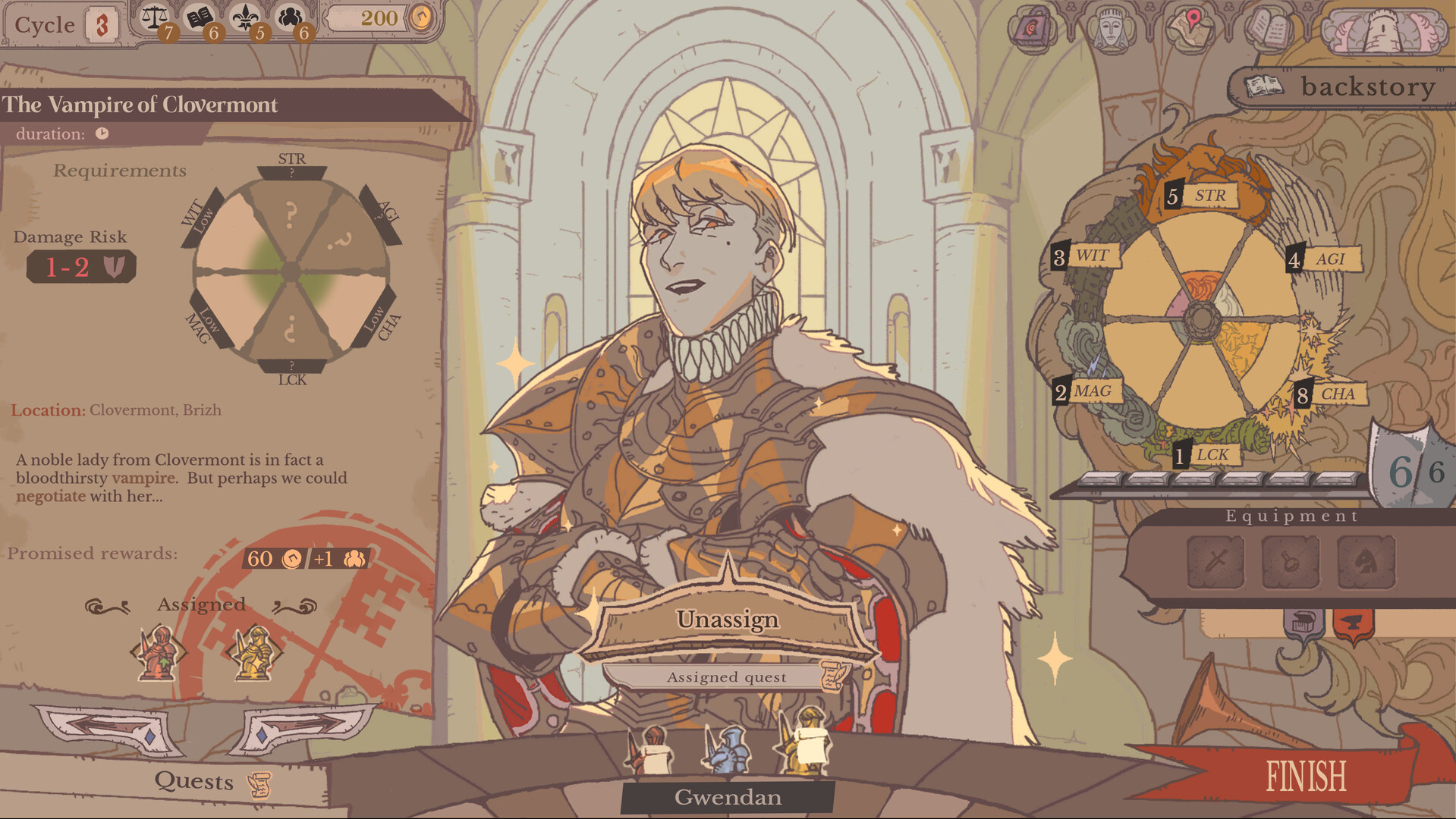
Each day includes petitions, faction pressures, and requests that become quests for the Round Table. Knights have different personalities and stats, and the ruler chooses who should handle each job. Results can affect the treasury, relationships, reputation, and later options.
When the reign goes badly, the demon can send the ruler back. The official devlog says retained knowledge can unlock new decisions, characters, events, and paths on another attempt.
Keeping the lesson, losing the court
Choice-driven games depend on uncertainty, yet saving and reloading sit outside the fiction. Players often use them to inspect both answers or erase a mistake. That can make a severe decision feel like a menu experiment.
Removing retries would protect consequence at the cost of curiosity. Sovereign Tower instead tries to make the retry itself part of the consequence system.
The rewind keeps information rather than restoring ignorance. A failed deadline or damaged relationship can teach the ruler what another timeline requires. Kingdom statistics then control which new answers and conclusions are available, so knowledge still has to be supported by earlier decisions.
The court gives the discarded timeline specific faces. Rewinding can mean giving up a successful quest, an alliance, or a relationship along with the failures that prompted the reset.
Repetition can feel investigative when the player returns to an earlier petition with context that the character is allowed to remember. Trying another answer now belongs to the ruler's strange position inside the story instead of happening in the save menu.
It also lets a small team reuse a repeated audience and quest loop while changing what the player understands inside it. Creative director Antoine Tabouret-Loudéac describes that strong repeated loop and restricted setting as a response to the project's smaller production scope.
A rewind needs something worth abandoning
The design depends on timelines feeling specific enough to lose. If a clearly superior sequence emerges, rewind becomes an ornate route to the correct answer. Early petitions may also become chores once the player has read them several times.
The rewind clearly changes what the player knows and can choose. The open question is whether giving up a timeline stays difficult once the routes become familiar.
Sovereign Tower is for players who like revisiting a choice with more context and who can accept losing a good outcome to investigate another path. Players who want every decision to remain final may find the demon too forgiving; players who chase one optimal route may find it too ceremonial.
Sources
Find Sovereign Tower on Steam
See current screenshots, system requirements, and release details.