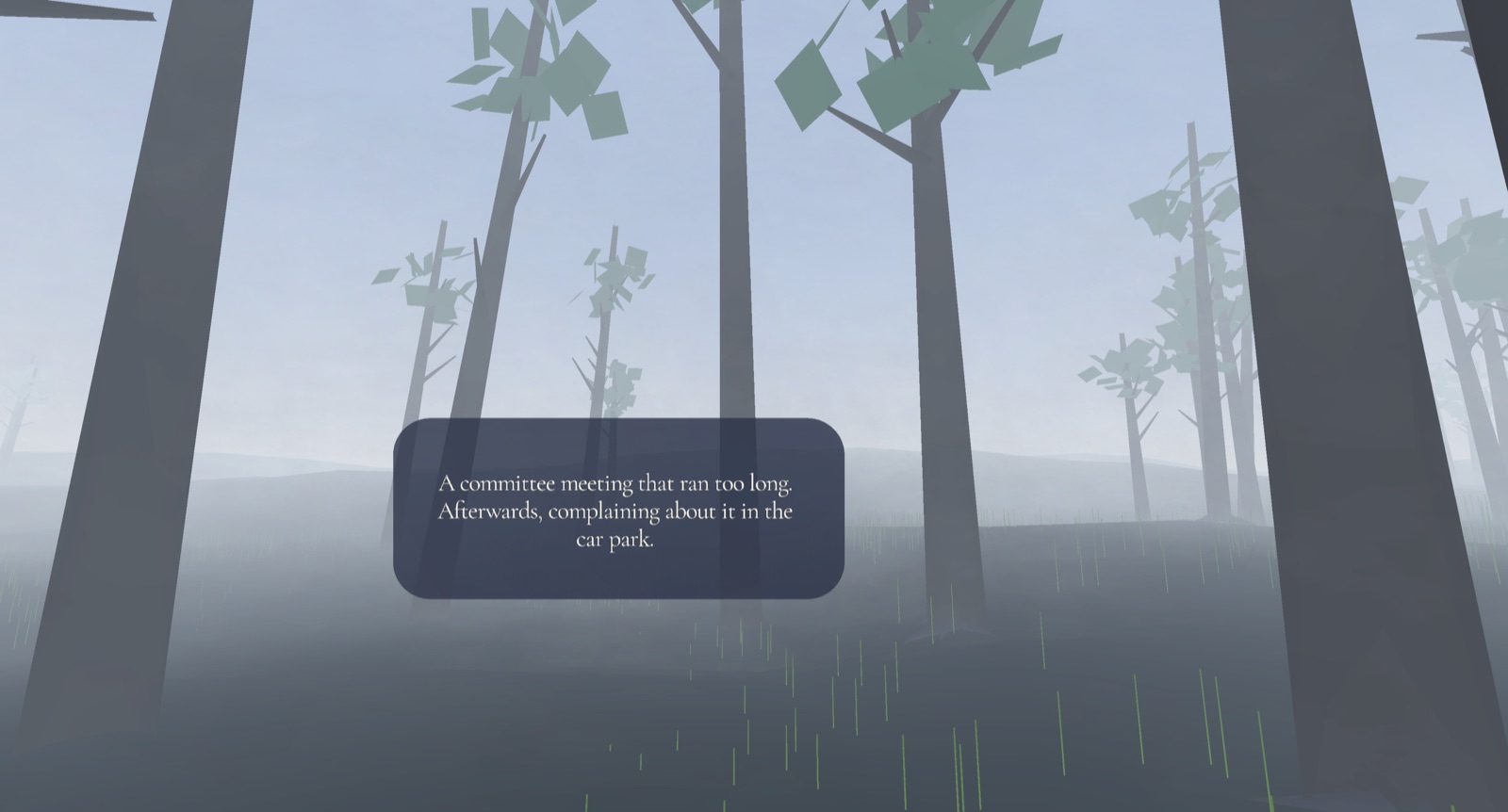
One memory in The Last Connection is a committee meeting that ran too long, followed by complaints in the car park. It would make a lousy trophy. It is exactly the kind of detail an obituary needs.
BRR Games scatters a hundred such memories among the trees. The ending counts the ones the player found, then allows the obituary to say more about the person they have been walking as. The final screen has more to say because the player wandered.
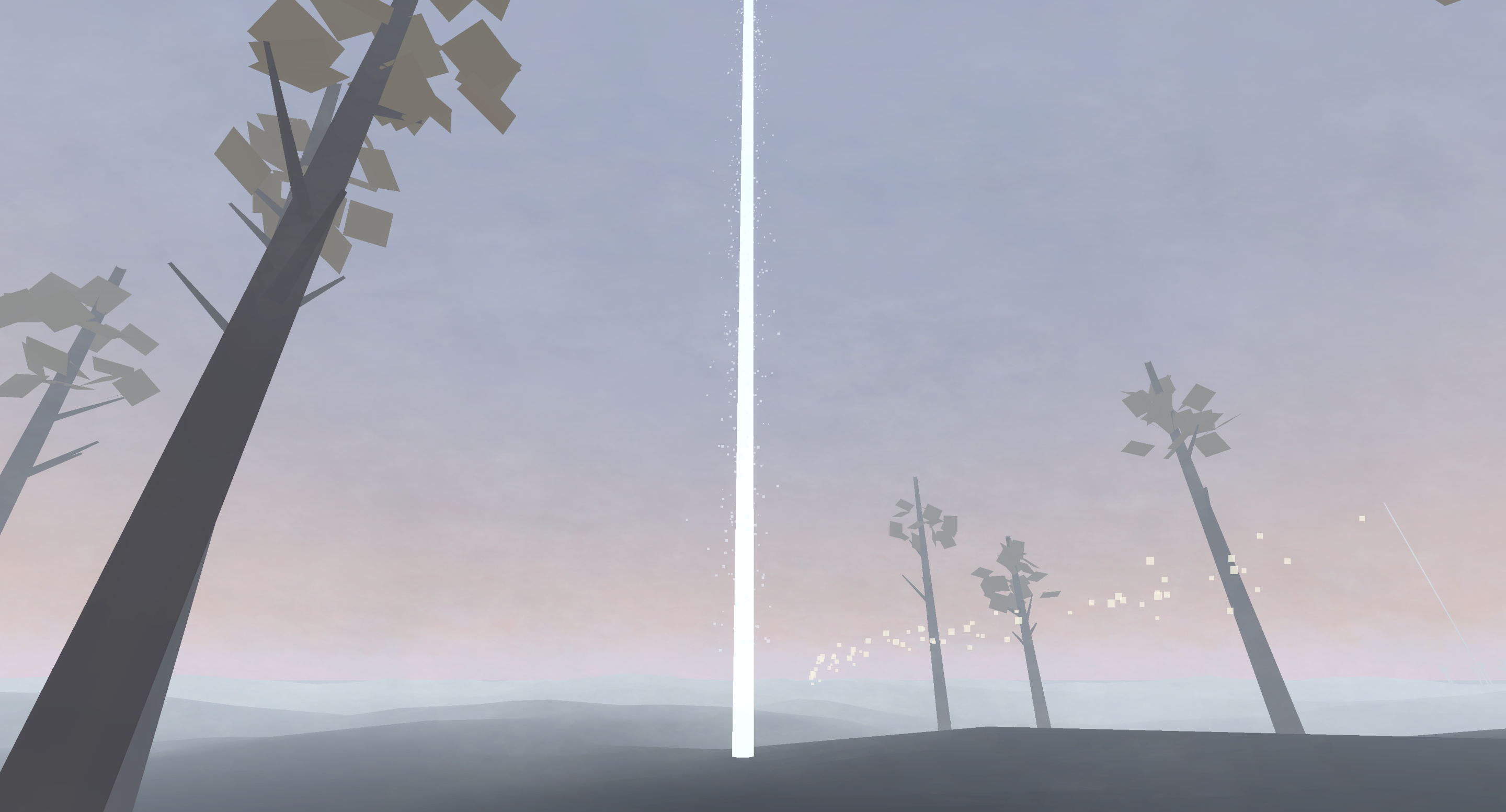
The route itself is plain: a foggy corridor, six beacons and fragments of a conversation. Drifting motes lead forward. Between the beacons, memories hang near the trees at roughly the player's breathing height, brief records of strangers, friends and overheard moments.
The official screenshot shows how unimportant one of those moments can look. A small dark text box sits low among pale trunks. Nothing in the scene turns the committee meeting into a grand revelation. The player has to decide whether an ordinary detail is worth leaving the lighted route to notice.
A detour becomes biographical evidence
Collectible memories often explain a world without changing its ending. The diligent player gets a fuller archive, but the story still speaks about the protagonist with the same confidence and the same words. Exploration adds context around the life instead of affecting what survives of it.
That separation would be especially awkward here. The Last Connection is about loss, and its walk ends with an obituary. If the ending already claims to summarize a person, then ignoring what the player chose to remember would make the detours feel decorative.
The obituary uses discovery as its input. The development log says it counts the memories found and says more when the player explored more. A stop beside a tree therefore changes what the ending is able to report, even though the memory itself may describe nothing more consequential than grumbling in a car park.
The output may only be extra text, but its source matters. The player is deciding how much evidence of a life will reach the last page.
Ordinary memories do the harder work
The rule does not need a branching dialogue tree. The motes offer the next conversation fragment. The memories ask for time beside the trees. Continue toward the final connection, or spend a little longer with what would otherwise disappear.
The unremarkable memories matter here. A list of major revelations would reward investigation in the usual way. A long meeting and the complaint afterwards suggest something less efficient: a life is partly the material nobody would put in a quest log.
More words can start to look like a score
Counting memories can flatten that idea into completion percentage. If a longer obituary always reads as the better obituary, grief has acquired a score and the hundred small moments become boxes to clear.
The guiding motes pull the player forward, and the sixth beacon begins a sprint. If that urgency makes detours feel unsafe or mistimed, a short obituary may look like a judgment on players who simply trusted the route.
More exploration produces a longer obituary. The shorter versions still need to describe a different life rather than merely an incomplete one. That distinction decides whether the ending remembers curiosity or grades it.
The Last Connection is for players who want a brief, quiet walk rather than a conventional challenge. The ending has to let optional discovery change what an obituary knows without turning remembrance into a checklist.
Sources
Find The Last Connection on itch.io
See the current game page, screenshots, and download details.