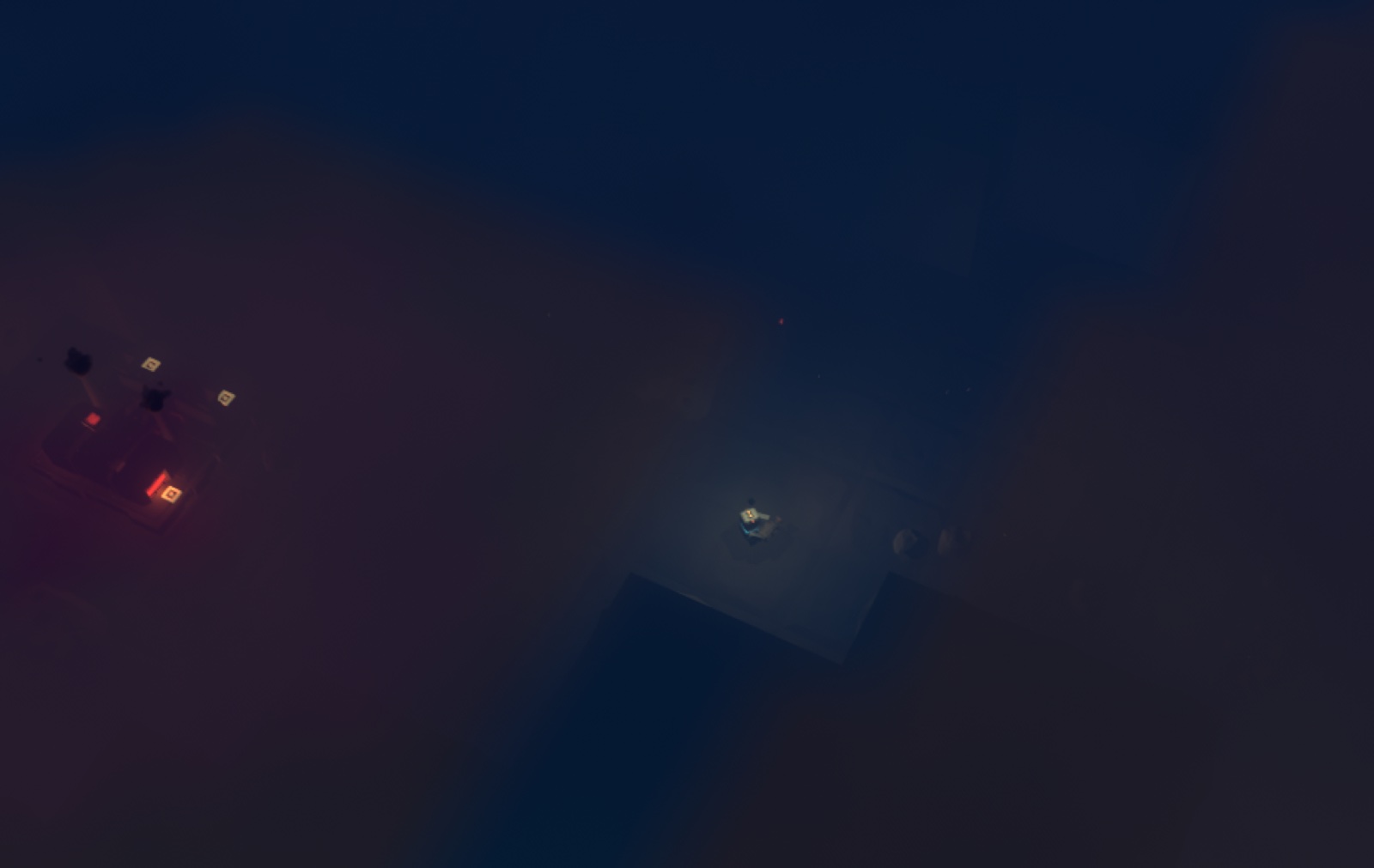
The Smelter's new Heat Overlay washes most of a cavern blue and leaves one machine glowing orange at the edge. The player can see the factory's waste spreading through the mountain without opening a separate map.
That image only became possible after heat stopped belonging to individual machines. The factory now has to answer a physical question: where should the unwanted part of production go?
The Smelter is a factory-building game set inside a procedural volcanic mountain. Machines process mined resources while the player expands toward a Core deeper underground. The mountain gets hotter with depth, and industrial activity can change its conditions.
Development log 7 records a structural change to that premise. Machines used to manage their own generated heat. They now inject it into a standalone world system. The overlay displays thermal zones in real time, reading as a broad layer when zoomed out and fading into the world at close range.
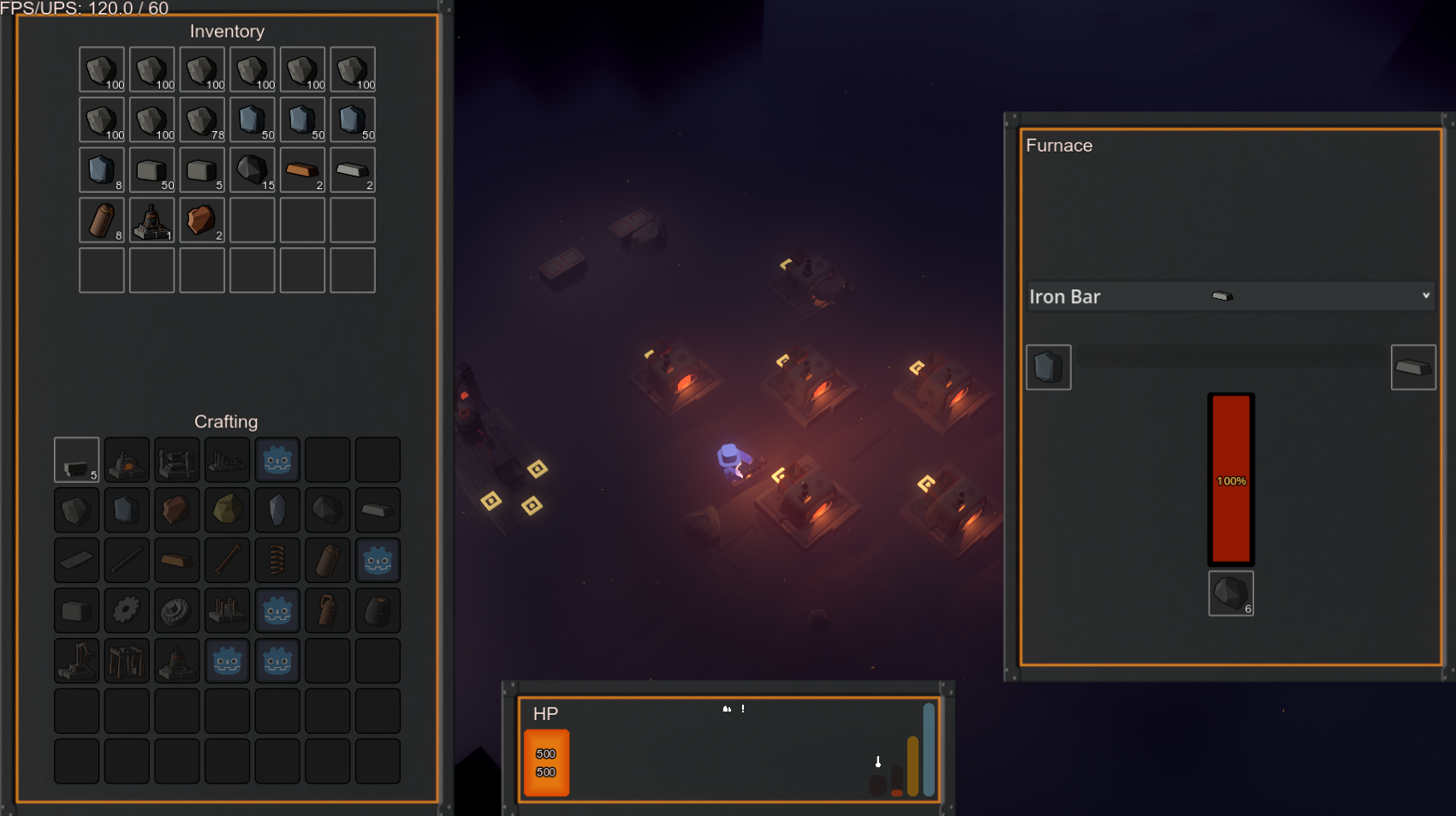
A machine no longer owns its heat
A heat meter attached to one machine can produce a local instruction: cool this machine. It says little about the route between a furnace, the rest of the factory and the mountain wall. Adding another regulator beside every hot machine would keep the answer local too.
The game needs heat to connect systems that already occupy the same cavern. The official page says machine output, environmental transfer, floors and the mountain's reactions all belong to the same model. A warning icon alone cannot show that relationship.
The new floor tiles give the shared heat somewhere to travel. Stone floors protect the player from environmental heat and lava. Conductive floors do the opposite kind of work: connected tiles transfer factory heat, allowing it to reach a Thermal Regulator placed where cooling makes sense.
Bombs join the same model. They open paths through the mountain and add heat where they explode. Excavation, production and cooling no longer need separate fictional excuses. Each one changes the thermal state the overlay is already reporting.
Conductive floor gives waste heat a route that can be inspected. A hot machine is the source, the tile connection is the path and the regulator is the destination. If part of that route fails, the overlay can show where the orange zone stops shrinking instead of asking the player to compare several unrelated gauges.
This also makes distance useful. Cooling does not have to be repeated beside every source if the factory can carry heat elsewhere. The player can think about a thermal plan at the same scale as a production line, while still seeing the hot patch created by one machine or one bomb.
A thermal bus can solve too much
The cleanest heat route could become too clean. Once a player discovers an efficient strip of conductive floor leading to a regulator, every new machine may plug into the same answer. The thermal network would grow, but the decision would not.
The overlay can flatten the mountain in another way. A strong blue-to-orange view is useful for diagnosis, yet it may become the only view that matters whenever the factory expands. The ordinary cavern then serves as decoration beneath the real planning screen.
If the mountain's local conditions do not make one thermal route unsuitable for another room, the world-level rewrite has not made heat part of the mountain. It has hidden a familiar utility coverage problem under the floor.
Players who enjoy factory layouts as arguments between several networks have a reason to watch this system develop. The next build has one telling question to answer: does a new hot machine force a different route, or does it merely add more conductive floor to the same regulator?
Sources
Find The Smelter on itch.io
See the current game page, screenshots, and download details.