Dordogne maps finished watercolor onto rough 3D scenes
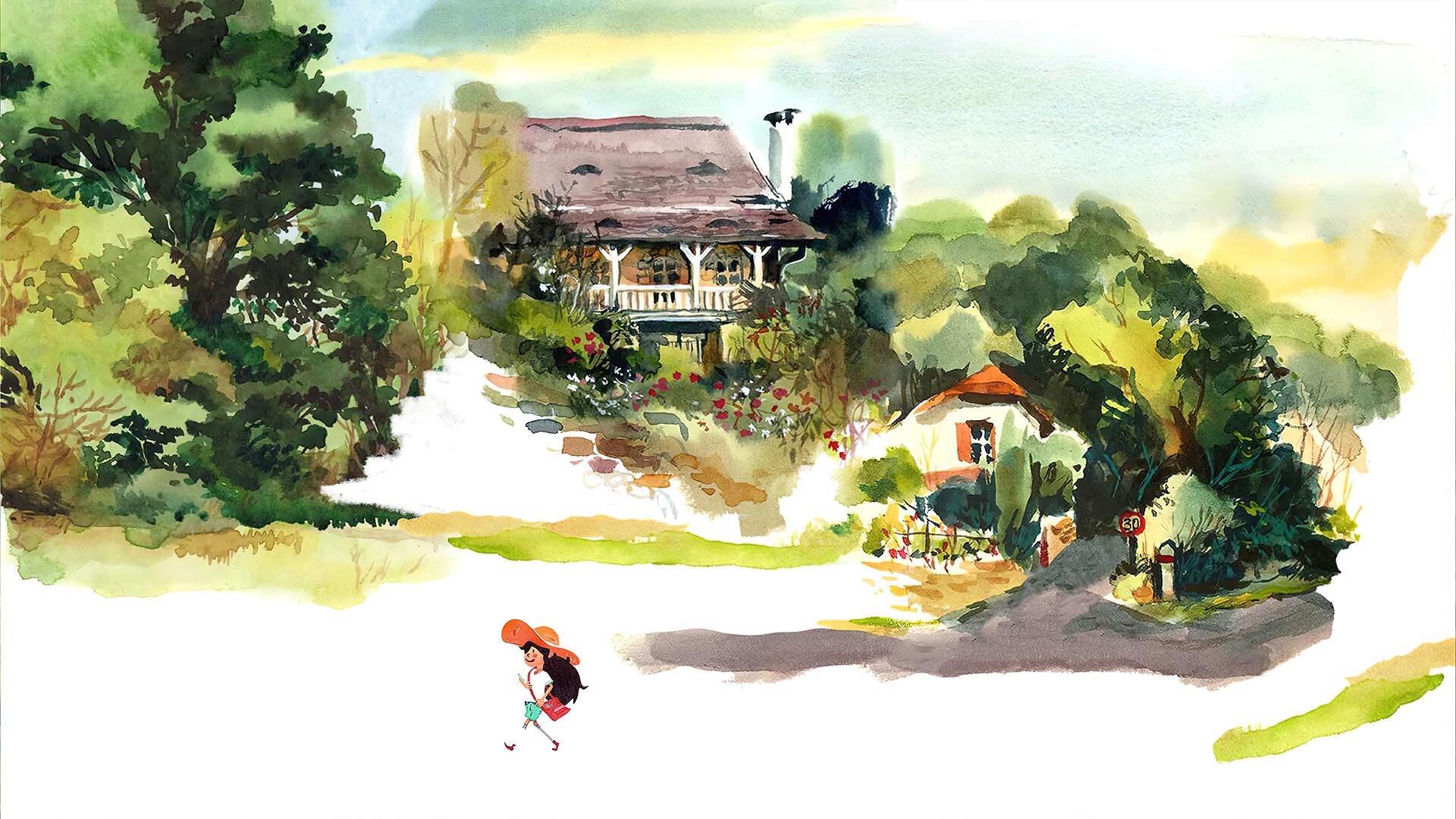
Dordogne does not ask a shader to recreate wet paint on every frame. Art director Cédric Babouche began with black-and-white value studies, made the final watercolor paintings, and placed those paintings onto rough 3D scenes with camera mapping.
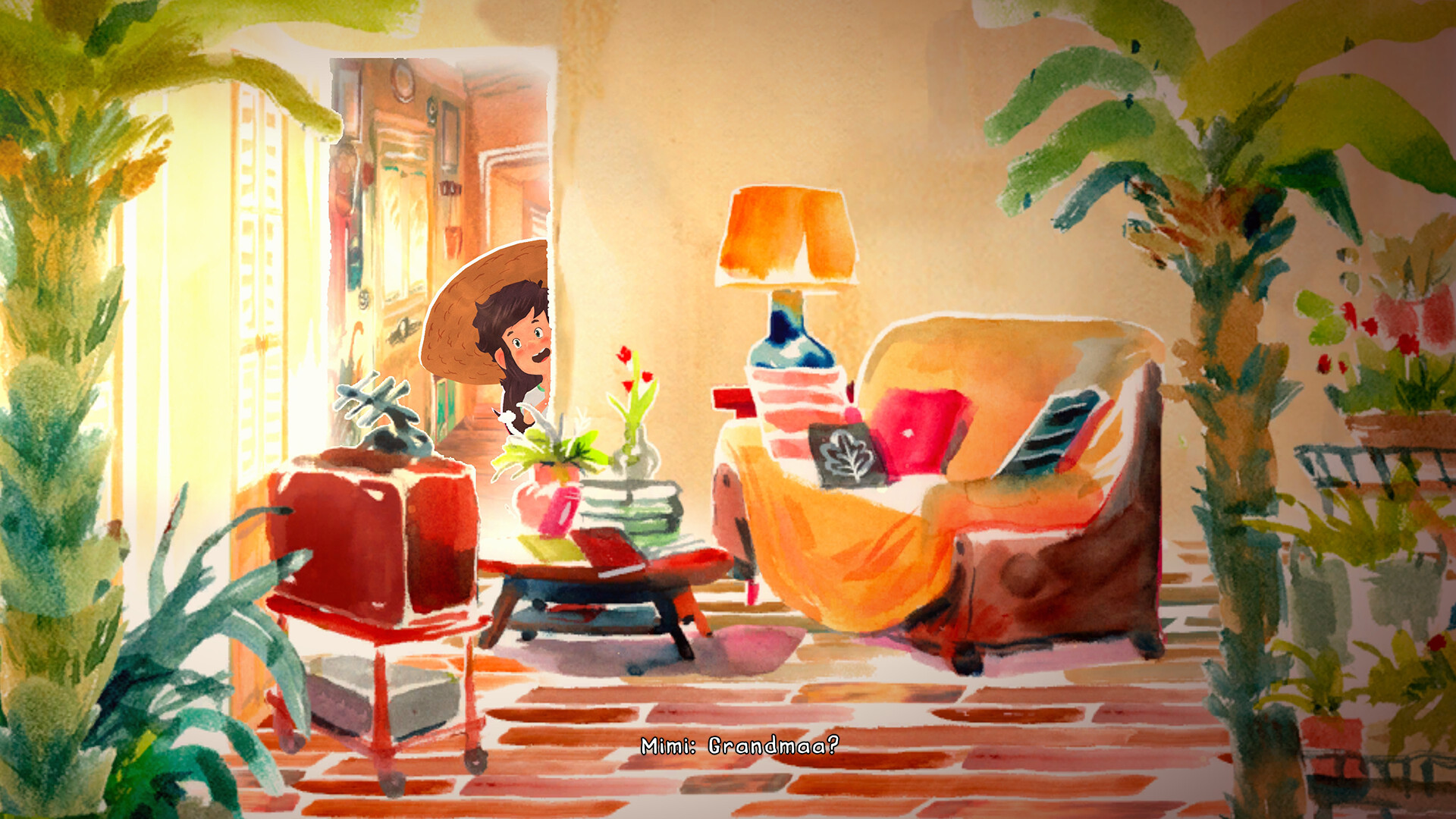
The paint does not have to keep moving
The finished painting already contains the color, paper texture, and most of the light. The 3D scene gives the character room to move while the mapped image keeps the marks of the original medium intact.
Small shaders, particles, glow, and rim lighting add movement where the scene needs it. They support the painting rather than trying to replace it.
Every extra angle asks for another piece of art
Camera mapping works best when the view is controlled. If a character or camera reveals an area outside the original painting, that space has to be filled, masked, layered, or painted. The team used Photoshop to create those missing areas.
A free camera would therefore be more than a control change. It would multiply the number of surfaces the artwork has to explain.
The camera and the painting stay linked
Dordogne’s recorded process began with the painting and used rough Blender geometry to give that image depth. The practical lesson is not that every team should work in the same order. It is that a mapped painting and its approved view become one asset: changing the view can expose areas the original watercolor never contained.
Test the shot before finishing the watercolor
Build the rough scene, place the gameplay camera, and move a plain character through the full playable area before painting the final image. Mark every place where the character crosses an important edge, disappears behind foreground art, or reveals an unpainted surface. Those marks define the real painting brief. They also show whether a camera move is worth the extra artwork it creates.
Then test three frames: the player’s entry, the most crowded interaction point, and the farthest allowed camera position. If the focal point stays readable in all three, the shot is ready for finished color. If not, change the geometry or camera while both are still cheap. The useful constraint is not “never move the camera.” It is “approve every view the painting must survive.”
Separate motion from painted light
List which changes need real-time motion and which can remain in the watercolor. A drifting particle, character rim light, or small glow can help the player read an active object. Repainting the whole scene to simulate every lighting change may work against the original medium and multiply production. Add motion where it carries gameplay information; let the finished painting carry the stable mood.