Sable turned visual constraints into reusable art systems
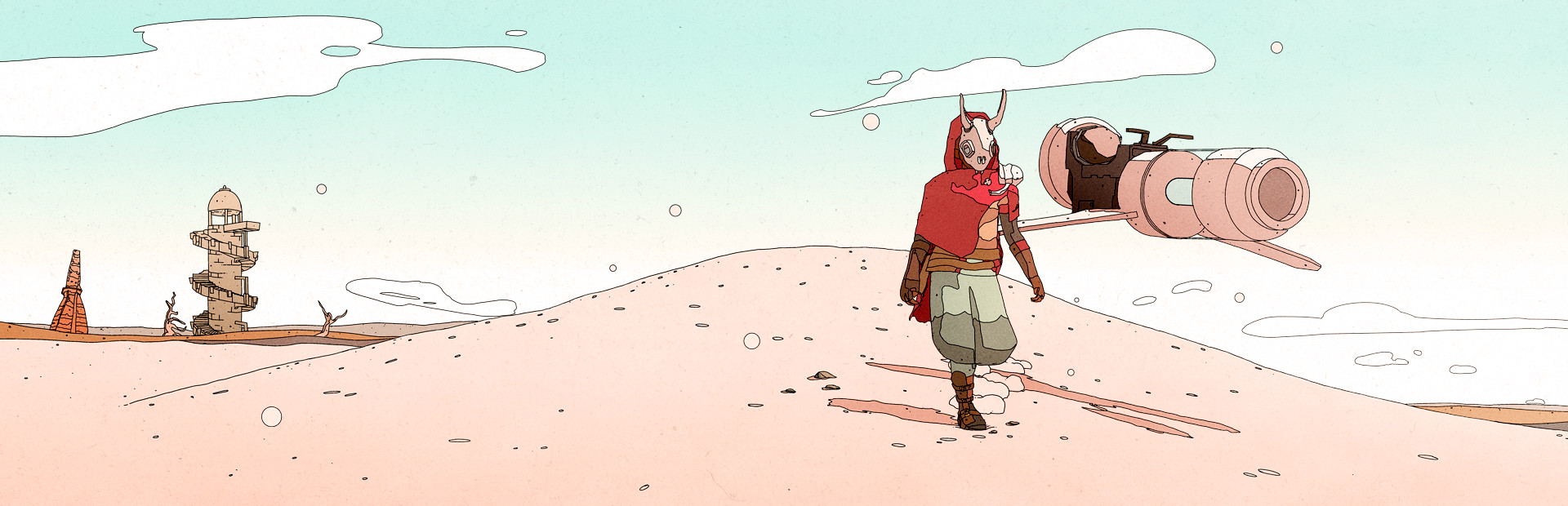
Sable was built around limits the team could repeat. Shedworks used low-poly models, a flat illustrated look, modular costumes and vehicles, and terrain tools that let a small team assemble a large world without treating every object as a one-off hero asset.
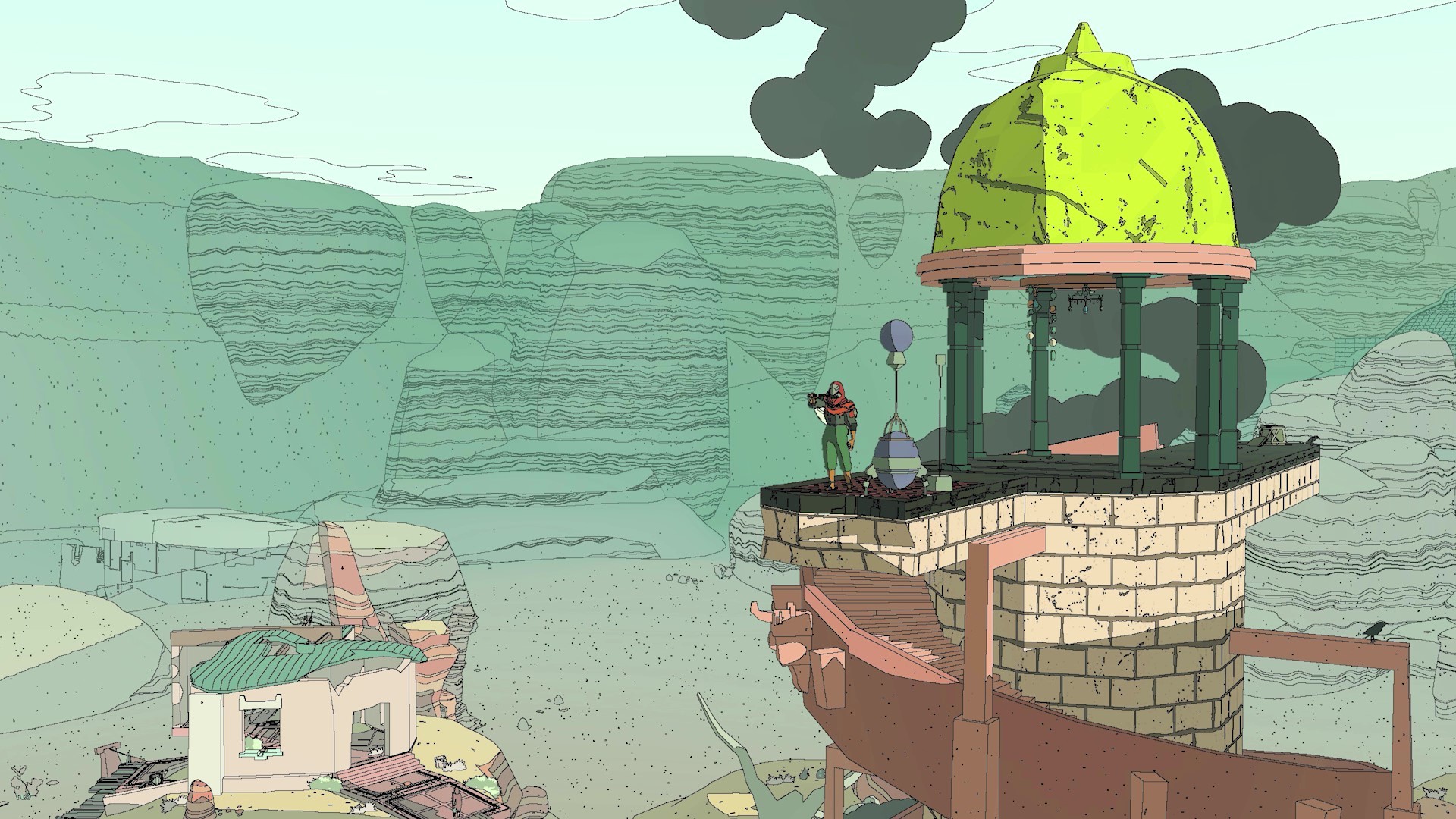
The look reduced the wrong kind of detail
Unity’s case study describes a team of six full-time developers and four part-time contractors. Instead of chasing dense realistic environments, the artists used sparse desert biomes and focused on colour to set the mood. Textures and visual effects were hand-drawn on iPads, while the 3D forms stayed comparatively simple.
This was not an excuse to leave scenes empty. It moved attention toward silhouette, line, colour, and spacing. Those were the parts of the image that had to remain consistent across the whole journey.
Modularity reached beyond code
Masks, clothing, characters, and hoverbikes were built from interchangeable parts. That gave exploration rewards visible variation without requiring a completely new production pipeline for every item.
For an art team, a modular kit still needs rules. Connection points, scale, palette, outline weight, and naming have to agree before parts can be mixed reliably. The value is not simply reusing meshes. It is knowing which visual decisions must stay fixed so that the variations still belong to the same world.
Tools handled volume; the team kept authorship
Shedworks used MapMagic to generate terrain ahead of time, then adjusted that result inside a fixed world. ProBuilder was used for much of the environment work, and noise-based shaders helped populate rocks. The team removed ProBuilder scripts from the final build while retaining the meshes.
Each tool answered a production problem: generating enough ground to explore, editing architecture quickly, or repeating natural forms without placing every rock by hand. None of those tools decided the palette or composition. Automation supplied volume; art direction decided what survived.
A useful small-team asset brief
Before making a new asset family, list the parts that can repeat, the features that carry identity, and the variations the player will actually notice. Then record the shared material, colour, scale, and naming rules. Sable’s production story is useful because its visual style and its asset system solve the same scope problem together.