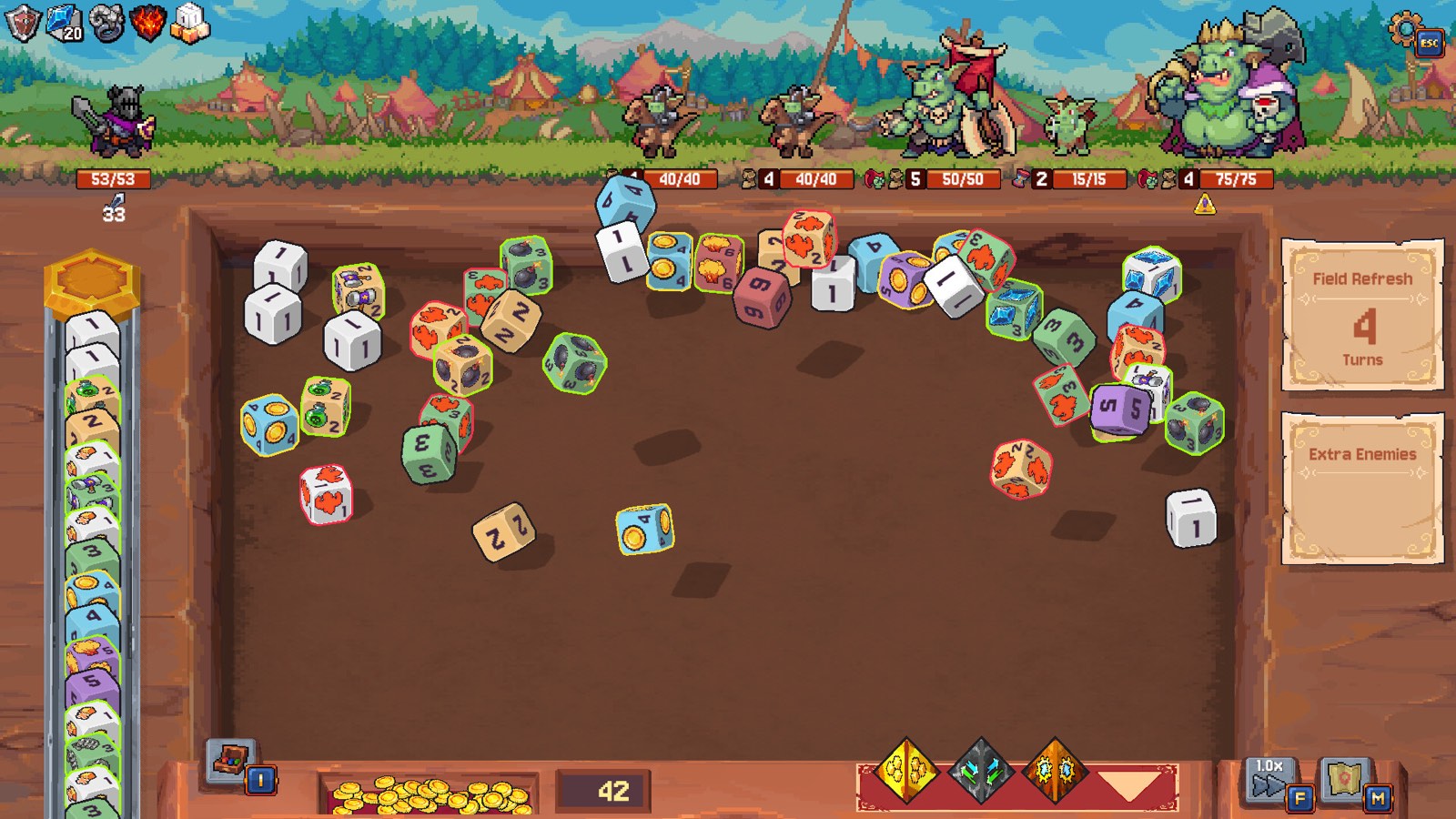
A build becomes easier to remember when it has a place
Decks, upgrades, and random rewards often live in menus. The player understands them as arithmetic, then watches an animation confirm the result. Rune Dice, Chivalware, and Spellsided each push the build back into space.
They do not use space in the same way. That difference is useful. It shows that physical presentation is not decoration. It changes what the player can predict and what kind of mistake the game can expose.
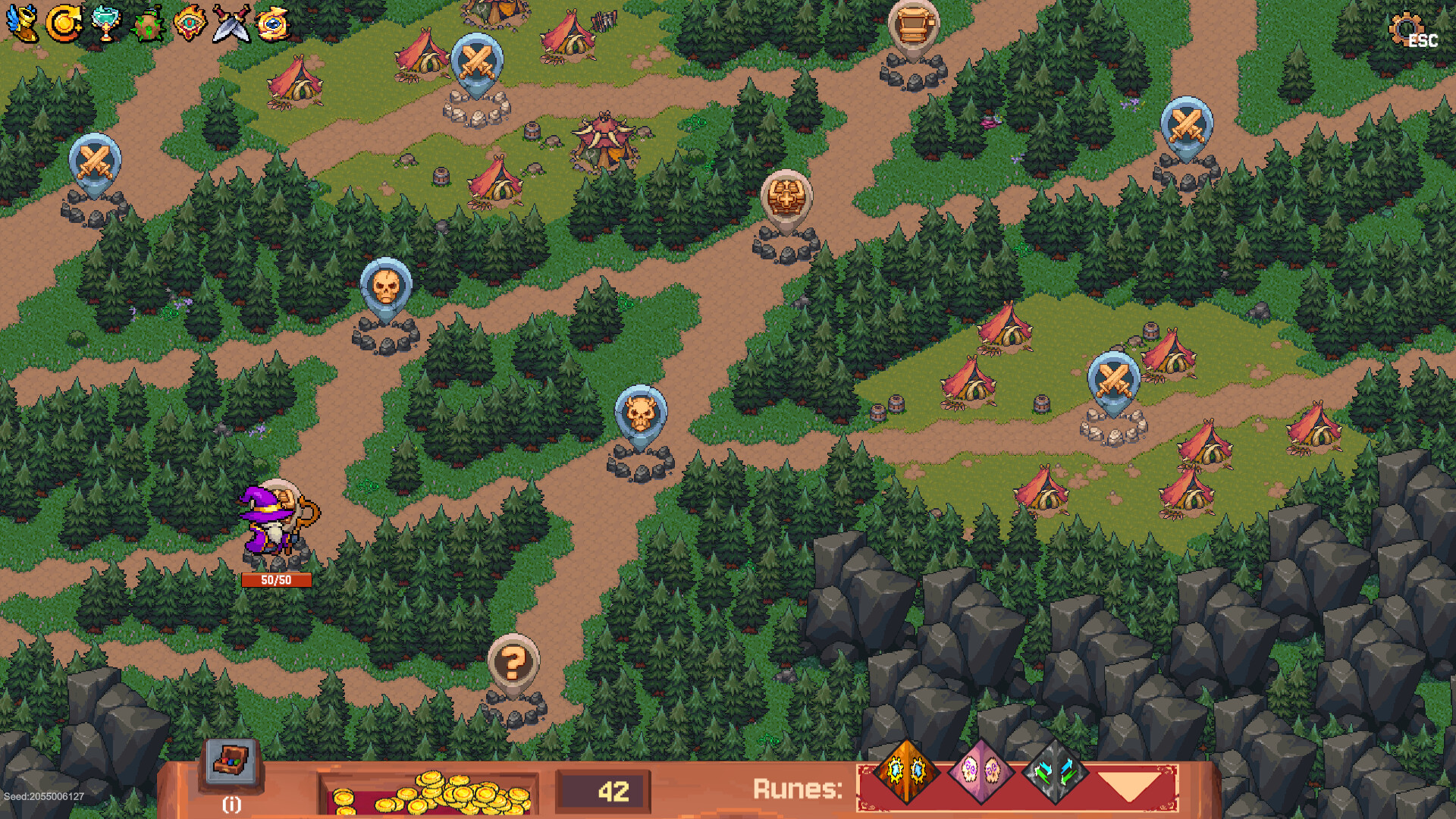
Rune Dice uses position as stored potential
A die lands beside other dice. Matches fuse and may continue into another match. The field remembers the throw, so the current action can prepare a later reaction.
The design gains momentum and visible history. Its risk is trust. If physics makes the result feel arbitrary, the board stops being a plan and becomes a spectacle.
Chivalware makes attention part of the cost
Chivalware places matching and survival on the same grid. A useful pattern is not free because the player must remain near it long enough to use it while enemies apply pressure.
Here, space creates conflict rather than storage. The risk is overload. A player who cannot tell which signal caused the failure will struggle to improve.
Spellsided turns position into sequence
In Spellsided, each move rotates a die and selects a face. The route is the spell order. A spatial mistake therefore becomes a sequencing mistake with consequences that can extend several steps ahead.
Deterministic rooms make that chain readable. The risk is brittleness. Recovery must be interesting enough that one wrong turn does not turn the rest of the solution into cleanup.
The useful question is what space remembers
These games suggest a practical test for spatial systems. After the player acts, what does the space remember? Rune Dice remembers arrangement. Chivalware remembers exposure. Spellsided remembers orientation.
When the answer is specific, the board carries design information. When the answer is only that the effect looked physical, space is probably acting as animation rather than rule.