The genre found a better wrapper
Incremental games used to be easy to picture: a button, a rising number, then a machine that presses the button for you. The loop was clear, but it rarely gave the numbers much of a world to inhabit. A recent group of indie games keeps the compounding growth and replaces the bare button with a familiar activity.
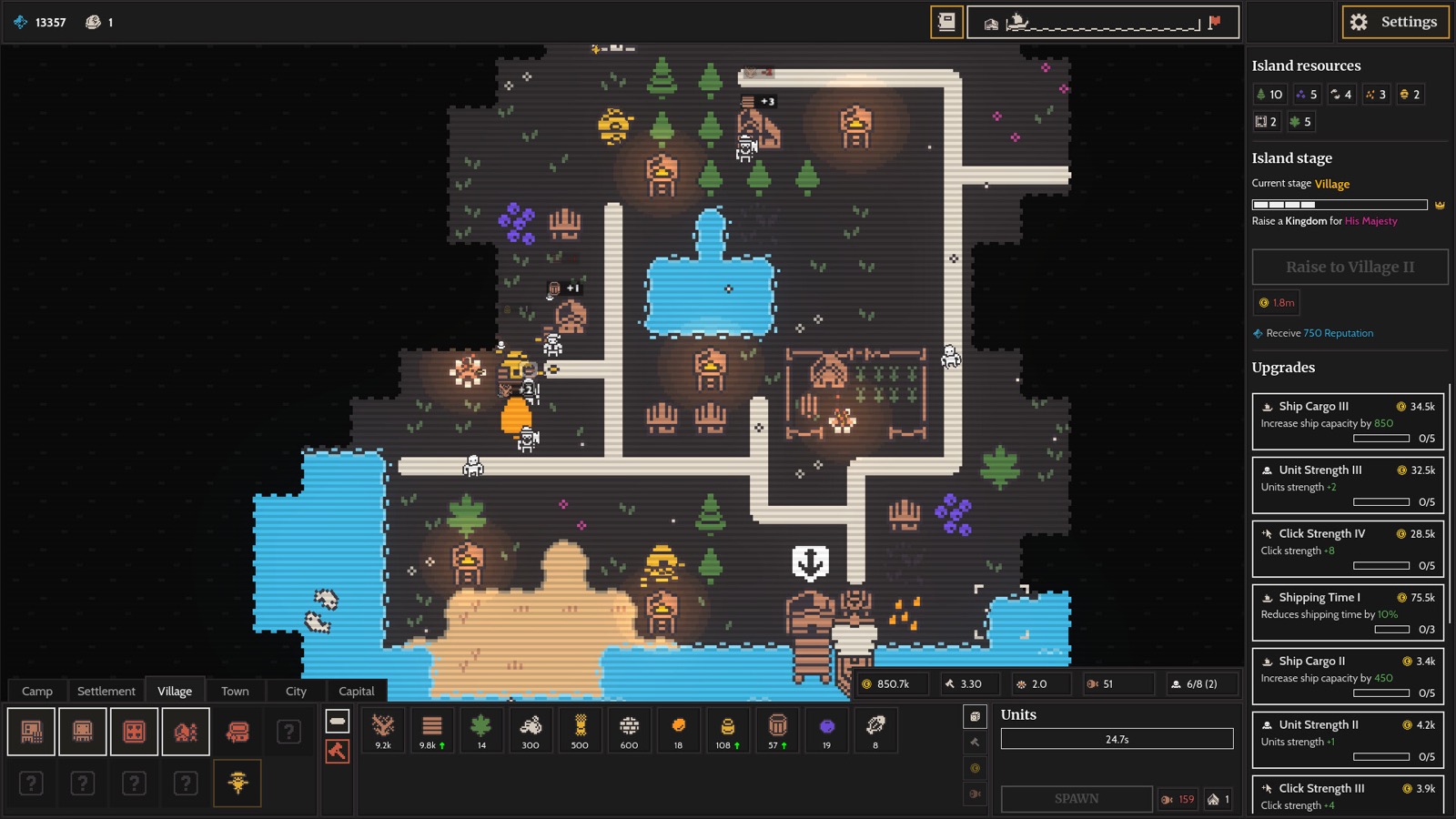
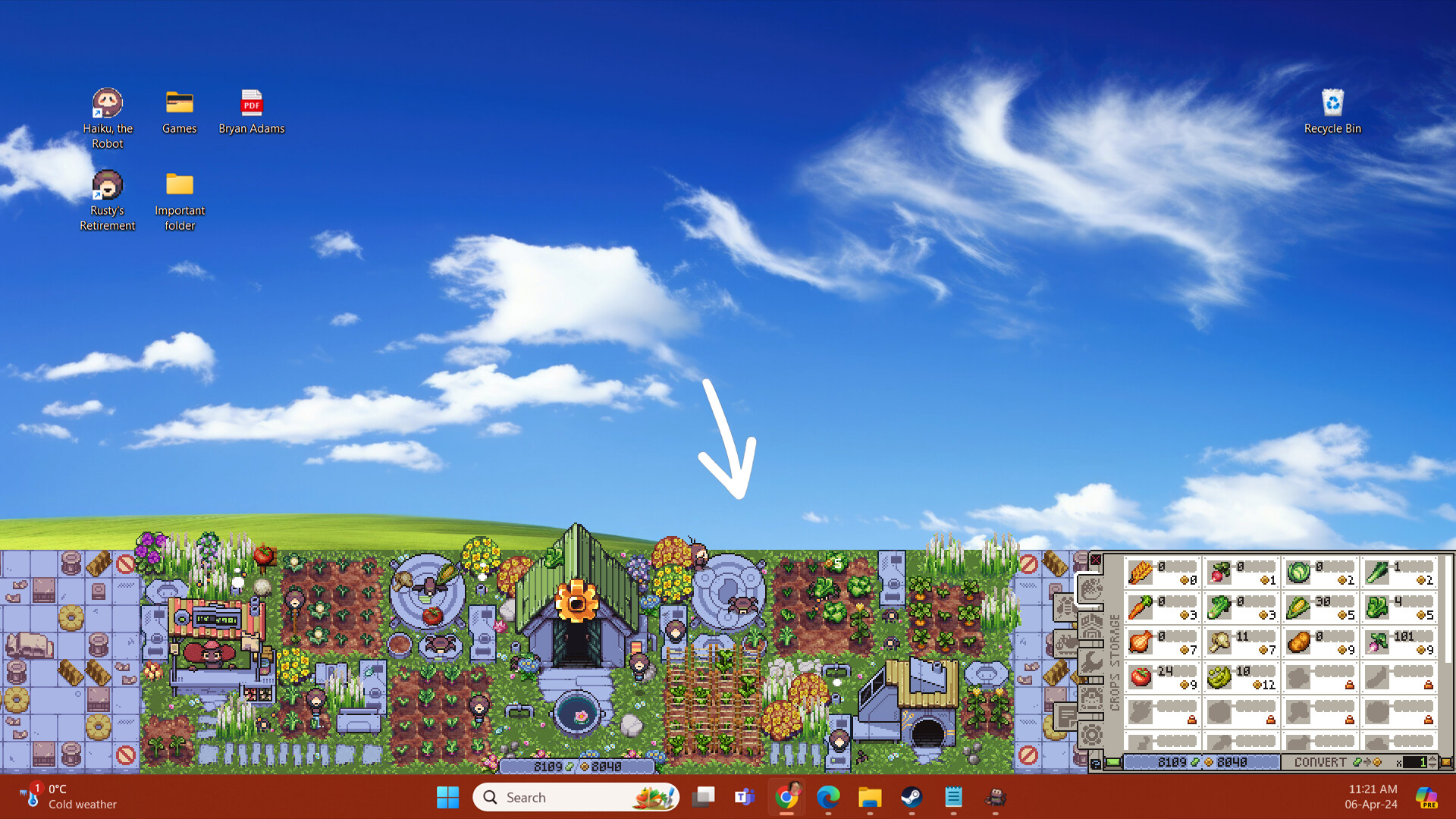
Rusty's Retirement grows a farm along the bottom of the screen. Clicky Islands and Little Incrementisle turn clicking into settlement building. Digcremental puts the curve inside an active mining game. Different genres, same useful sequence: do a job, earn a resource, build a system that changes the job, then decide what deserves attention next.
Rusty's Retirement is designed to share the screen with other work. Its farm occupies a strip at the bottom, and Focus Mode can slow production when the player needs less distraction. Digcremental takes the opposite position. Its Steam page promises an incremental game built around moment-to-moment mining and meaningful upgrades.
That contrast is more useful than the old argument about whether an idle game counts as playing. The design question is how often the game asks for attention, and what the player can accomplish when they return. Background progress suits planning and occasional intervention. Active play suits execution and short tactical choices. A hybrid can move between both, provided extra attention changes a decision instead of merely filling the same bar faster.
One readable action can carry a long arc
Incremental structure is attractive to small teams because one action can be reused without staying identical. Clicky Islands begins with manual resource gathering, then adds workers, production chains, and permanent upgrades. Little Incrementisle adds island modifiers, events, prestige points, and a lasting talent tree. The assets do not need to multiply as quickly as the player's capability does.
Rusty's Retirement offers a striking example, not a production formula. Developer Jordan Morris told GamesRadar that the game took about six months to make and had sold roughly 550,000 copies by the interview.
Its Steam page now anchors a bundle of 17 games built for the bottom of the screen. Rusty's Retirement is an outlier, not an easy production formula. Its success does show that players can understand a compact interaction model without a conventional full-screen game loop.
The numbers need a body
A multiplier becomes easier to care about when it changes something the player can point to. In Rusty's Retirement, the farm occupies more space and robots take over visible chores. Clicky Islands turns production into buildings, units, and chains. Little Incrementisle gives growth an island to reshape. Digcremental gives it ground to break and a route to extend.
The borrowed genre supplies the body. Farming makes automation look like labor being reassigned. A colony makes throughput look like infrastructure. Mining turns stronger output into deeper access. The best hybrid upgrades do more than raise a rate. They alter what the player watches, where a bottleneck lives, or which responsibility has moved from hand to system.
Growth can erase the game
Compounding progress creates its own failure mode. If every upgrade only raises output, the opening actions become ceremonial. If automation solves every interesting choice, playing becomes less useful than waiting. Prestige can make that worse when it asks the player to repeat a solved opening for a permanent percentage bonus.
Automation should introduce a new decision.
The player might choose which island modifier to exploit, where a production chain should bend, or when active mining is worth the attention. If the answer is only the same action at a larger number, the incremental layer is stretching time rather than deepening the design.