Name the delay before choosing the tool
Tool lists are easy to write because every problem gets a product. Small teams pay for that neatness later. Another login, file format, plugin, and update channel can add more waiting than it removes.
Add a tool when you can name the delay. Work cannot be restored. Two people can overwrite the same asset. A build takes an evening to upload. Playtest confusion is invisible. A writer or sound designer needs a programmer for every change. If the delay is not happening, keep the current stack.
A working prototype rarely needs a new engine
A new project needs an engine. A working prototype usually needs fewer engine changes, not another rewrite. Keep the engine that already proves the controls, target hardware, export path, and skills available inside the team.
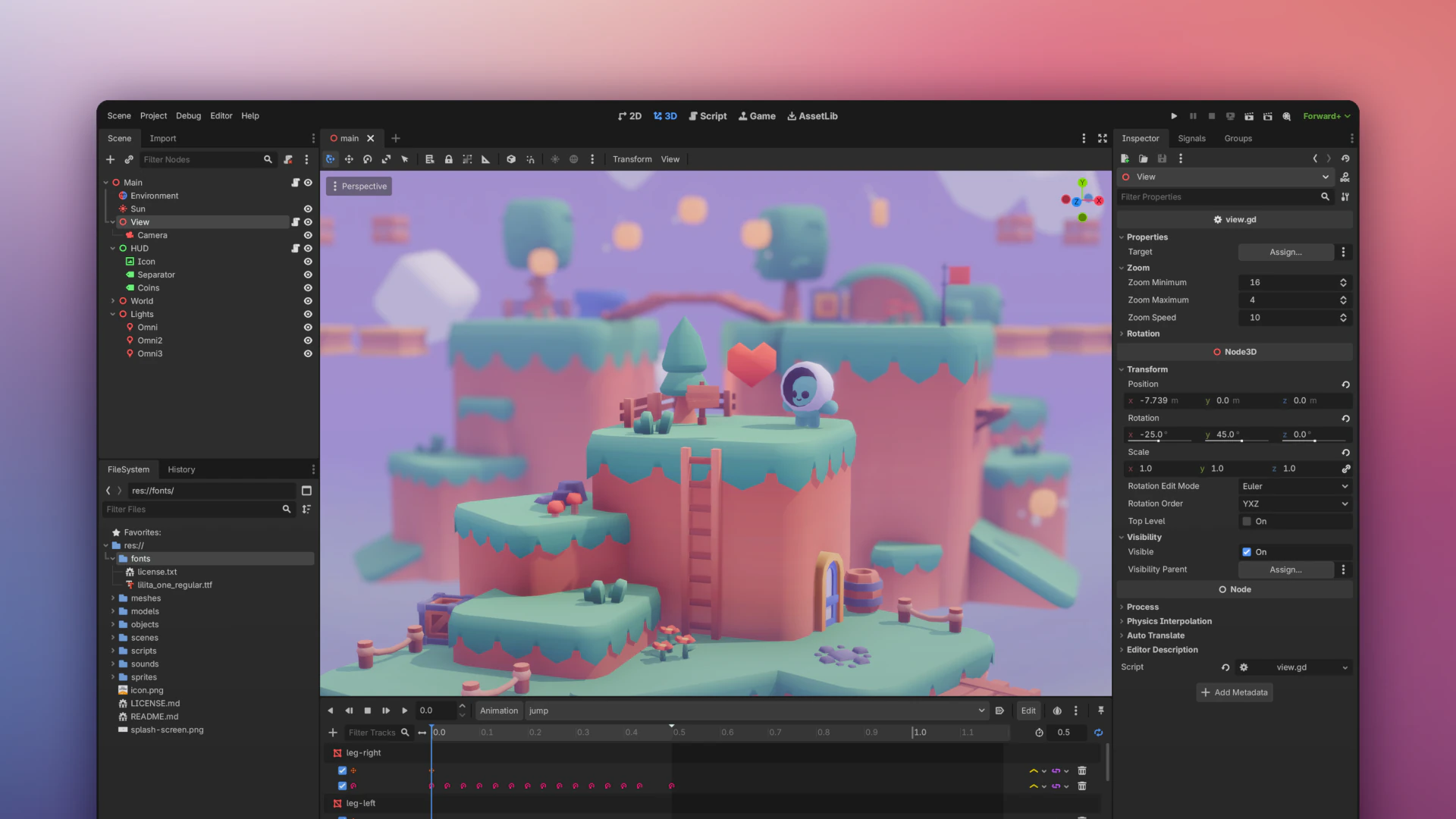
Godot is a sensible greenfield option when a team wants one MIT-licensed editor for 2D and 3D work without royalties. That freedom does not make it the answer to every project. Godot's own documentation notes that console release goes through third parties, and its design notes still expect external tools for complex 3D production. Choose it because the pipeline fits, not because a list called it free.
Protect the work before making collaboration clever
Git LFS replaces large files in the repository with pointer files while the real objects live in LFS storage. It works well for a code-heavy small project when the team already understands Git, but binary history still consumes storage and bandwidth. A tiny change to a large binary file stores another full version, so quotas deserve attention before the art folder grows.
Anchorpoint keeps Git compatibility and adds an artist-facing workflow, file locking, selective checkout, and asset previews. Add that layer when binary conflicts or Git anxiety are already slowing the team down. If one person owns the art and a normal Git client is working, the extra process may not earn its place.
Choose art tools by the files that reach the engine
Blender covers modeling, rigging, animation, texturing, compositing, and other parts of a 3D pipeline. Krita covers painting, seamless textures, and frame-based 2D animation. Together they can cover a surprising amount of small-team asset work without a subscription.
Breadth can hide a bad handoff. Before producing a library of assets, take one representative character, environment piece, or texture all the way into the engine. If it returns at the wrong scale, with broken materials, or in a folder nobody expected, fix that trip before making ten more assets.
Keep story and sound changes close to their authors
ink and Yarn Spinner both move branching dialogue into readable text and provide ways to test it outside the final game. ink comes with Inky and treats text as the center of the script. Yarn Spinner provides official paths for Unity, Godot, and Unreal, although teams should check the maturity of the integration that matches their engine. Pick one narrative system. Maintaining the same conversation in two formats creates another source of truth.
REAPER handles recording, editing, processing, mixing, and mastering. FMOD handles adaptive audio inside the running game, with live update and profiling tools. They solve different jobs. Add FMOD when sound truly needs to react to game state and the engine's audio tools make that iteration expensive. Otherwise REAPER plus the engine may be the smaller pipeline. FMOD eligibility and release licensing must be checked against the current project budget and studio revenue.
A playtest build should be easy to send and easy to watch
OBS Studio can record a play session, microphone, and game audio together. That makes hesitation, missed prompts, and repeated wrong turns available after the call ends. Ask for consent, record the game window, and leave the rest of the tester's screen out of it.
itch.io's butler uploads builds, creates patches, and now also has a graphical path through the itch app. Steam Playtest uses a separate child app, lets a developer gate access, and keeps playtest activity separate from the main game's reviews and wishlists. It is not confidential. Use itch for frequent direct sharing, then Steam Playtest when the store audience and Steam delivery path have become part of the test.
Track work and players only when a decision is waiting
Codecks connects project goals, cards, milestones, dependencies, and player feedback. It becomes useful when chat and a loose checklist can no longer answer who owns a problem or why it exists. A solo prototype with a dozen visible tasks may be clearer without it.
GameAnalytics provides SDKs for several engines and supports progression, design, error, and performance events. Start with one question someone is ready to act on, such as where players leave the first playable loop. Instrument every button before naming that decision and the likely result is a dashboard nobody uses.
A practical stack can stay small
For a solo 2D prototype, a reasonable starting point is the chosen engine, Git with LFS, Krita, OBS, and butler. An art-heavy 3D team may add Blender, Anchorpoint, and Codecks because binary ownership and asset handoffs are now real problems. A narrative-heavy game can add ink or Yarn Spinner. An audio-heavy game can add REAPER, then FMOD only when adaptive implementation justifies the integration and license work.
The stack has done its job when a change moves from idea to playable build, reaches a tester, produces evidence, and returns as a smaller next decision. If a tool cannot show where it shortens that loop, leave it out.
Sources
Product features and license terms were checked August 11, 2026. Verify the linked documentation before committing a project or release.
- Godot 4.6 official release page
- Godot 4.6 official introduction
- GitHub official Git LFS overview
- GitHub official Git LFS billing
- Anchorpoint official product facts
- Codecks official game production overview
- Blender official manual overview
- Krita official features
- ink official narrative scripting page
- Yarn Spinner official getting started guide
- REAPER official product and license page
- FMOD official licensing
- OBS Studio official features
- itch.io official butler manual
- Steamworks official Steam Playtest documentation
- GameAnalytics official SDK overview
- GameAnalytics official event types