Rune Dice guide
Rune Dice Beginner Guide
For a safer first Rune Dice run, stop treating every throw as a damage roll. Aim for board position first, merge only when the next die still supports your class plan, buy relics and runes that make your current dice more reliable, and start preparing for bosses before the final node instead of hoping one late purchase fixes the run.
First-Run Priority Table
Practical Route Notes
A beginner Rune Dice run should feel less random after every decision. I prioritize board space, predictable merge angles, and relic support before chasing a spectacular chain, because one blocked die can ruin the turn that was supposed to carry the fight. If a throw feels unlucky twice in a row, review the setup, not just the result.
How to Think About Throws
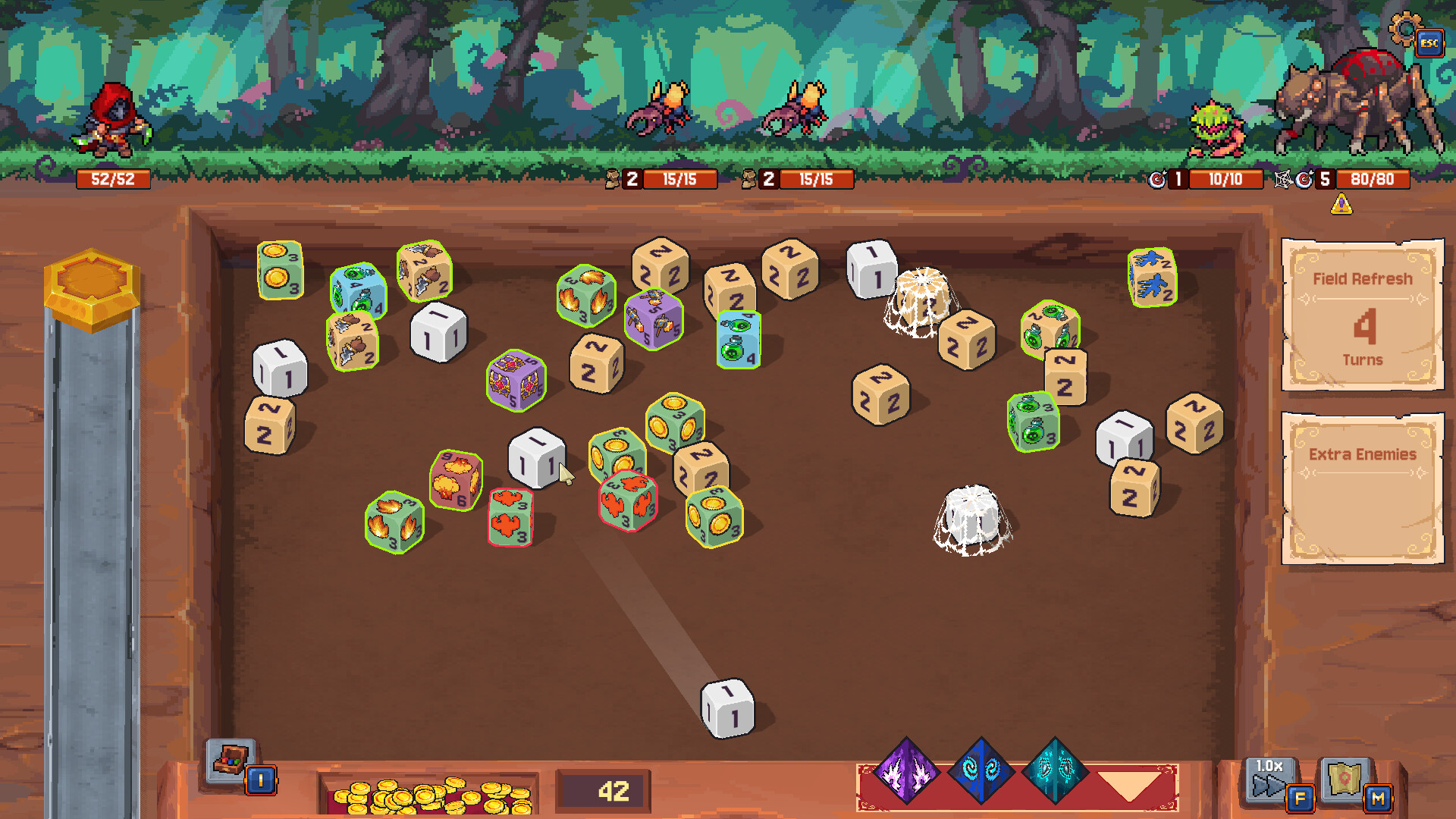
Rune Dice mixes tactical planning with physics-based dice movement, so the cleanest beginner improvement is not a secret class or a perfect relic. It is throw discipline. A greedy shot can hit hard and still leave the next turn awkward. A safer shot that keeps dice near future merge angles can be better over the whole fight.
The trap is building around one lucky bounce. It is the same mistake new deckbuilder players make when one greedy hand wins a fight and the next three hands collapse. If the board only works when the die lands perfectly, the route is not stable yet.
Before each throw, ask what the board should look like afterward. If the answer is only "more damage," you are probably skipping the positional part of the game. If the answer names a merge, a safe contact point, or a setup for the next die, the throw is easier to learn from even when it misses.
Merge and Route Rules
- Do not force every merge. A merge is useful when it supports the class plan and keeps future turns playable.
- Spend before the route gets dangerous. Shops, relics, and runes are preparation tools, not emergency buttons only.
- Pick one weakness to fix. If the run lacks control, buy control support. If it lacks scaling, buy scaling support.
- Enter bosses with a named plan. Know whether the boss answer is damage, control, relic synergy, or safer dice placement.
First Shop Readiness Check
Use the first shop or support stop as a route check, not a shopping break. Before buying the flashiest effect, decide what the next route segment is likely to expose: bad dice placement, weak merge follow-up, poor class focus, missing control, or boss preparation that has not started yet.
Beginner Failure Checks
When a Value Changes
A changed value may move a purchase or merge decision, but it does not excuse sloppy placement, a split class plan, or spending every rune before the boss. Keep the route together before rebuilding around one number.
Related Guides
Read the Merge Chains and Dice Positioning Guide if your runs feel random after the first route choices. Use the Relics and Runes Planning Guide when relics, runes, shops, and boss prep feel disconnected. Use the Boss Prep Guide if bosses erase runs that looked strong earlier. Use the Class Safe Starts Guide when the class itself is pulling your choices in different directions.