Last updated: July 15, 2026Full release route repairCreature build stability
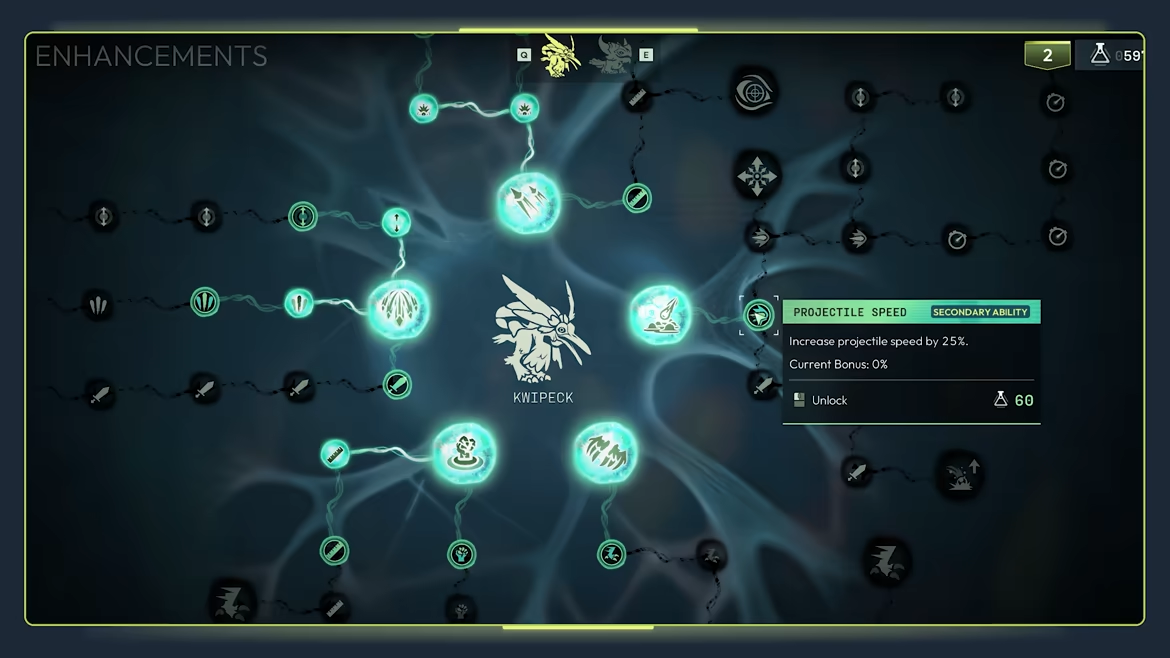
If a Voidling Bound build starts losing after full release, do not rebuild the whole creature. Name the first failure, keep one creature job, change one layer, then run the same question again. Most unstable routes are not missing every system; they are trying to make evolution, genes, breeding, and spending solve different problems at the same time.
The Fast Stability Rule
Voidling Bound gives you enough creature systems to make a build look busy before it becomes reliable. That is the trap. A route feels better when the creature has one job that still works under mission pressure: survive and trade, kite and chip, burst and reset, control space, or support a swarm plan.
Before changing anything, describe the build in one sentence. If the sentence needs three commas, the route is probably drifting. The repair is not always more damage. Sometimes the right fix is safer movement, cleaner target selection, a defensive branch, or simply refusing to breed away from a creature that already does its job.
SituationBuild ideaWhy it worksFailure riskWhen not to use it
You die before the route does anything.Stabilize movement, spacing, shield, sustain, or safer attack windows before adding damage layers.A living creature gets more chances to prove whether the route is actually weak.Overcorrecting into a route that only survives and never ends fights.Do not use this if deaths are rare and the real issue is slow kill speed.
Enemies live too long.Pick one damage identity and make evolution or genes support that exact pattern.One repeatable damage loop beats several half-built attack ideas.Adding damage that pulls the creature into unsafe range.Do not use this if the creature already kills well but fails when pressure spikes.
The creature feels strong on paper but messy in missions.Remove one layer of ambition: delay a breed swap, branch commitment, or gene edit until the current job is easy to explain.Fewer moving parts makes the next failed mission easier to diagnose.Waiting too long when a repeated weakness is already obvious.Do not use this if the route has one named problem and one clear fix.
A new breed looks tempting.Keep the current creature unless the new roll solves a named route problem.A stable imperfect creature is often better than a fresh creature that restarts every decision.Becoming too attached to a roll that cannot handle the next pressure tier.Do not keep it if the route fails the same survival or damage check repeatedly.
Abyss or harder content exposes the route.Back up one layer and fix the repeated failure before spending deeper support.Harder content punishes unclear roles; support should confirm a route, not hide it.Treating one unlucky mission as proof that the whole route is bad.Do not back out if the route only failed because of one avoidable player mistake.
Use customization to answer one route problem at a time. If a change makes the creature harder to explain, it is probably not stability.
Step-by-Step Route Repair
Write the creature job in one sentence. Examples: safe bruiser, mobile poison pressure, summon control, close-range burst, or setup damage. The exact label matters less than having one label.
Name the first failure after the next mission. Survival, kill speed, range comfort, target access, cooldown rhythm, crowd control, or breed quality are different problems. Do not treat them all as damage.
Change only one layer. Pick evolution, genes, breeding, or spending. If you change two at once, you lose the ability to tell which one helped.
Retest the same question. A successful fix makes the next mission easier to explain, not just brighter or busier.
Lock the route when it repeats. Once a creature survives and ends fights in the same way across several missions, stop hunting novelty and start supporting that role.
Clip-to-Stable Route Filter
Demo videos and showcase pages are useful because they show what players are trying to solve: melee boss contact, burst shooting windows, poison or counter attrition, quick egg routing, final-evolution endpoints, and fire or speed pressure. They are not safe to copy as full-release build orders. Before rebuilding your creature around a clip, translate the clip into one stability question.
Clip makes you want to...First stability questionChange only this layerKeep the idea if...Ignore it if...
Copy a melee boss route.Can your creature enter, stay close, recover, and leave without losing the whole attempt?Movement, recovery, or close-range survival before damage genes.The same mission gets safer while still ending fights.The clip only worked because the player already had cleaner contact timing than you do.
Copy a burst shooting route.Do repeatable damage windows appear in your current mission, or did the clip hide the setup cost?One damage-window support layer: aim comfort, window size, or reset safety.The route turns safe openings into progress without deleting survival.You still die before the burst window matters.
Copy poison, counter, reflect, or attrition play.Can the route stay alive long enough for delayed damage or counter value to matter?Sustain, control, status uptime, or recovery after a missed timing.The fight becomes more readable and the boss loses progress without constant direct attacks.The route becomes safe but cannot finish priority targets.
Farm eggs after seeing a quick route.Which failed job is the egg supposed to replace: survival, damage, movement, ability rhythm, or nature fit?One hatch test before breeding, evolving, or editing genes.The new hatch makes the next mission easier to explain.You are collecting options without naming the route problem.
Chase a final evolution showcase.Does your current route already create the same survival or damage window that showcase uses?Evolution branch or gene edit, not both at once.One retest proves the endpoint supports the job you already had.The final form looks stronger but solves a different mission than the one blocking you.
Copy a fire or speed-pressure clear.Is the clip winning through uptime, movement comfort, or raw damage?Pressure uptime or movement rhythm, then retest the same route.You keep pressure active without turning every dodge into panic.The route needs perfect pacing that your current creature cannot repeat.
The filter is intentionally strict. If a clip cannot answer your first failure in the next mission, keep it as inspiration and do not rebuild around it yet. A stable full-release route should survive one outside idea without becoming a completely different creature every run.
Fire Pressure Retest Board
A fire or speed-clear video is tempting because the route looks solved from the outside. In practice, fire pressure only feels stable when the creature can keep uptime without turning every dodge into a panic roll. Use this board before rebuilding around a fast-looking clear.
Video route signalWhat to check in your runUse it if...Do not copy if...
The creature keeps constant fire pressure.Can you keep attacking while moving, or do you stop dealing damage whenever the arena gets busy?Your losses come from slow clear speed, not from early survival collapse.Your current creature cannot stay alive long enough to create pressure uptime.
The clear looks fast because enemies melt.Is the route winning through repeated safe windows or one overfed damage layer?You can recreate the same window with your current branch, gene plan, or spending choice.The clip hides setup cost that your route cannot afford yet.
The player barely stops moving.Does your route have a movement rhythm that still lets attacks land?You already dodge cleanly but need a route that rewards staying active.You dodge constantly because you are underbuilt, not because the route is designed for motion.
The route uses a high-level endpoint.Which lower-layer piece is doing the work: branch choice, gene edit, breeding result, or player spacing?One of those pieces can be tested without rebuilding the entire creature.You would need to change evolution, genes, breeding, and spending all at once.
The route comes from demo-era footage.Does full release still ask the same mission question?The idea still solves the same failure after one clean retest.You only want to copy it because it looked solved in an older version.
If the fire idea passes the board, change one layer and run the same mission question again. If it fails, keep the lesson anyway: you learned whether your problem is pressure uptime, movement rhythm, setup cost, or simply wanting a route that belongs to a different creature.
Failure Checks
TrapWhat it looks likeBetter response
Damage panicEvery failed mission becomes a reason to add more offense.Check whether the creature died before the offense had time to work.
Menu confidenceThe build looks stronger because more systems are active.Ask whether the route is easier to describe after the change.
Breed reset loopYou replace a decent creature whenever a new roll looks interesting.Only replace it when the new roll fixes a repeated weakness.
Branch chasingYou pick the branch that sounds rare instead of the one that supports the job.Choose the branch that makes the same role safer, faster, or clearer.
Hard-content denialYou spend deeper support to keep a fragile route alive.Return to the last mission where the route was understandable and repair from there.
Example Repair Paths
These are route patterns, not guaranteed answers. Use them to decide what kind of fix matches the failure you just saw.
Route patternIf it fails like thisTry this repair firstRead next
Safe bruiserYou survive, but fights drag until mistakes pile up.Add one clearer damage loop before adding more defense.Route Priority Guide
Mobile skirmisherYou can kite, but damage windows feel tiny.Support the attack pattern that lands while moving, not a stationary fantasy.Gene Editing Guide
Swarm or summon pressureThe screen gets busy, but priority targets stay alive.Make the route better at finishing key enemies, not only adding more bodies.Evolution Paths Guide
Close-range burstDamage is good until a bad entry kills the creature.Fix entry timing, exit safety, or recovery before chasing bigger hits.Common Mistakes Guide
New breed attemptThe new creature has promise but the old one was more consistent.Keep the old route until the new roll solves one named weakness better.Breeding and Natures Guide
When to Stop Tweaking
A Voidling route is stable enough to keep when you can answer three questions without guessing: how does it avoid dying, how does it end fights, and which system is currently doing the most work? If those answers are clear, the next upgrade should reinforce them. If the answers are not clear, more upgrades usually create more confusion.
The best full-release habit is boring in a useful way: one job, one failure, one change, one retest. That rhythm keeps a promising creature from becoming a pile of unrelated good ideas.