

Chef Knight guide
Chef Knight Dungeon Route Guide
Compare the full dungeon-to-money loop when considering a deeper Chef Knight route. Useful returns can justify a longer clear or a new kitchen queue; every stage does not have to improve together. Keep upgrades and shop setup fixed for the depth comparison, and check how the haul becomes useful money.
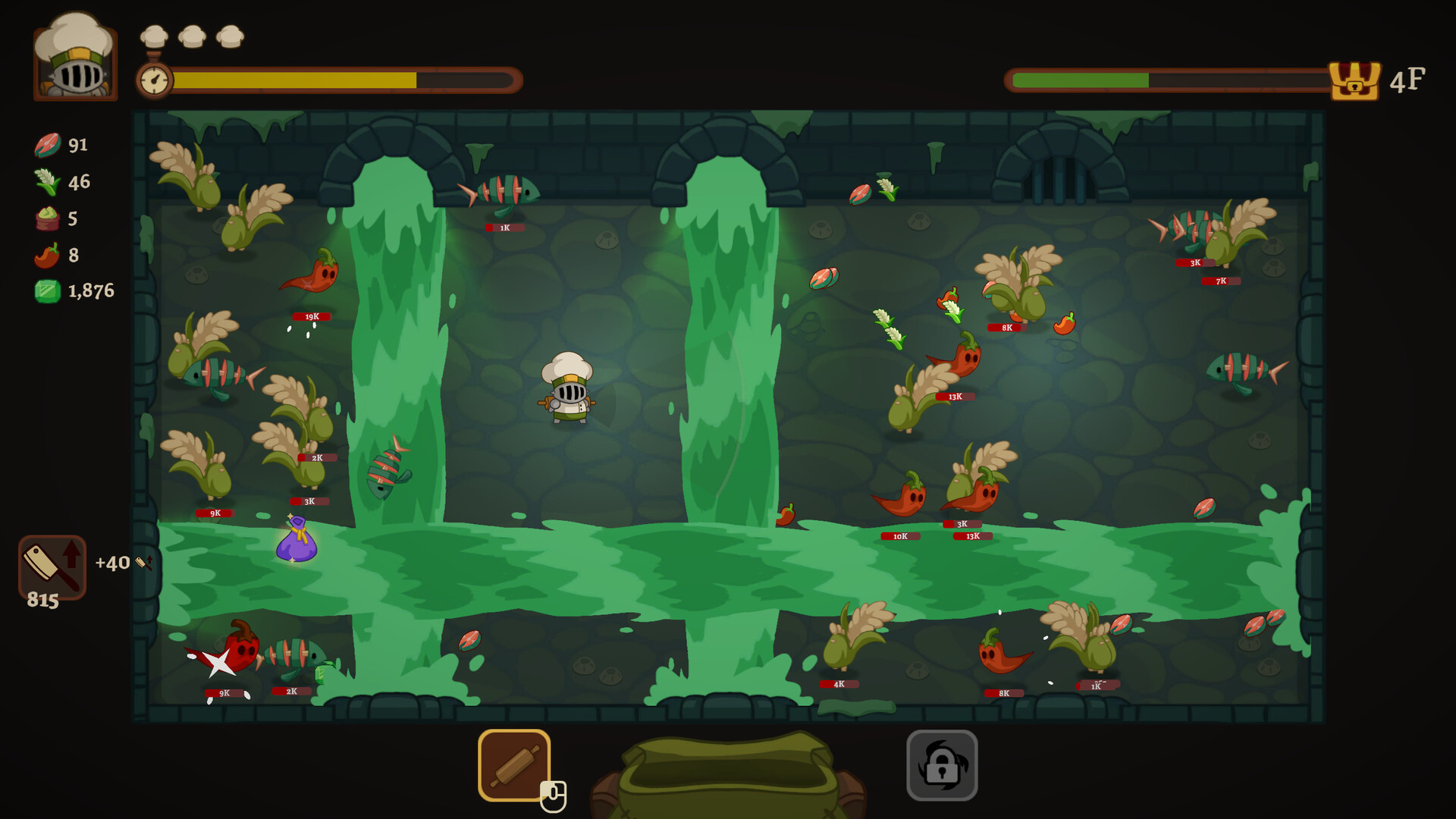
When a Deeper Dungeon Makes Progress Slower
Chef Knight is not a pure action game where the answer is always "go deeper." A dungeon run brings monster ingredients back to the kitchen, the kitchen turns them into dishes, and sales pay for the next upgrade. A dungeon route is only good when that whole chain benefits.
A harder area may yield a larger haul but take longer to clear or process. Compare the useful return over the same interval before adopting it as your farm. A bigger ingredient pile and money ready for a purchase are different measures.
If you play a lot of action-management hybrids, this rhythm should feel familiar: the fight is only half the build. A run that looks brave in the dungeon can still be a bad route if it leaves the shop side wheezing afterward. A repeatable route gives you a steadier comparison; weigh a deeper push against its extra clear and processing time.
Surviving one extra room does not settle the comparison. Note clear time, usable haul, waiting stock and money gained before deciding whether to repeat it. A safe farm route is a conservative choice while those results are unclear.
Route Decision Table
Safe Push Checklist
- Check the current farm route's clear cost. Note repeated deaths, long fights or traps; compare those observed costs with what another route would provide.
- Check whether the haul converts. A good dungeon trip should feed useful dishes, not just create a bigger inventory mess.
- Compare time to the same intended purchase. A later purchase is a warning sign. Check starting stock, recipe, selling setup and the observation interval before attributing it to depth.
- Check an available upgrade against the observed delay. Read its stated effect in your build; a category name does not prove that a purchase will remove the queue.
- Repeat the same route once after a focused upgrade. Keep the route and shop setup comparable. Check the queue's size and waiting time, or money gained over the same interval. A queue can remain while shrinking; one disappearance does not prove that the purchase caused the change.
When to Farm Instead of Push
Repeating the safe route is reasonable when its useful return compares well, or when you prefer its lower risk. Keep it as a baseline while checking what a deeper route would add. Waiting stock alone does not establish which route pays better.
When to Push Deeper
Consider a deeper route when its possible returns serve your goal and its clear, processing and risk costs are acceptable. Spare kitchen capacity is useful information, not a requirement that every queue must disappear first.
Compare One Farm Loop With One Push
Separate the purchase test from the depth test. After an upgrade, repeat the safe route first, keeping the recipe and selling setup unchanged where possible. Then hold that upgrade and shop setup fixed while comparing a safe-route loop with a deeper-route loop. Note starting stock and unavoidable differences. Compare clear time, usable returns and waiting stock, plus money gained over the same observation interval. One pair of runs is a signal, not a verdict.
For a mixed result, a safer route is a reasonable temporary choice, but a new queue alone does not reject the deeper route. Compare useful money over the same interval and the time needed to process the haul; repeat comparable observations before calling either route better.
FAQ
Should I always push to the deepest Chef Knight dungeon I can survive?
No. Compare useful returns against clear time, processing and risk. A slower clear or some waiting stock can still accompany a better full loop; test the tradeoff rather than treating either symptom as a veto.
How do I know a dungeon route is actually good?
Check comparable clear times, usable returns, waiting stock and money gained. Keep the purchase and setup fixed and record differences; one quicker upgrade is encouraging, not proof of the cause.
When should I stop farming and try a harder route?
Try it when the possible return serves your goal and the costs are acceptable. An idle kitchen is not enough evidence on its own: check whether it repeatedly waits for the chosen recipe's ingredients. A backlog calls for a full-loop comparison, not an automatic ban on depth.
Where the route starts to slip
- You survive deeper but progress slows: the route may be too slow or too hard for the current economy.
- New ingredients do not turn into money: check whether the haul suits the recipe, whether cooking or sales is waiting, and the observation interval.
- You keep dying to traps or pressure: route safety is the blocker, not recipe knowledge.
- Your upgrades feel random: you may be changing route and spend timing at the same time, making the real bottleneck hard to read.
- The safe route still earns well: keep it as a comparison baseline; weigh the purpose, useful returns and costs of another depth.
After a Balance Change
If dungeon rewards, route safety, or upgrade timing shift, do not chase the deepest path by habit. Read the chain in order: clear speed, ingredient usefulness, kitchen conversion, selling flow, then upgrade timing.
Related Guides
Start with the Chef Knight Beginner Guide if the whole loop still feels unclear. Use the Chef Knight Money and Selling Guide when deeper routes create income problems, then use the Chef Knight Upgrade Priority Guide before spending. Use the Chef Knight Common Mistakes Guide if you need a quick diagnosis checklist. Return to the Chef Knight guides.