

Hold The Mine guide
Hold The Mine Recovery: Next Day or Next Run?
Hold The Mine's Patch #10 added a last-minute shop or demolition shortcut beside the battle-start button, when that service is available that day. After a rough night, ask whether an affordable defense went unbought there. Then check the run's state: if you survived, repair on the next day; if defeat ended the run, carry the lesson into a new attempt, not an imaginary tomorrow.
Check whether the run is still alive
A night that costs you health and a night that ends the run need different instructions. Before changing the build, establish which one happened.
- The run continues. Use the next available day to address the weakness you saw, with the resources and options this run actually has. Keeping a useful part of the defense can save you a costly rebuild.
- Defeat ended the run. Plan a fresh attempt. Record the enemy pressure, the part of the defense that failed, and one purchase or route decision to reconsider. Do not assume the old inventory, heroes, or blueprints will be available again.
If you lost with resources unused, that is a question for the next attempt's spending plan. It cannot rescue the battle you already lost. If you survived with those resources, there may still be a purchase to make—but only if it addresses a weakness and is available.
A full purse can hide an empty defense
An unspent resource pile is a prompt to check what you could buy, not proof that you should have mined less. Were those resources the right ones for an available building or upgrade? Could you afford it before battle? Would it have affected the first enemy that got through? If any answer is no, “spend earlier” is not yet a useful repair.
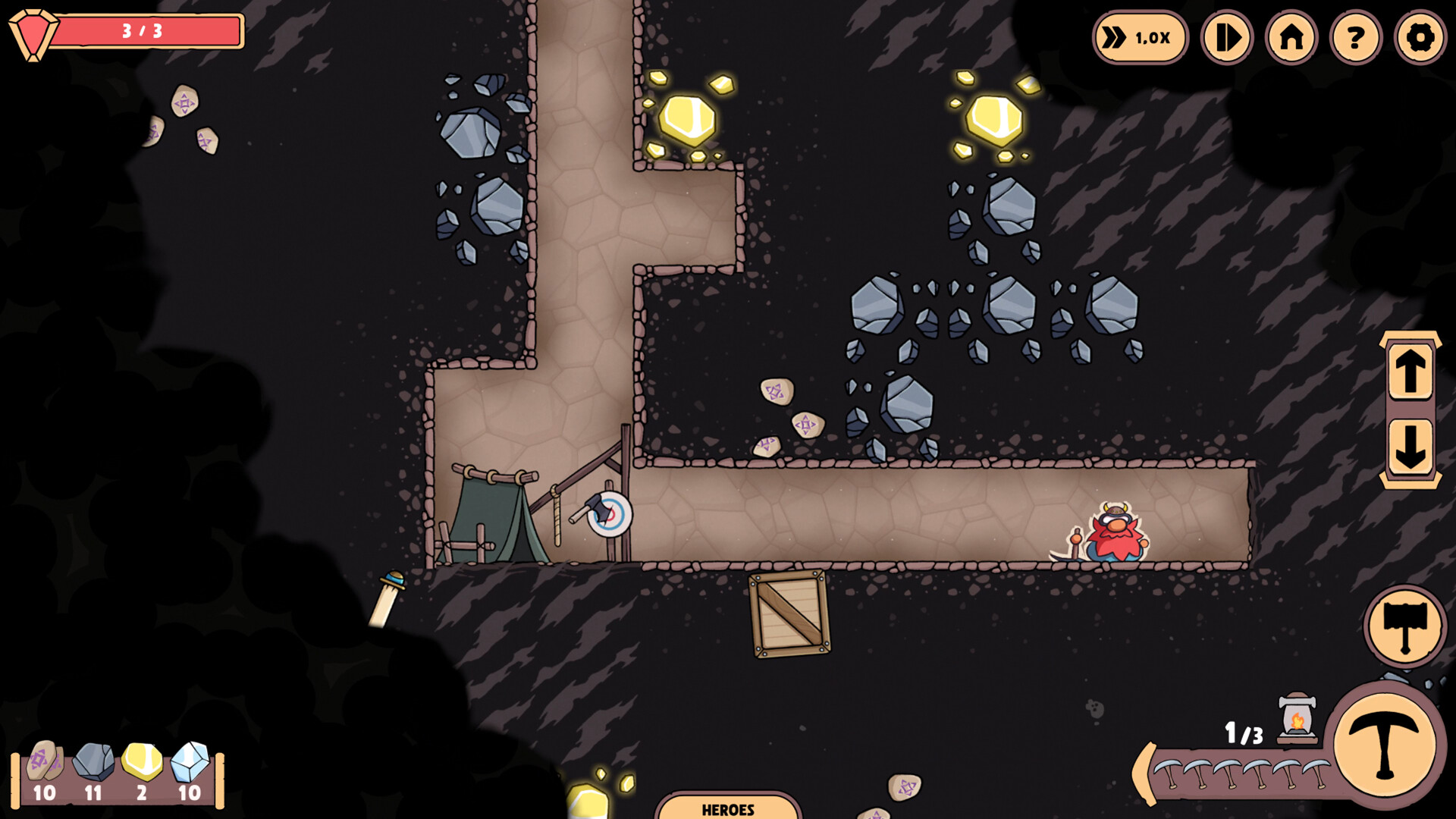
The official store description gives the mining day a limited number of expeditions. Plan within that budget rather than treating the trip as a race against a return timer. If you can already fund the relevant defense, check the purchase before committing expeditions to another reward. If you cannot, identify the required resource and whether the remaining expeditions can reach it. A shorter route that leaves the same purchase unaffordable has solved nothing.
The end-of-day shortcut is a final check when the service is offered, not a promise of a useful item. The available choices may not fix the weakness. Keeping resources can be reasonable when the only purchase does too little; spending them merely to empty the purse can weaken a later decision.
Route order also deserves a look. In Patch #15 (v0.8.0, September 17, 2026), mining changed to follow the order in which blocks were marked. The developer's examples included a Mushroom moving the dwarf into an already marked area and wasting pickaxes, and Dynamite or Bomb Storage effects depending on the last block dug. If an expedition failed to deliver the intended resources, inspect that order before blaming the amount you mined. These are versioned examples, not a universal route to copy.
The first summon is a different problem from the fifth
A defense can lose before its useful effect begins, or hold the opening and fail later. Those failures should not automatically receive the same purchase.
Patch #10, released May 26, 2026 for v0.7.40, made the initial cooldown for periodic effects and summons half the ordinary interval. Its Necromancer example used a first summon after 3 seconds, followed by the normal 6-second interval. Those numbers describe that patch; check the power in the version you are playing before planning around them.
If enemies reached the gate before that first summon, a change that improves only the later summon interval would leave the opening unanswered. Look for an available effect that can act before the observed break. If the first summon arrived in time and the gate held initially, the more useful question is what happened afterward: were enemies surviving the attacks, arriving outside coverage, or accumulating between triggers? An earlier first summon does not increase every later summon's frequency.
Keep the part that handled comparable pressure when you can, and change a purchase that addresses the observed gap. But do not preserve an opener just to obey a one-change rule: a new enemy or an unaffordable follow-up can make the old plan unsuitable. In a fresh run, the same tools may never appear.
A later defeat is a clue, not a verdict
Write a short comparison rather than grading the repair by the time of death alone:
- Before: which enemies got through, where they did it, and what the defense could actually afford.
- Change: the purchase, trigger coverage, or marked mining order you altered. Note other differences too.
- After: whether the same weakness appeared under similar enemy pressure, and what else changed in the wave.
Patch #15 narrowed the variation in enemy spawn rate; it did not say that every night becomes identical. A later defeat may reflect a useful change, lighter pressure, a different enemy mix, or another purchase. The same failure can also return because a relevant repair was too small. Neither outcome, by itself, proves that the diagnosis was right or wrong.
One change is useful because it leaves fewer explanations to untangle. It is not worth protecting at the cost of a run that could still survive. If two available purchases are both necessary to cover the gate, make them—and accept that this attempt will tell you less about which one mattered.
The difficult call is whether to preserve a defense that nearly held or spend scarce resources replacing it. Name the gap before making that call: what reaches the gate before your existing answer can act, and what can you actually afford to change?
Sources. Hold The Mine on Steam describes the expedition budget and day/night loop. Patch #10 (May 26, 2026; v0.7.40) documents the shortcut and first-trigger timing. Patch #15 (September 17, 2026; v0.8.0) documents marked mining order and reduced spawn-rate variation. The recovery choices above are editorial recommendations, not guaranteed builds.
Related guides. Use the Hold The Mine Wave Survival Guide to examine enemy pressure, the Mining Route Guide for resource planning, the Buildings and Heroes Guide for defense roles, or the Upgrade Priority Guide when choosing a spend. Return to the Hold The Mine guides for the full list.