Kinny and the Cosmic Cauldron guide
Kinny and the Cosmic Cauldron Ingredient Reactions Guide
Do not judge a Kinny ingredient by one lucky bounce. Treat an ingredient reaction as useful only when you can name what touched, what changed, and why it helped the score target. A reliable early plan builds around repeatable crashes and merges, keeps the deck readable, and skips cute pieces that start a second plan before the first one is stable.
When One Lucky Reaction Becomes a Bad Build
Kinny's cauldron is not a normal card hand. Ingredients drop into a physical space, collide, merge, and trigger reactions, so a messy deck can fail even when every individual ingredient looks interesting. If your run feels like random soup, the problem is usually not that you missed the secret best ingredient. The problem is that you added too many pieces before you understood which reactions were actually repeatable.
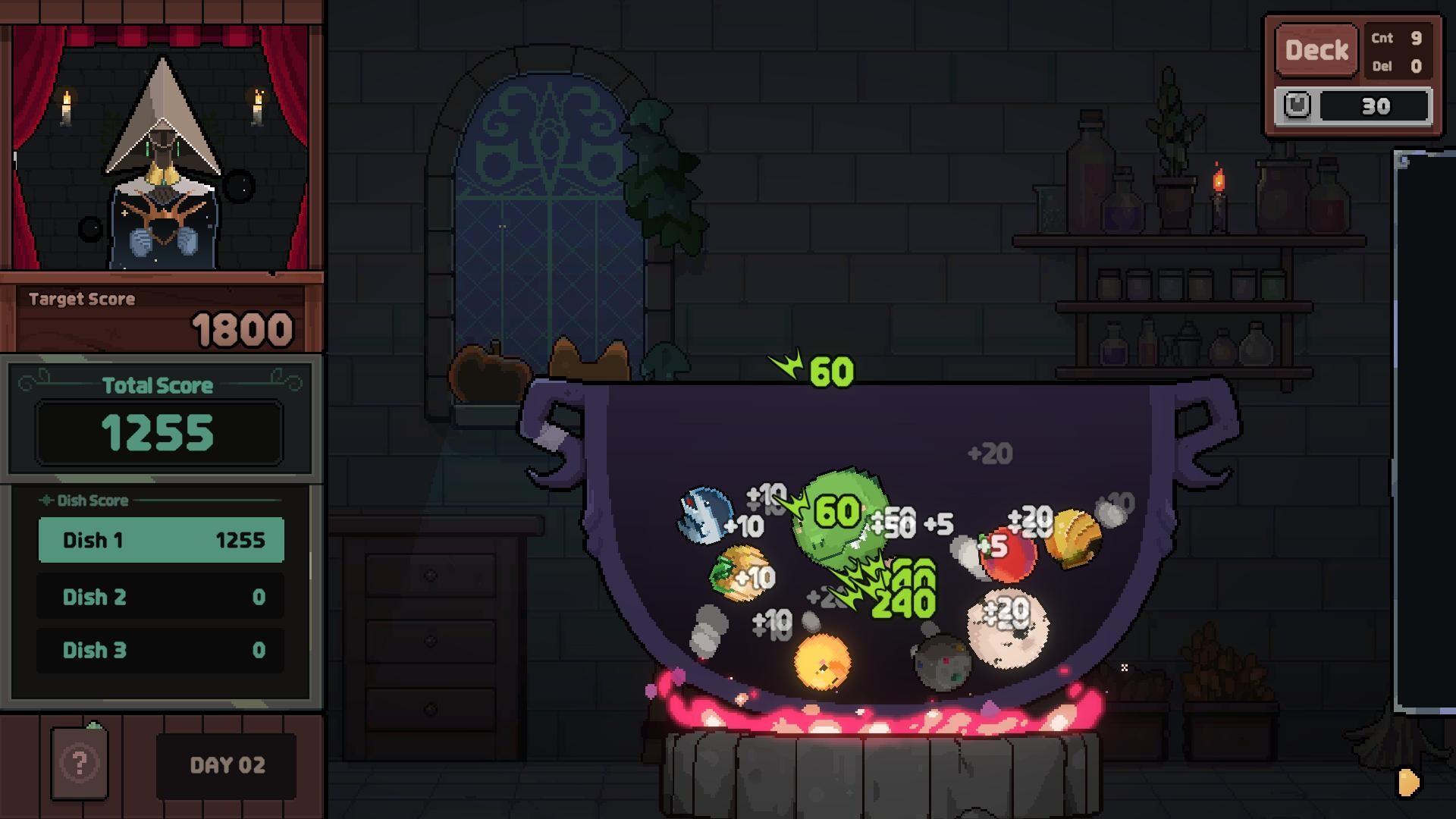
Watch one reaction chain, protect it, then add only rewards that make that chain easier to trigger or better at scoring. A reaction you cannot explain is not a route yet. It is just a clue for the next run. Kinny rewards curiosity, but taking every shiny ingredient quickly turns the bowl into noise.
Ingredient Reaction Reading Table
Build Around a Reaction You Can Repeat
Play this like a physics deckbuilder, not a normal recipe list. Your question is not only "what does this ingredient do?" It is "can I make this happen again when the cauldron is crowded and the score target is breathing down my neck?"
- Name the current job. Are you trying to score faster, repeat a merge, keep the cauldron readable, or recover from a weak dish?
- Watch the first repeat. A real beginner route needs a reaction that can happen more than once, not a highlight moment.
- Keep the deck narrow. If a new ingredient does not help the current reaction, leave it for a later run.
- Use rewards as support, not decoration. A relic, upgrade, or bonus should make the chain more reliable, stronger, or easier to recover from.
- After a failed dish, identify the break point. Did the pieces miss each other, merge too late, score too low, or get buried by deck clutter?
Reward Priority Rules
When Kinny offers a reward, do not ask whether it is exciting. Ask what job it does for the reaction you are already building. New players often lose because every reward creates a new idea, and by the time the score target matters, none of those ideas appear together. That is the Slay-the-Spire-style trap in a cuter outfit: a deck full of "good cards" can still have no plan.
Why the dish scored low
After a weak dish, read the chain before taking the next reward. Did the pieces never meet, meet too late, score too low, or disappear inside deck clutter? Each failure points to a different reward job, so a perfect recipe list would not solve all four.
Common Reaction Mistakes
Building around spectacle instead of repeatability
A flashy dish can reveal a useful reaction without giving you a stable route. If you cannot make the reaction happen again, keep it as a clue instead of forcing the whole deck around it.
Adding ingredients to fix a bloated deck
If the cauldron already feels unreadable, another ingredient usually makes the problem worse. The recovery move is to narrow the plan: support the chain that already scores, and stop feeding side routes.
Taking rewards before knowing the failure
Rewards are only good when they solve the thing that is killing the run. If the dish misses because pieces never meet, take consistency or control. If the dish lands but scores short, take score support. If you do not know which problem you have, slow down and read the next attempt.
What to check when the plan stops working
- Every run looks different: you are probably adding too many off-plan ingredients before one reaction chain is stable.
- The best dish cannot be repeated: treat it as a clue, not the main route.
- The cauldron is busy but weak: your ingredients may be reacting without solving the score target.
- Rewards feel impossible to choose: sort them by job first: consistency, score push, control, or novelty.
- You keep losing after a promising start: the early combo may not scale, or later rewards may be pulling the deck away from its first job.
Stabilize the Reaction before Adding Payoff
When a reaction looks good once but will not repeat, stabilize that chain first. Add score push or relic value only while the cauldron remains readable.
If the cauldron suddenly looks like a fireworks show but the score barely moves, that is not bad luck. It usually means the run has reactions without a job. Cut the noise, keep the reaction that actually moves the target, and rebuild from there.
Related Guides
Start with the Kinny Beginner Guide if you need the full first-run mindset. Use the Deck Consistency and Bloat Guide if too many reactions make the cauldron unreadable, then use the Score Target and Reward Priority Guide when the reaction works but the reward choice is unclear.