
Pandora's Toybox guide
Pandora's Toybox Faith Guide
Quick Answer
Faith is your in-run action economy. Grow believers first, keep a reserve for emergencies, and spend faith only when it protects a settlement, creates more believers, stops heretic pressure, unlocks a stronger route, or finishes the scenario objective. Do not confuse Faith Points with Faith Crystals: points solve the current run, crystals improve future runs.
What this guide helps with
Faith feels like a miracle button, which is exactly why beginners burn it too early. If you have played roguelites with emergency potions or deckbuilders with limited redraws, treat Faith the same way: spending it because the button is glowing is usually wrong. A good cast either prevents a real collapse, grows the route, answers heretics before they snowball, or closes the objective. If it only makes the city look cleaner, save the faith.
Faith Points vs Faith Crystals
Faith Spending Priority
A good faith spend should change the run. If it does not prevent a collapse, speed up a real objective, create believers, or answer rival faith pressure, it is probably optional. Save optional casts until your economy and believer base are stable.
The veteran habit is to ask one question before every cast: what gets worse if I wait? If the honest answer is "nothing important," that faith belongs in the reserve.
Faith Reserve Check
Before spending Faith Points, decide whether the reserve is protecting the run or just sitting unused. A good reserve gives you one clean answer to heretics, disaster recovery, or the final objective push. A bad reserve is either empty before pressure arrives or so large that you never convert it into progress.
How to Grow Faith Safely
- Stabilize population. More people give you more possible believers and more room to recover from bad events.
- Protect the ordinary economy. Food, wood, stone, and housing problems eventually become faith problems.
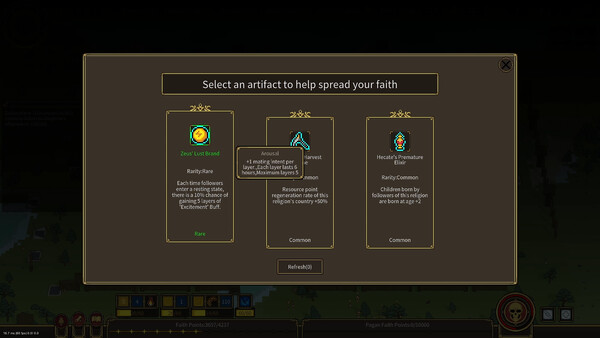
- Support prayers that match the route. Prayer rewards and artifacts are strongest when they solve the current run, not when they distract from it.
- Answer heretics early. Rival beliefs are cheaper to manage before they become a map-wide problem.
- Finish scenarios instead of overbuilding. Permanent growth comes from the clear loop, not from endlessly perfecting a safe city.
When to Use Punishment Instead of Conversion
Conversion is usually the cleaner first answer when rival belief pressure is still small. Punishment or holy war becomes more reasonable when heretics are already threatening the run, conversion would be too slow, or the objective requires a decisive response. The risk is recovery: destructive answers can solve faith pressure while creating population or resource problems.
If you are unsure, read How to Convert Heretics before escalating to Punishment and Holy War.
Faith Failure Checks
FAQ
Should I spend Faith as soon as a miracle is available?
No. Hold Faith unless the cast prevents collapse, grows believers, answers heretics, unlocks a route, or finishes the objective. A glowing button is not a reason by itself.
Why am I always out of Faith?
You are probably spending on comfort instead of pressure. If the city would survive without the cast, save the reserve for heretics, emergency recovery, or the final objective push.
What is the difference between Faith Points and Faith Crystals?
Faith Points solve the current scenario. Faith Crystals are long-term progression. Do not play a current run as if every Faith Point is a crystal-farming currency.
Patch Context
This page focuses on faith decision rules that stay useful across balance changes: reserve discipline, believer growth, heretic timing, and scenario cash-out. If exact miracle costs or god effects change, keep the same question first: what gets worse if you wait?
Related Guides
For first-run routing, start with the Beginner Guide. If faith spending keeps ruining your scenarios, use the Common Mistakes Guide. If you want permanent progression, read the Faith Crystals Guide after you understand the difference between points and crystals.