
Rune Dice guide
Rune Dice Merge Chains and Dice Positioning Guide
For more reliable Rune Dice merge chains, stop throwing only for the biggest immediate hit. Decide where the die should land, what matching die it can realistically reach next, and whether the fused die still supports your class plan. A weaker-looking throw that keeps the board chainable is usually better than a flashy launch that scatters the next turn.
What this guide helps with
Rune Dice is not just "roll dice until numbers combine." The important skill is making the next board state easier to play. If your throws keep creating isolated dice, awkward angles, or a merged die that does not help your current plan, the run will feel random even when you are technically making upgrades.
If this happens, stop blaming bad luck for one route segment and look at the shape of the board. A clean merge chain feels boring in the good way: fewer miracle rebounds, fewer panic throws, and more turns where the next target is already obvious.
Merge Chain Decision Table
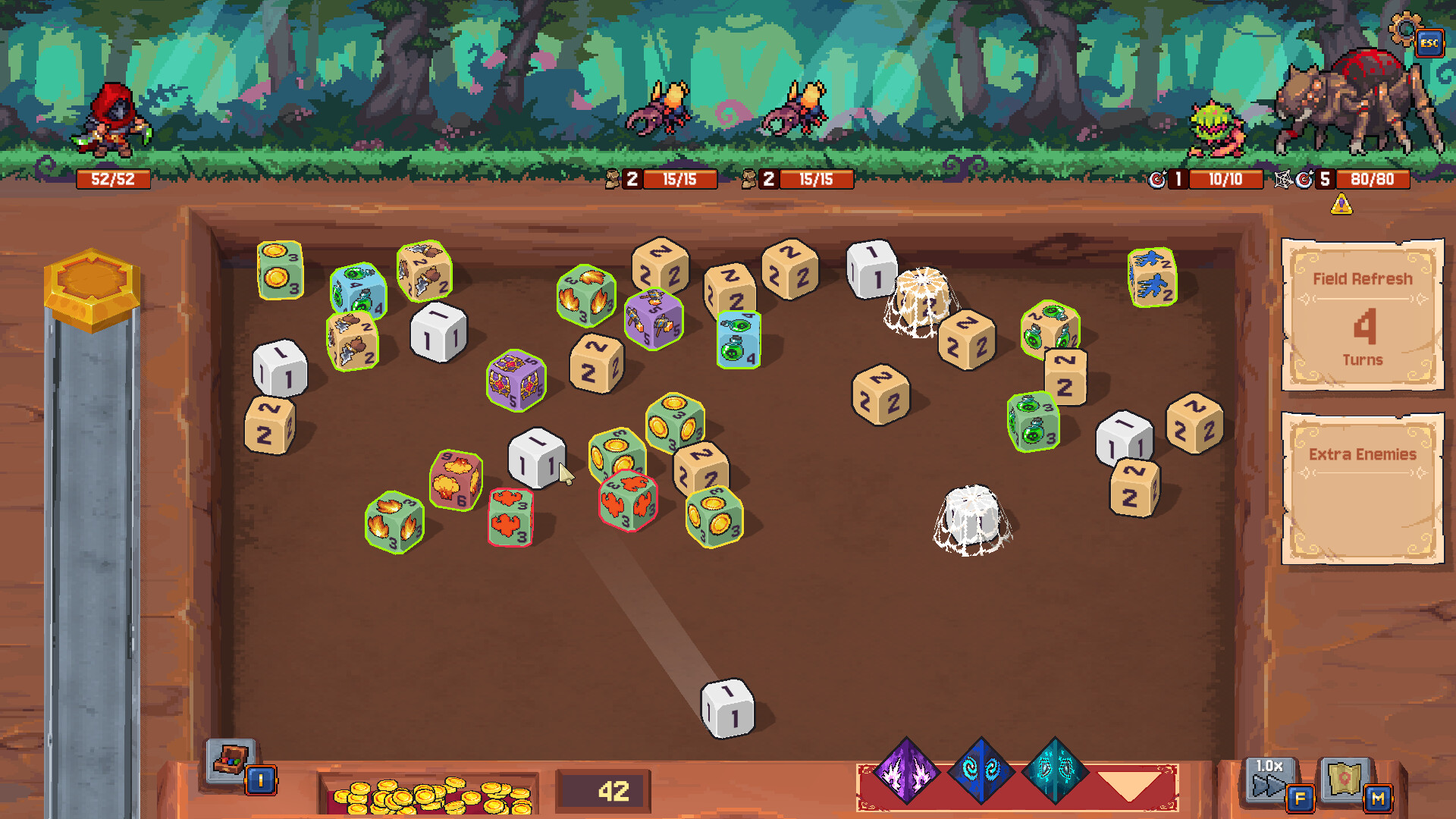
How to Set Up Cleaner Dice Placement
- Pick the next target before releasing. If you only know what you want to hit right now, the next turn is already being left to luck.
- Leave clusters, not islands. A cluster gives future dice more ways to fuse. Isolated dice make every later throw harder.
- Respect board edges and rebounds. Physics can be useful, but beginners should use rebounds to control position, not to gamble for miracle hits.
- Merge for a plan, not for the animation. A fusion that does not support your class, relics, or rune timing is not automatically a good upgrade.
Board State Reset Check
When the board gets messy, the next throw should usually reset the run's shape before it chases a bigger number. A reset throw is not passive. It pulls dice back into useful contact, protects the class plan, and makes the next merge readable instead of asking for a miracle rebound.
Build/Route Impact
Because Rune Dice has classes, relics, runes, shops, bosses, and procedural route decisions, merge discipline changes more than one combat. If your current class wants reliable setup turns, buy and route around consistency. If your run already has enough damage but poor control, a positioning-friendly relic or rune can be more valuable than another disconnected effect.
Use this as a route-stability rule: support the dice plan you already have, and avoid rewards that make your board harder to use just because they sound stronger.
Common Beginner Mistakes
Failure Checks
If your Rune Dice run feels inconsistent, diagnose the board before blaming class choice. Most weak runs fall into one of these patterns:
- Your dice finish too far apart, so every future merge needs a perfect throw.
- Your merged dice do not match the relics or runes you bought.
- You spend after the route becomes dangerous instead of preparing before bosses.
- You keep chasing one-turn damage when the run actually needs control and setup.
Your run is not dead every time a die lands badly. The recovery move is to stop the next panic throw, rebuild one playable cluster, and spend on the support that makes the next two turns less chaotic.
How to use this guide
Use this page when your dice keep upgrading but the board keeps getting worse. It focuses on stable board and route fundamentals before chasing rankings, exact boss counters, or unlock routes. If a throw creates a bigger number but ruins the next two turns, treat it as a bad merge until your class, relics, and runes can support it.
Related Guides
Start with the Rune Dice Beginner Guide if you want first-run priorities. Use the Relics and Runes Planning Guide when support choices are not making your dice plan more stable. Use the Boss Prep Guide when field disruption or boss pressure breaks your setup. Use the Class Safe Starts Guide if class identity is making route choices unclear. Return to the Rune Dice guides for the current coverage plan.