
Vampire Crawlers guide
Vampire Crawlers Common Mistakes Guide
Most bad Vampire Crawlers runs are not lost because one card was weak. They are lost because the hand is trying to do three jobs at once: draw forever, scale Amount, farm gold, and beat bosses with no clear anchor. Pick one job for the run, protect the cards that make that job work, and stop taking shiny cards that do not fix the current failure.
What this guide helps with
Vampire Crawlers is good at making a messy hand look exciting. The screen fills with cards, the combo count climbs, and it feels like the build is almost online. Then the boss lives, the key card cracks, or the gold route dies before the payout. That is not usually bad luck. The route lost its shape before the fight ended.
Treat each run like a deckbuilder with a dungeon timer breathing down your neck. Adding one more clever card is not progress if the hand can no longer find the card that actually wins the fight. The goal is a clear hand, not a dramatic hand.
Common Mistake Table
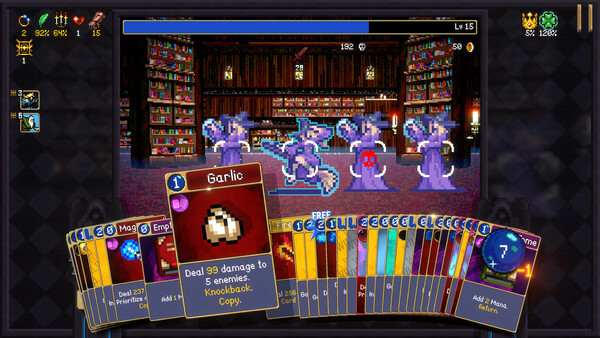
Mistake 1: Forcing the build before the game offers it
The run does not care that you wanted Infinite Draw. If the early rewards are projectile payoffs, Amount support, or a safe farming angle, forcing a draw engine can turn a playable route into a pile of missing pieces. The same is true in reverse: stacking Amount without Bone, Runetracer, dual guns, or another card that converts it into hits is just making a weak plan louder.
Recovery move: after the first few meaningful rewards, name the route out loud. If you cannot say, "this is a draw run," "this is an Amount run," "this is a gold route," or "this is a safe clear," stop adding speculative cards until the job is clear.
Mistake 2: Treating every card pick like a tier list
A good card can still be the wrong pick. If the hand already has damage but cannot keep mana moving, another damage card is clutter. If the hand has draw but no payoff, more draw is just a longer road to nowhere. If the run is already fragile, a greedy cracked-card line can turn one strong turn into the last turn.
Mistake 3: Upgrading the weapon into a dead end
Evolutions want planning. If you fill every socket with small value, you can block the upgrade that would have carried the route. This feels awful because the weapon looks stronger for a while, then suddenly cannot become the card you were actually building toward.
Recovery move: pick one weapon-plus-passive target, keep room for it, and spend gems on the card that is supposed to carry the next few floors. If you do not know which card that is, the right answer is usually patience, not another random socket.
Mistake 4: Farming gold like the dungeon is already solved
Greed tools are tempting because they feel like progress even when the build is fragile. The trap is building the payout before the fight is stable. Krochi, Iguana Gallo, and O'Sole can support safer money routes, but the run still needs enough control to reach the payout window.
If the farm keeps dying late, stop blaming the gold cards first. Check whether the route has freeze timing, recovery, revive safety, or enough normal damage to survive until the money plan matters.
Mistake 5: Saving nothing for boss pressure
Boss fights punish hands that only work in perfect conditions. Red Death and Trickster pressure are especially good at exposing greedy turns. If the whole plan depends on one uninterrupted combo, the run needs a backup: Clock Lancet timing, recovery, revive safety, earlier turn endings, or a less dramatic damage route.
Blunt route judgment: if the next boss needs the hand to be perfect, the hand is not ready. Make it boring enough to survive, then make it flashy again.
Failure Checks
Related Guides
Start with Beginner Route if the early dungeon still feels noisy. Use Crawler Card Builds to match cards to character jobs, Weapons and Evolutions to avoid upgrade dead ends, and Red Death and Trickster when boss pressure is the real wall.