Vampire Crawlers reference

Vampire Crawlers Route Reference

A practical reference for choosing a Vampire Crawlers route: card jobs, evolution pairings, crawler roles, relic priorities, gold-routing gates, and the checks you should run against the current in-game tooltip before committing a run.
Last updated: July 14, 2026 Steam app 3265700 checked Route reference
Quick answer: Vampire Crawlers is officially a Vampire Survivors spin-off, so familiar character, weapon, and stage names are expected. Use those names as route anchors, but verify the current card tooltip, passive pairing, and empty-socket state before you spend gold or lock a boss route around them.

Current-Build Verification Gate

The useful reference habit is simple: treat every outside list as a starting point, then check what the live game is showing before you build the whole run. This keeps community-discovered data useful without pretending every old recipe, unlock note, or floor location is permanent.

Before you commitCheck in gameSafe decisionFailure risk
A weapon evolution routeWeapon card, matching passive, and at least one open socket.Hold the socket open until the evolution is actually available.Filling the weapon with side gems blocks the payoff you were chasing.
A crawler unlock targetCurrent unlock text, stage name, and whether the route can reach the target cleanly.Route for one unlock or boss condition at a time.A run that chases five unlocks usually reaches none of them safely.
A relic or village spendWhat system it opens: recovery, reroll, Arcana, sockets, blacksmith, jeweler, or gold.Buy the tool that fixes the failure you are repeating.Permanent spending feels good but can be wrong for the next route.
A gold farmWhether the hand already survives bad rooms without greed cards.Add greed after control and draw safety exist.Greed before stability turns a farming run into a short run.

Route Job Matrix

Route jobTypical anchorsWhy it worksWhen not to use it
Beginner survivalWhip, Garlic, Magic Wand, Recovery, Reroll.Keeps early fights readable while you learn combo order, cracked-card risk, and reward pacing.When the account already survives cleanly and needs a faster boss or gold plan.
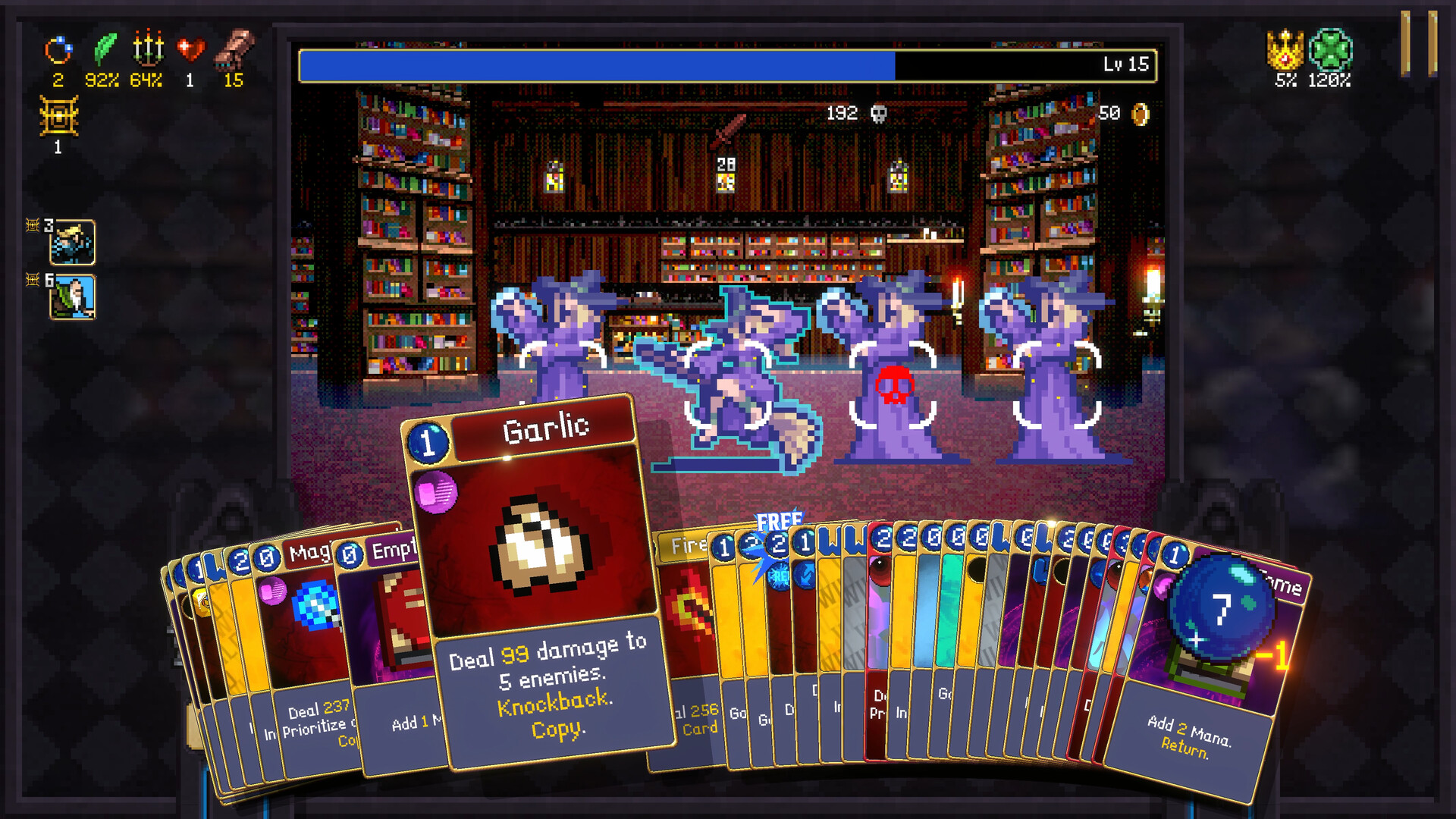
Evolution focusKnife + Bracer, Whip + Hollow Heart, Magic Wand + Tome, Runetracer + Armor.A weapon-plus-passive plan gives the run one clear payoff instead of several half-finished ideas.When reward offers do not show the passive, socket space, or upgrade support yet.
Draw enginePugnala, Giovanna, Poe, Wildcard, draw or color-trigger support.Extra cards matter only when the hand converts them into damage, control, or a repeatable finisher.When the deck draws more cards but still cannot end rooms quickly.
Amount scalingGennaro, Mortaccio, Bianca, Amount-friendly attacks.Projectile and hit-count value turns modest cards into a boss-ready damage pattern.When the run lacks targeting, sustain, or a way to protect the setup turn.
Boss controlClock Lancet, freeze timing, armor or revive safety, cleaner burst windows.The route wins by creating one safe window rather than trying to out-damage every boss action.When normal rooms already take too long; control cannot fix a deck with no finisher.
Gold and account growthGreed tools, Krochi safety, Gallo control, O'Sole triggers, cash-out discipline.The farm works when survival is solved first and gold is treated as the reward, not the opener.When the hand is still unstable or the route has not unlocked the spend you are farming toward.

Weapon and Evolution Route Check

These are planning rows, not a claim that every patch will keep the same wording forever. If the recipe text changes, follow the game tooltip first and use this table only to decide what job the route is trying to solve.

Weapon lineSupport to checkRoute valueCommon mistake
Knife into Thousand EdgeBracer and open socket state.Fast directional pressure for Amount or single-target routes.Taking it as the only answer to rooms with wide enemy pressure.
Whip into Bloody TearHollow Heart and whether the run needs sustain more than speed.Stabilizes sloppy fights and makes recovery routes less brittle.Overvaluing sustain after the deck already needs faster boss damage.
Magic Wand into Holy WandTome and reliable targeting support.Simple targeting route for cleaner early decisions.Letting reliable hits become an excuse to ignore scaling.
Runetracer into NO FUTUREArmor and enough room value to justify bounce-style scaling.Good when area pressure and defensive support both matter.Forcing it into narrow fights where the route needs direct burst instead.
Garlic into Soul EaterPummarola and whether early proximity safety is the real blocker.Makes beginner and Poe-style routes more forgiving while the account is weak.Keeping it as the main plan after the run needs a real finisher.
Clock Lancet controlBoss timing, freeze windows, and whether the deck can spend the window.Turns scary boss turns into planned burst windows.Using control as a substitute for damage the deck never built.

Crawler Role Snapshot

Crawler typeExamples to compareRoute ideaCheck first
Learning startersImelda, Pasqualina, Antonio.Use them to learn targeting, growth, and basic evolution discipline.Do not abandon a stable starter route just because a later crawler looks flashier.
Amount payoffsGennaro, Mortaccio, Bianca.Feed them cards that convert extra hits into room clears or boss pressure.If the deck has no sustain or control, Amount alone can still die.
Draw and trigger enginesPugnala, Giovanna, Poe.Build around hand velocity, color triggers, and one payoff for all those extra plays.More draws are bad if every draw adds another decision with no finisher.
Safety and controlKrochi, Iguana Gallo, O'Sole.Route them toward boss control, gold safety, or mistake tolerance.Do not force them into pure speed routes unless the deck already has burst.
Late reward routesMissingN0 and other deep unlocks.Treat these as account milestones that need stable setup, not day-one farming goals.If the unlock condition is unclear after an update, verify it before planning the whole session.

Relic, Village, and Cash-Out Reference

SystemUseful signalsRoute valueFailure check
Recovery and RerollEarly village spends that smooth bad rooms and reward offers.Best when repeated deaths come from chip damage or missing one key support.If the deck has no win condition, rerolling rewards only delays the same problem.
Gem Hammer and socket toolsSocket access, card upgrade planning, and route anchor selection.Turns a favorite weapon or support card into a real build center.Bad if you upgrade side cards before choosing the card that wins fights.
Polentir and Arcana accessPassive route effects that change how the whole run is planned.Good when normal card picks cannot solve the route weakness alone.Do not chase Arcana before the base deck can survive the path there.
Grim Grimoire and recipe clarityIn-run visibility for evolution planning.Reduces wasted reward picks and makes socket discipline easier.Still check the actual tooltip; a list is not stronger than the current game UI.
Blacksmith and jeweler toolsCard upgrades, gem control, sealing, and late tuning.Most valuable after you know which card or gem family the run actually wants.Buying tuning tools before a route exists turns gold into clutter.
Gold farming and Overkill routesGreed cards, safe clear speed, and whether the run can bank value.Good after the deck can clear without sacrificing survival.If fights slow down, cash out or pivot before greed deletes the run.

Patch Context and Route Confidence

Reliable contextCheck during your runBest player habit
Steam app 3265700 identifies the game as a Vampire Survivors spin-off from poncle and Nosebleed Interactive.Recipe wording, unlock text, and relic locations after patches.Use familiar names as route anchors, then follow the current tooltip when the game gives a different instruction.
The game is built around turn-based deckbuilding, Turboturn-style hand play, dungeon routing, and familiar Vampire Survivors concepts.Displayed values, final unlock requirements, and any route that depends on one changed card line.Confirm the card or relic text first, then decide whether the route still solves your failure pattern.
The main player problems are upgrade order, evolutions, crawler roles, village spending, gold routes, and boss prep.Lists that skip sockets, village refunds, crawler cards, Arcana, or deck sequencing.Prefer route advice that explains why the choice fixes your next room, not only what item name to chase.

How to Use Outside Lists Without Breaking a Run

Vampire Crawlers uses familiar names, but it is still a card-based dungeon crawler with sockets, village spending, crawler roles, Arcana, and route timing. If you find a recipe chart, video note, or forum list, treat it as a lead first. A good list becomes useful only after it passes the current-build checks below.

Outside source says...Check this firstUse it if...Ignore or downgrade if...
A weapon has a fixed evolution recipe.The weapon card, required passive, and open socket state in your current run.The current tooltip and reward flow still support the pairing.The list never mentions sockets or treats the recipe like a different auto-battler.
A crawler is the best choice for a route.The crawler's current role: draw, Amount, revive safety, control, or gold support.The route has cards that convert that role into a real fight plan.The advice ranks names without explaining the hand, boss, or account problem.
A relic should be rushed.Which system it opens: recipes, Arcana, sockets, blacksmith, jeweler, map reads, or Overkill.That system fixes the blocker you keep hitting.You are chasing it only because the list calls it mandatory.
A gold route is optimal.Whether the deck already survives normal rooms and reaches payout windows cleanly.Greed is added after control, draw safety, and cash-out timing are stable.The route starts with economy before survival or boss control exists.

The practical habit is simple: use outside data to choose a target, then let the live game decide whether that target is still valid. If the tooltip, socket state, or route job disagrees with a list, follow the game and treat the list as outdated context.

Reference Links