Vampire Crawlers guide
Vampire Crawlers Core Mechanics
The heart of Vampire Crawlers is sequencing. Build hands that climb from low mana costs into higher costs, use wildcards to reset awkward chains, stop before cards shatter, and count boss actions before a good turn becomes a wipe.
Combo Stack
The main damage engine is a rising mana-cost chain. A clean 0-cost, 1-cost, 2-cost line keeps the multiplier growing, and longer chains can turn ordinary cards into fight-ending plays. This is why a reward that fits your cost curve can be better than a high-damage card that strands the rest of your hand.
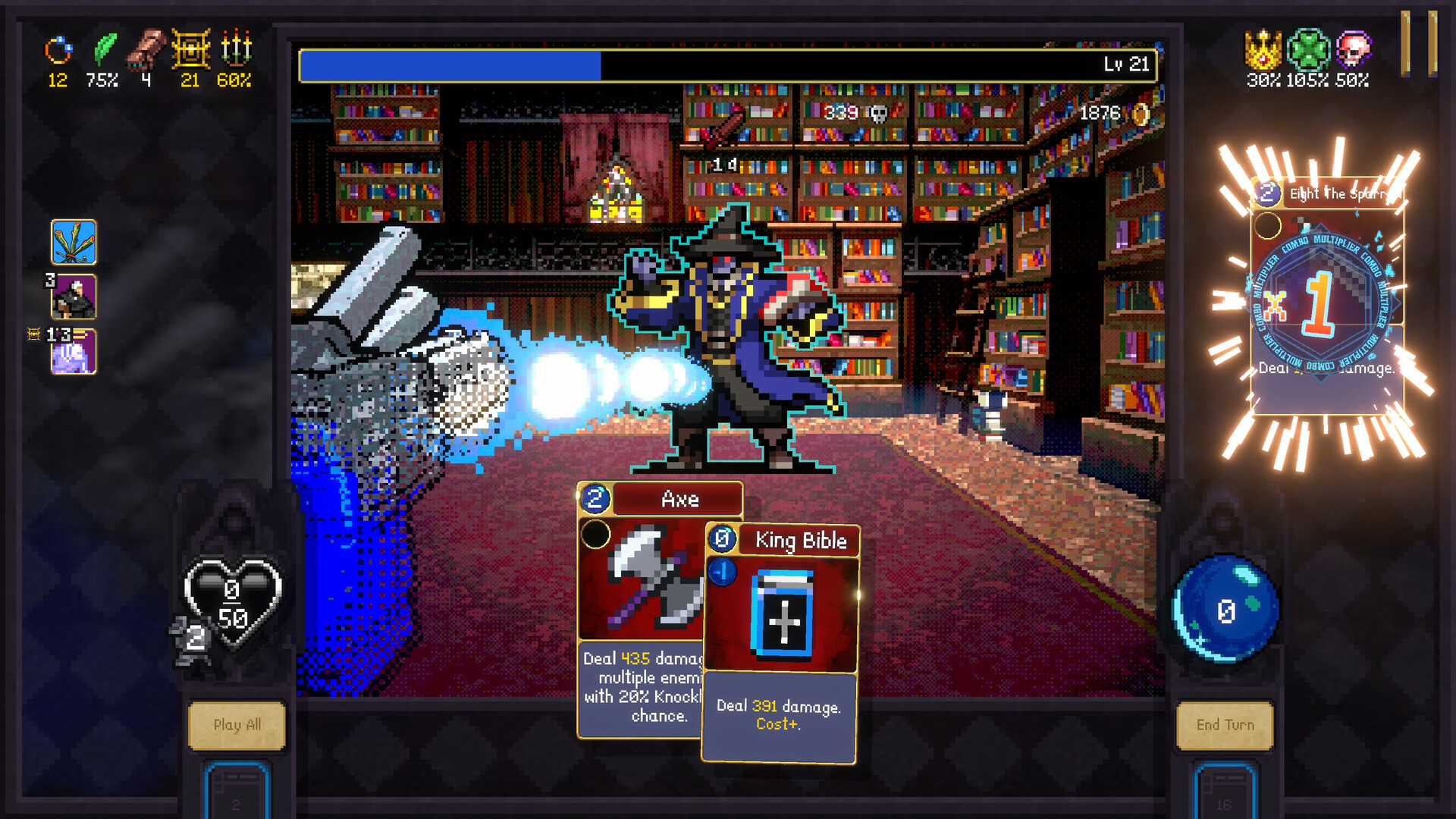
If your hand feels powerful but keeps stalling, the problem is usually not damage; it is the gap between cards. Think of the combo line like a rhythm game. Missing one beat does not just lower style points, it can end the whole turn before the payoff card matters.
Turboturns
Turboturn is the fast side of the game: turn-based combat without the usual wait between moves. When mana, draw, and card order line up, a turn can become a long burst instead of a single careful play. That speed is the appeal, but it also hides mistakes. The better the turn looks, the more carefully you should watch cracks and boss counters.
Wildcards and combo gems
Wildcards are combo glue. They do not just add power; they let a chain survive an awkward cost jump. After a 3-cost card, a wildcard can help restart the line back at 0-cost without throwing away the whole turn. Reverse Combo Gems and Easy Combo Gems are even more direct: they loosen the mana-order rule and make explosive hands much easier to build around. Wild Card triggers also matter for the Gold Farming Guide, where Krochi and Iguana Gallo use them for revive safety and Greed scaling.
Cracked cards
The cracked-card system is the game's anti-infinite warning light. Reuse the same card too many times in one turn and the card starts to crack; push it further and it can shatter out of the deck. The exact reuse threshold and any follow-up pressure are version-sensitive, so read the current card warning before treating a remembered count as a safe extension. Learning to stop is part of learning to combo.
Mechanics priority table
Boss action counters
Red Death and similar boss fights add an action counter on top of normal sequencing. Every played card or passed turn can advance the visible threat state. Read the current counter and boss text before committing to an extra action: counter length, rage behavior, and control interactions can drift between versions. A freeze or control tool matters only when its current text creates enough room for the next safe turn.
What this changes about deckbuilding
- Cost curve matters. A deck needs playable order, not just strong cards.
- Draw is dangerous and powerful. It fuels Turboturns but can push the same card into shatter range.
- Control tools are real damage tools. A frozen boss is a boss that did not end the run.
- Upgrade choices should support sequencing. Gems and sockets are strongest when they make good turns repeatable.
The veteran habit is to end a good turn before it becomes a bad one. That feels wrong the first time, because the screen is asking you to keep going. In practice, stopping with the boss controlled and your key card intact is often the stronger play.
Turn Stop Rule
A strong Vampire Crawlers turn should still have an exit. If the combo is running, the hand is full, and the next card looks tempting, pause for three checks before continuing: can the cost chain still connect, is a key card close to cracking, and will the boss counter punish one more action?
What to check when the plan stops working
Ascending Mana and Wildcards
The official launch notes describe the basic sequence: playing cards in ascending mana order strengthens the next card, and Wildcards can extend the stack. The chain only matters while it still serves the turn's damage, control, or setup job.
The official launch notes define the combo rule: ascending mana strengthens the next card, and Wildcards can extend the stack. Stop extending when cracks, boss eyes, or the next action would turn that extra value into a lost turn.
Read Damage as Four Separate Questions
Break damage troubleshooting into projectile count, modifiers, reach, and attack effects. Read those layers in the live tooltip and combat interface before buying another upgrade for a number that does not reach the target.
The useful answer is the first layer that failed: too few hits reach the target, the modifier supports the wrong card, the attack lacks room coverage, or the payoff arrives outside the boss window.
Related guides
Start with the Beginner Route if you are still learning the loop. For upgrade planning, read Weapons and Evolutions.
If this feels too cautious, compare it to any hard deckbuilder boss: the losing turn is often the turn that looked amazing two cards earlier. Greed turns into pressure fast, and the clean recovery move is stopping while your win condition is still intact.