Last updated: July 15, 2026Boss build rolesCreature route repair
Voidling Bound · Official game image
Before rebuilding a Voidling for a boss, choose the job it is supposed to perform: melee bruiser, burst shooter, attrition counter, fire pressure, or mobility control. A boss build fails when it mixes those jobs without solving the first reason the boss attempt collapsed.
Match the Role to the First Failure
Pick the role that matches your failure, not the one that looks most impressive. If you die entering the fight, fix melee safety or mobility. If the boss survives every clean window, fix burst or pressure. If direct attacks keep getting punished, try attrition, counters, poison pressure, or a safer reset plan. Change one layer, then repeat the same boss attempt.
One Failed Fight Can Blame Every Menu
A single failed fight can make every menu look guilty: evolution, genes, breeding, nature, movement, damage, and long-term spending. Start with the first moment the plan collapsed, then choose the role that answers it.
Close-range bruisers, burst shooters, counter or reflect attrition, poison pressure, fire pressure, and mobility control solve different failures. Choose the one that changes the fight with the fewest new dependencies.
Boss prep is a role decision first. Use customization to support the role that fixes the failed attempt, not to activate every tempting system at once.
Boss Build Role Router
Boss failureBuild role to tryWhy it worksFailure riskWhen not to use it
You die while entering or staying close.Melee bruiser with safer entry, recovery, and exits.Close-range routes need enough survival to make their damage windows real.Overbuilding defense until the boss never dies.Do not force melee if the creature cannot reach the boss safely.
You survive but cannot finish during openings.Burst shooter or focused damage-window route.The build stops leaking time and turns clean windows into real progress.Becoming fragile because every change chases damage.Do not use this if most attempts fail before a clear damage window appears.
You get punished whenever you attack directly.Attrition, poison pressure, counter-damage, or safer delayed damage.The creature can win while spending less time in unsafe attack frames.The fight may become too slow if the route lacks sustain or control.Do not use this if the boss has clear burst windows that your build can already exploit.
The boss gives short windows but the route needs constant pressure.Fire pressure or uptime-focused skirmisher.Pressure routes keep damage flowing between safe repositioning moments.Pressure can turn into panic if movement support is weak.Do not use this if you are missing basic survivability or spacing.
Adds, projectiles, or arena movement keep breaking the plan.Mobility control with enough damage to finish priority targets.The build wins by choosing when to engage instead of face-tanking every pattern.A pure mobility route can feel safe but fail to end the fight.Do not use this as an excuse to avoid choosing a damage identity.
Pick the Role Before the System
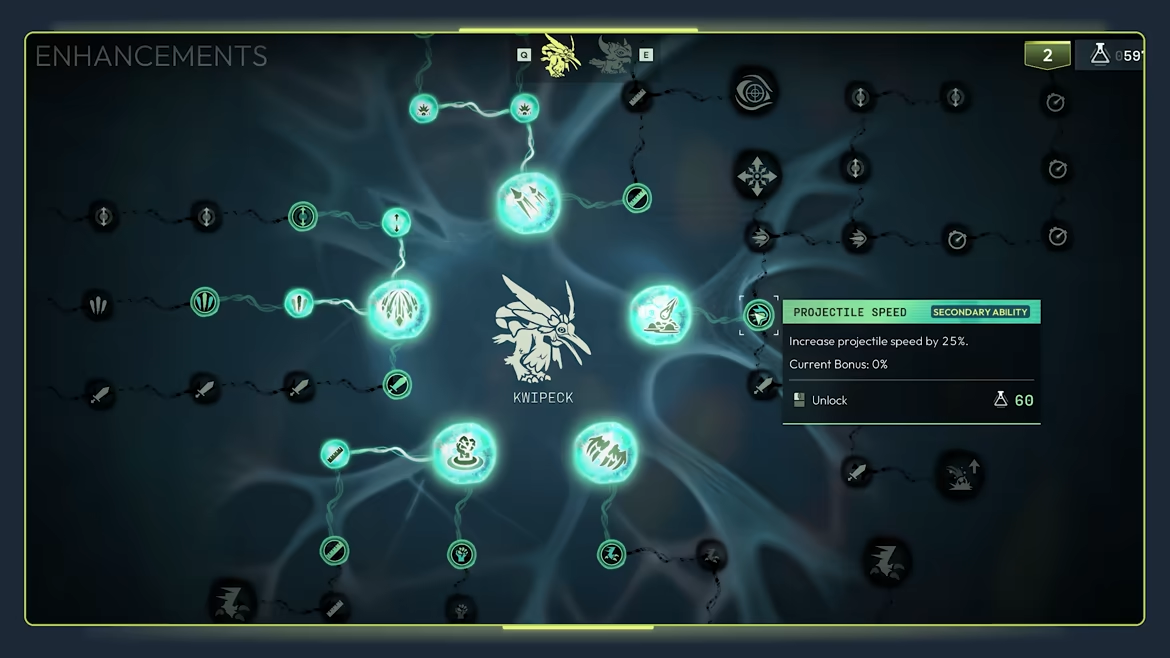
Boss prep gets weaker when you choose a system before choosing the job. Evolution, genes, breeding, natures, and long-term spending should all answer the same role question. If the role is melee bruiser, every change should help entry, contact time, recovery, or close-range finish. If the role is burst shooter, every change should help safe windows, aiming rhythm, or damage payoff. If the role is attrition, every change should help survival, control, and damage that keeps working while you reposition.
Name the first collapse. Did you die entering, run out of damage, lose to adds, panic during movement, or change too many systems at once?
Pick one boss role. Melee bruiser, burst shooter, attrition counter, fire pressure, or mobility control.
Change one layer. Use evolution, genes, breeding, or nature support, but do not change all of them before the next attempt.
Repeat the same boss question. If the new role does not fix the named failure, revert the idea or move to the next role.
Lock the role only after repeatable attempts. One clean fight is a clue. Repeatable boss comfort is a route.
Role Support Table
RoleEvolution should support...Genes should support...Breeding / nature should support...
Melee bruiserContact safety, recovery, or stronger close-range windows.Survival, controlled damage, and fewer failed entries.A sturdier close-range identity, not just bigger numbers.
Burst shooterA cleaner window where the boss can actually be punished.Damage rhythm, aim comfort, and a route that does not collapse if one shot misses.A roll that improves finish power without deleting safety.
Attrition / counterSurvival, delayed damage, poison pressure, counter value, or safer uptime.Sustain, control, and consistency across long attempts.A nature that helps the creature survive long enough for attrition to matter.
Fire pressurePressure uptime and safer repositioning between attacks.Damage flow, movement rhythm, and enough recovery to avoid panic.A roll that keeps pressure up instead of adding unrelated utility.
Mobility controlSpace control, resets, and priority-target access.Movement comfort plus one reliable finish tool.A nature that improves control without turning the route into pure running.
When to Change Roles
Change roles only when the same failure returns after one focused fix. If melee still dies after you improve entry and recovery, try mobility control or attrition. If burst shooting still cannot finish after you support damage windows, try pressure instead of more raw damage. If attrition takes too long and creates more mistakes, move toward burst or fire pressure. The goal is not loyalty to a build idea. The goal is a boss plan you can repeat without explaining away every failure.
After the July 2 Abyss Changes
The July 2 update made Abyss bosses damageable once they emerge during their spawn attack. It also adjusted deep-run enemy health, damage resistance, elite behavior, and boss-arena bounds. Recheck the opening damage window and the route's finish power before rebuilding the creature.
What you noticeRead it asTry nextAvoid
The boss is exposed during the spawn attack.The opening now offers an earlier damage window.See whether your role can use that window without losing its safe entry.Rebuilding entirely around an opening you cannot execute consistently.
Deep enemies take longer but show clearer damage progress.The patch changed deep-run scaling, not your creature's job.Check whether the route still has a finish plan after its safe setup.That more defense alone solves a slow kill.
An elite-heavy room feels less predictable than a normal mission.Elite and boss pressure expose different weaknesses.Keep the same role, then adjust movement, sustain, or one reliable finish tool.Assuming a normal-mission build automatically covers Abyss pressure.
Read the official July 2 notes for the full change list, then decide whether the next adjustment belongs to entry safety, pressure uptime, or damage finish.
What usually breaks before the boss
TrapWhat it looks likeBetter response
Copying a style without the routeYou try melee, burst, or reflect-style play because it looked strong elsewhere.Ask which failure that style solves in your own attempt.
Changing every system after one deathEvolution, genes, breeding, and nature all change before the next boss attempt.Change one layer and face the same boss problem again.
Damage tunnel visionYou keep adding offense while dying before the boss window matters.Fix survival, movement, or entry first.
Safety without a finishThe creature survives forever but the boss attempt never becomes cleaner.Add one reliable damage identity, not five small side tools.
Novelty breedingA new roll changes the style but not the result.Use the Breeding and Natures Guide to decide whether the roll solves a named problem.