
Rune Dice guide
Rune Dice Shop and Route Spending Guide
In Rune Dice, spend only after naming the problem the next route segment can punish. Buy dice when the board needs a clearer merge plan, buy relics when the current class identity needs repeatable support, use runes when a near-term fight can break the board, and choose safer route options when the shop cannot fix the missing layer.
What this guide helps with
Shop mistakes in Rune Dice rarely look dramatic in the moment. A new die looks useful. A relic looks strong. A rune feels safe to keep. The run collapses later because those choices solved different problems, or because the route needed one boring stabilizer instead of another exciting effect.
This guide is for the shop and route screen moment: you have some resources, several tempting directions, and not enough certainty. The goal is not to memorize a fixed shopping list. The goal is to decide what the next fight, boss path, or board state is actually asking for.
Shop Priority Table
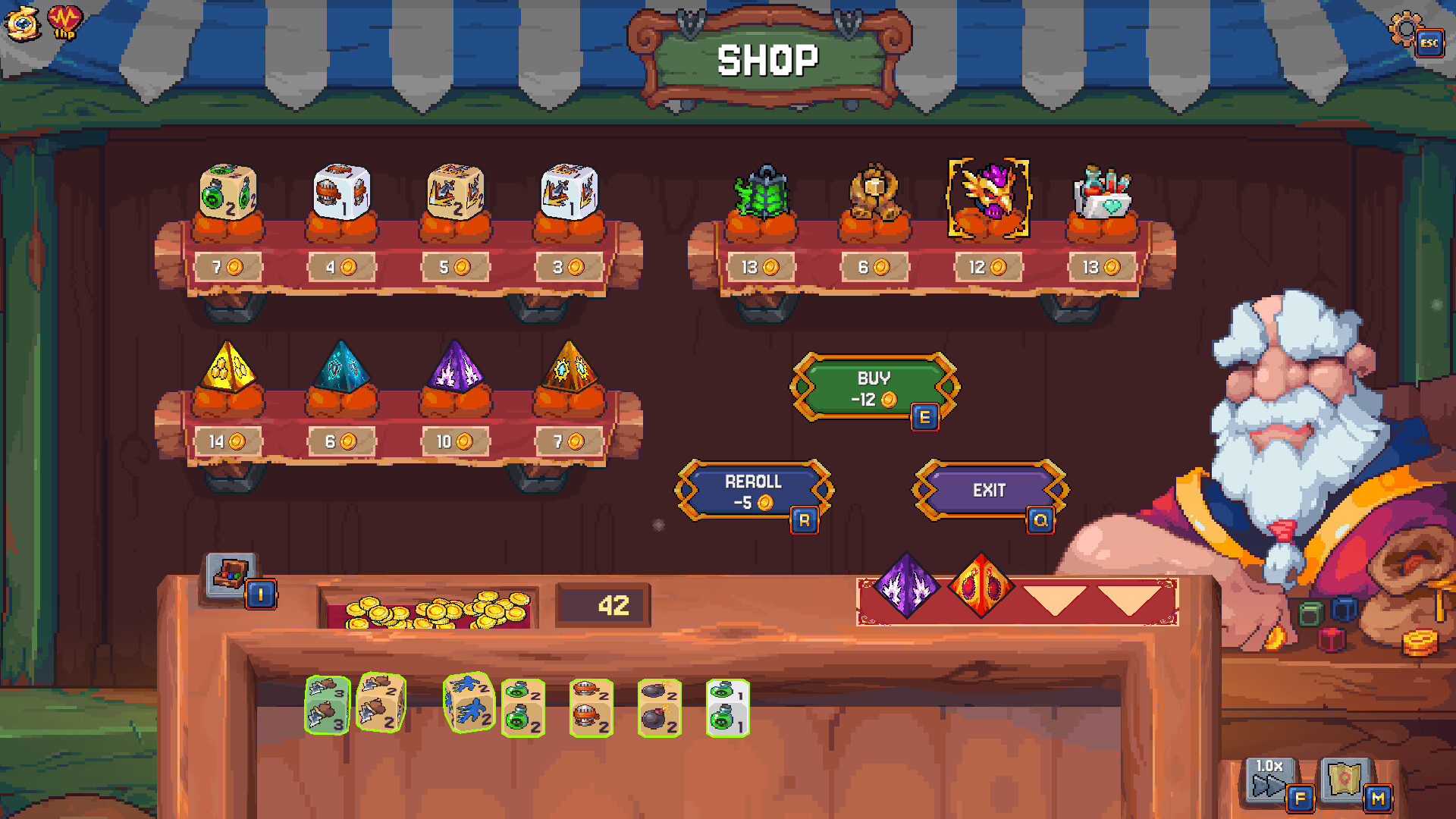
Use the Three-Layer Spend Check
Before spending, check the run in this order. If the first layer is broken, do not skip to the third layer just because the third layer has a flashy offer.
- Board layer: can the next board state produce a readable merge or setup?
- Build layer: do the class, dice, relics, and runes point at one job?
- Route layer: does the next node or boss ask for control, damage, recovery, or a safer path?
If the board layer is failing, spending on long-term scaling may never pay off. If the build layer is split, a powerful support item can make the run harder to steer. If the route layer is ignored, a good build can still walk into the wrong fight unprepared.
Buy Dice When They Make the Board More Readable
More dice are not automatically more consistency. A new die is useful when it makes your next merge path easier, fills a role your current dice cannot cover, or lets the class plan survive a messy board. It is risky when it adds another shape or number that does not connect to the route.
Buy Relics When the Current Plan Deserves Support
Relics are strongest when the run already has a job. If your class direction, dice plan, and route needs are readable, a relic that reinforces that direction can carry several fights. If the run is confused, a relic may just make the confusion permanent.
Use this blunt rule: if you cannot describe how the relic helps the next three fights, it is probably not the shop answer yet. Open the Relics and Runes Planning Guide when you need to choose support by route job instead of by excitement.
Use Runes Before the Emergency Becomes Unrecoverable
Runes are not trophies. A rune saved past the fight it was supposed to solve did not create value. Spend a rune when it protects a board state, boss entry, or class setup that would otherwise collapse soon. Save it when the current fight is comfortable or when you cannot name the problem it fixes.
Route Spending: When the Best Buy Is a Safer Path
Sometimes the correct shop decision is not in the shop. If the board is unstable, the class plan is split, or the boss route is approaching without an answer, a safer route option can be the best purchase because it gives the run time to become coherent again.
Use the route as a repair tool. Choose a safer node when the next fight would test a layer you have not fixed. Choose greed only when the board, build, and route layers can already survive the punishment.
Common Shop Mistakes
Failure Checks
If a Rune Dice run keeps dying after shops, check these before blaming bad offers:
- You bought a die without knowing the next merge it enables.
- You picked a relic because it sounded strong, not because it supported the current class job.
- You saved a rune past the boss or route node that needed it.
- You chose a greed route while the board layer was already unstable.
- You spent every time the shop opened, even when saving would preserve a cleaner pivot.
Related Guides
Use the Merge Chains and Dice Positioning Guide when dice purchases keep making the board harder. Use the Relics and Runes Planning Guide when support choices feel disconnected. Use the Boss Prep Guide when your spending fails right before bosses. Use the Rune Dice Route Reference to diagnose which layer is missing before your next shop.