Romestead guide
Romestead Beginner Guide
Start Romestead like a logistics game that happens to have monsters, gods, and co-op chaos. Most bad first settlements do not fail because the player lacked ambition; they fail because food, storage, hauling, crafting, and night reset points are all fighting each other. Build a compact loop first, then chase bosses, gods, and distant exploration.
When a Busy Settlement Still Goes Nowhere
If your first settlement feels busy but never actually stabilizes, stop opening new projects. That usually means the base has no backbone: food is not reliable, storage is too far from work, tools are scattered, and nobody knows what must be reset before night. If you have played survival-crafting co-op games, this is the familiar first-base mistake: everyone is doing something, but nobody is protecting the loop that lets tomorrow happen. Fix one daily loop before you explore again. The goal is not a pretty Roman town on day one; the goal is a settlement that can survive while you leave it for a short trip.
Before the Group Leaves Town
The safest first settlement is not the prettiest one. A compact camp with short hauling paths, one clear crafting chain, and a dull but reliable night plan beats a wide village that asks workers to sprint across the map for every task. Before a new expedition, make sure food, materials, and return supplies remain readable without the whole group standing still.
First Settlement Route
Early Build Priorities
Romestead mixes survival, crafting, settlement rebuilding, exploration, gods, and up to eight-player co-op. That makes the early game feel open-ended, but the safest beginner route is narrow: keep the town small, make resource routes readable, and delay distant exploration until the settlement has a reliable daily rhythm.
The trap is treating every unlocked object as progress. A station you cannot feed is not progress. A route nobody hauls back from is not progress. A boss attempt that leaves the base hungry is not progress. In the first hours, count progress by whether tomorrow is easier to run than today.
- Food before expansion. If food or basic gathering stalls, every other plan becomes slower.
- Storage before long crafting chains. A crafting station is only useful when the right materials arrive on time.
- One work cluster before multiple outposts. Compact towns are easier to defend and easier to diagnose.
- Tools before vanity builds. Early upgrades should shorten repeated work or make survival safer.
- Defense before night experiments. Treat night pressure as a system to prepare for, not a surprise to improvise around.
Resource Hauling Rules
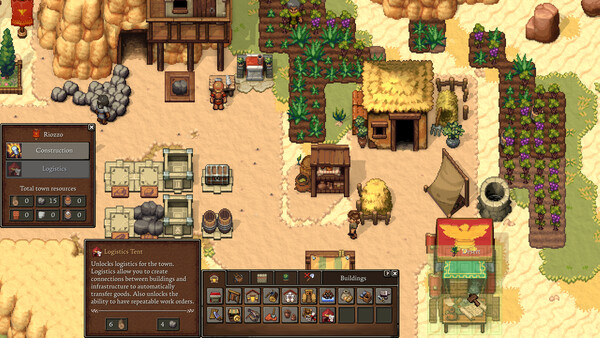
The easiest way to waste a Romestead day is to make every useful action require a long walk. Keep high-use storage near the places where resources are collected, processed, or consumed. If a station seems slow, do not assume the station is the problem; first check whether materials are sitting far away, blocked by another job, or being moved by the wrong player.
When to Touch God Progression
Romestead includes restoring Roman gods, but a beginner should not treat every god-related objective as the first priority. Track god progression once the settlement can keep basic work moving without constant rescue. If an offering, shrine, or god task improves survival, crafting, or town growth, it can move earlier. If it only distracts the group from food, storage, or defense, delay it.
A god objective earns early attention when it makes food, hauling, crafting, defense, or recovery easier now. If it only opens another project while the settlement is already rescuing basic work, leave it until the daily loop can carry the extra demand.
Solo vs Co-op
Solo routes should keep a smaller town and avoid long supply chains until each loop works without constant rescue. Co-op groups can move faster, but only if each player has a job. If everyone explores, the base stalls. If everyone builds, nobody brings inputs back. Use the Co-op Roles Guide to split work cleanly.
Failure Checks
Related Guides
Read the Resource Hauling Guide if stations feel slow or materials keep ending up in the wrong place. Use the Night Defense Guide if your settlement collapses after dark. Start with the Co-op Roles Guide if you play with friends. After a patch, use the updates page to decide whether food, hauling, crafting, bosses, or Logistics Tent timing changed your first route.
FAQ
Should I explore early or fix the base first?
Explore only after the base can feed itself, store repeated materials, and reset before night without panic. If a short trip makes the settlement lose its rhythm, the base is not ready for longer routes yet.
What is the first sign my Romestead base layout is bad?
The clearest sign is not ugliness; it is walking. If every craft, repair, storage drop, or night reset needs a long trip across town, your layout is taxing every future action.
Is co-op always easier than solo?
Only if players split jobs. Eight players can create eight priorities and make the base worse. Co-op gets easier when one player owns the base route, one gathers, one explores, and someone calls the night reset.
Changes That Reach the Town
When an update changes god rewards, recipes, boss pressure, or co-op balance, follow the effect to the first daily task that stops working. The Romestead updates page connects recent changes to hauling, crafting, defense, and progression routes.